
Articles | Volume 13, issue 1
https://doi.org/10.5194/gi-13-131-2024
© Author(s) 2024. This work is distributed under
the Creative Commons Attribution 4.0 License.
the Creative Commons Attribution 4.0 License.
https://doi.org/10.5194/gi-13-131-2024
© Author(s) 2024. This work is distributed under
the Creative Commons Attribution 4.0 License.
the Creative Commons Attribution 4.0 License.
Research article
| 
05 Jun 2024
Research article |
| 05 Jun 2024
| 05 Jun 2024
Copper permalloys for fluxgate magnetometer sensors
B. Barry Narod
CORRESPONDING AUTHOR
Department of Earth, Ocean and Atmospheric Sciences, University of British Columbia, Vancouver, Canada
David M. Miles
Department of Physics and Astronomy, University of Iowa, Iowa City, IA, USA
Related authors
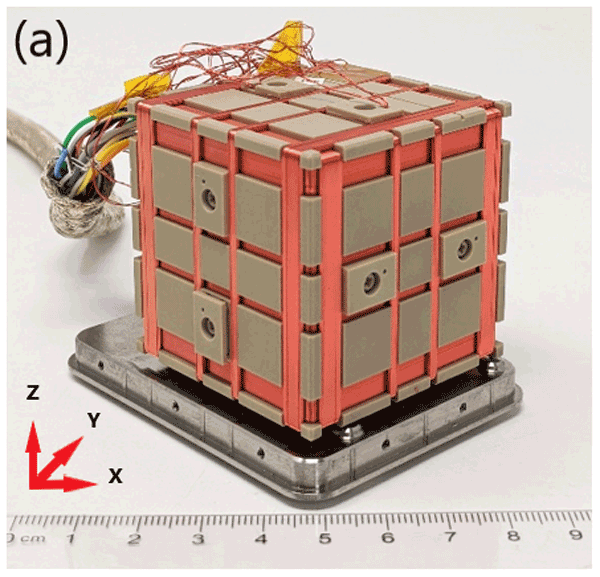
Kenton Greene, Christian Hansen, B. Barry Narod, Richard Dvorsky, and David M. Miles
Geosci. Instrum. Method. Data Syst., 11, 307–321, https://doi.org/10.5194/gi-11-307-2022, https://doi.org/10.5194/gi-11-307-2022, 2022
Short summary
Short summary
The ability to make reliable magnetic measurements in space is very important for a broad range of applications in space science. Here, we present the design and performance of a new magnetometer that looks very promising for making stable reliable magnetic measurements in space. We show that Tesseract performs better than the traditional ring-core design in metrics that are associated with stability.
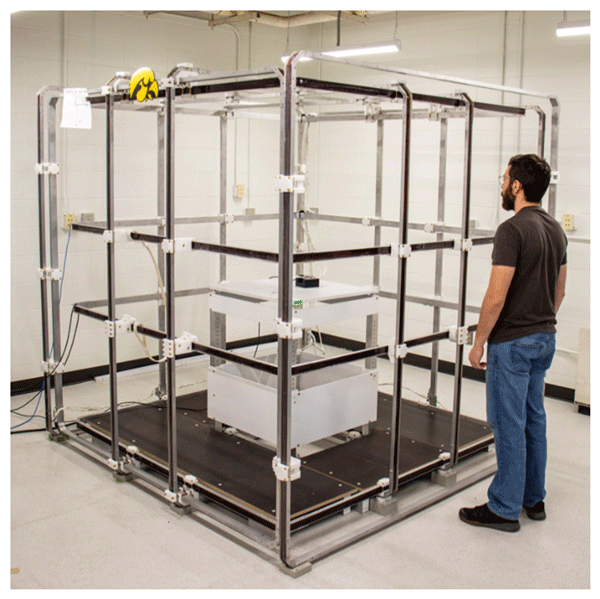
Matthew G. Finley, Allison M. Flores, Katherine J. Morris, Robert M. Broadfoot, Sam Hisel, Jason Homann, Chris Piker, Ananya Sen Gupta, and David M. Miles
Geosci. Instrum. Method. Data Syst., 13, 263–275, https://doi.org/10.5194/gi-13-263-2024, https://doi.org/10.5194/gi-13-263-2024, 2024
Short summary
Short summary
Spaceflight magnetic-field measurements are often contaminated by interference from the host spacecraft. We present a new dataset to enable the development and testing of interference mitigation schemes for spaceflight magnetic-field data. Over 100 h of data, including laboratory-generated proxies for magnetic interference and geophysical signals, have been produced. A ground truth for the underlying interference is also provided, enabling the rigorous quantification of data-cleaning techniques.
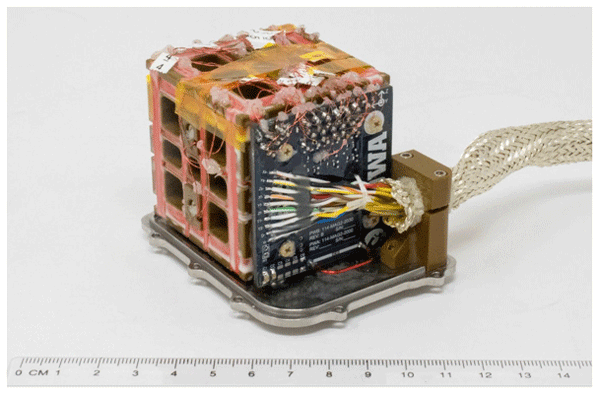
Kenton Greene, Scott R. Bounds, Robert M. Broadfoot, Connor Feltman, Samuel J. Hisel, Ryan M. Kraus, Amanda Lasko, Antonio Washington, and David M. Miles
Geosci. Instrum. Method. Data Syst., 13, 249–262, https://doi.org/10.5194/gi-13-249-2024, https://doi.org/10.5194/gi-13-249-2024, 2024
Short summary
Short summary
Demonstrating the space flight capability of the next generation of precise, reliable magnetic field instruments is important for enabling future space science missions that will further our understanding of the connection between Earth's magnetic field and the Sun. Here, we present a new magnetic field instrument design called Tesseract, the results from its successful first space flight demonstration aboard a rocket, and its measurements of magnetic fields associated with the aurora.
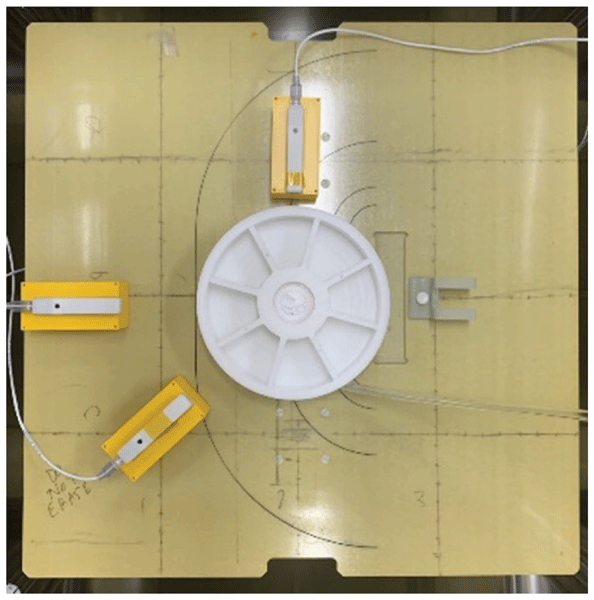
Cole J. Dorman, Chris Piker, and David M. Miles
Geosci. Instrum. Method. Data Syst., 13, 43–50, https://doi.org/10.5194/gi-13-43-2024, https://doi.org/10.5194/gi-13-43-2024, 2024
Short summary
Short summary
Magnetic field measurements in space can be contaminated by stray magnetic fields from their host satellite. We present an automated tool for measuring the magnetic field generated by potential satellite and instrument components to identify those that may degrade the measurements taken on orbit. This tool is designed for use by the Tandem Reconnection and Cusp Electrodynamics Reconnaissance Satellites (TRACERS) Small Explorers mission and is currently being used for mission design activities.
Robert M. Broadfoot, David M. Miles, Warren Holley, and Andrew D. Howarth
Geosci. Instrum. Method. Data Syst., 11, 323–333, https://doi.org/10.5194/gi-11-323-2022, https://doi.org/10.5194/gi-11-323-2022, 2022
Short summary
Short summary
The Swarm-Echo Satellite carries two magnetometers that allow us to obtain two independent measurements of the changes that occur in the Earth's magnetic field during events such as aurora. Magnetometers must be independently calibrated to ensure they remain accurate. If no magnetic reference is available, a model magnetic field must be used. This paper discusses the method used to calibrate the magnetometers on Swarm-Echo and shows the improvements the calibration has made to the data product.
Kenton Greene, Christian Hansen, B. Barry Narod, Richard Dvorsky, and David M. Miles
Geosci. Instrum. Method. Data Syst., 11, 307–321, https://doi.org/10.5194/gi-11-307-2022, https://doi.org/10.5194/gi-11-307-2022, 2022
Short summary
Short summary
The ability to make reliable magnetic measurements in space is very important for a broad range of applications in space science. Here, we present the design and performance of a new magnetometer that looks very promising for making stable reliable magnetic measurements in space. We show that Tesseract performs better than the traditional ring-core design in metrics that are associated with stability.
David M. Miles, Richard Dvorsky, Kenton Greene, Christian T. Hansen, B. Barry Narod, and Michael D. Webb
Geosci. Instrum. Method. Data Syst., 11, 111–126, https://doi.org/10.5194/gi-11-111-2022, https://doi.org/10.5194/gi-11-111-2022, 2022
Short summary
Short summary
We present an experiment intended to enable extremely low-noise magnetic field measurements. We manufactured fluxgate magnetometer cores using two metal alloys, two geometries, two foil thicknesses, and six different heat treatments and compared the resulting material properties, power consumption, and magnetic noise. Our results suggest that thinner foils, potentially using a new copper alloy, manufactured into continuous racetrack washers may provide excellent performance in fluxgate sensors.
Cited articles
Akulov, N. S.: Über ein Gesetz, das verschiedene Eigenschaften ferromagnetischer Kristalle miteinander verknüpft, Z. Physik, 59, 254–264, https://doi.org/10.1007/BF01341430, 1930a.
Akulov, N. S.: Über die Anwendungen des Gesetzes ferromagnetischer Anisotropie zur Berechnung der Eigenschaftern polykristallinisschen Eisens, Z. Physik, 66, 533–542, https://doi.org/10.1007/BF01402036, 1930b.
Akulov, N. S.: Zur Theorie der Feinstruktur der Magnetisierungskurven der Einkristalle, Z. Physik, 69, 78–99, https://doi.org/10.1007/BF01391515, 1931.
Anonymous: Die Magnetischen Eigenshaften des Monel-Metalle, Electrotechnik und Maschinenbau, 40, 142, 1922.
Anonymous: The Electrician, https://en.wikipedia.org/wiki/The_Electrician (last access: 15 February 2024), 1927.
Arnold, H. D. and Elmen, G. W.: Permalloy, and alloy of remarkable magnetic properties, J. Franklin Inst., 195, 621–632, https://doi.org/10.1016/S0016-0032(23)90114-6, 1923a.
Arnold, H. D. and Elmen, G. W.: Permalloy, A New Magnetic Material of Very High Permeability, Bell Syst. Tech. J., 2, 101–111, https://doi.org/10.1002/J.1538-7305.1923.TB03595.X, 1923b.
Arnold, H. D. and Elmen, G. W.: Permalloy, an alloy of remarkable magnetic properties, Proc. Amer. Phys. Soc., 20–21 April 1923, Washington, DC, 701–722, 1923c.
Aschenbrenner, H. und Goubau, G.: Ein Anordnung zur Registrierung rascher magnetischer Störungen, Hochfrequenztechnik und Electroakustik, 47, 177–181, 1936.
Becker, R.: Zur Theorie der Magnetisierungskurve, Z. Physik, 62, 253–269, https://doi.org/10.1007/BF01339797, 1930.
Becker, R.: Über die Magnetostriktion von ferromagnetischen Ellipsoiden I., Z. Physik 87, 547–559, https://doi.org/10.1007/BF01333324, 1934.
Becker, R. und Kersten, M.: Die Magnetisierung von Nickeldraht unter starkem Zug., Z. Physik, 64, 660–681, https://doi.org/10.1007/BF01397217, 1930.
Boothby, O. L. and Bozorth, R. M.: A New Magnetic Material of High Permeability, J. Appl. Phys., 18, 173–176, https://doi.org/10.1063/1.1697599, 1947.
Bozorth, R. M.: Ferromagnetism, in: facsimile, 1993 edition, edited by: Perkins, W., IEEE Press, Piscataway, NJ, ISBN 0-7803-1032-2, 1951.
Bozorth, R. M.: The Permalloy Problem, Rev. Mod. Phys. 25, 42–48, https://doi.org/10.1103/RevModPhys.25.42, 1953.
Carpenter Technology: Cartech® HyMu “800” Alloy, Technical Datasheet, https://www.carpenterelectrification.com/hubfs/Resources/Datasheets/20230324--Electrification_Datasheet_HyMu_800_F.pdf (last access: 15 February 2024), 1991.
Chaston, J. C.: Permalloys and Related Ferromagnetic Alloys – A Review, Elect. Commun., 15, 38–51, 1936.
Chevenard, P. A., Portevin, A. M. and Waché, X. F.: A Dilatometric study of some Univariant two-phase reactions, J. I. Met., 42, 337–373, 1929.
Cohen, P.: Effect of Compositional Variation on the Permeability of Molybdenum Permalloy, J. Appl. Phys., 38, 1174–1175, https://doi.org/10.1063/1.1709529, 1967.
Copper Development Association Inc.: Copper-Nickel Alloys: Properties, Processing, Applications, https://www.copper.org/applications/marine/cuni/properties/DKI_booklet.html#2.1 (last access: 15 February 2024), 2023.
Couderchon, G., Porteseil, J. L., Bertotti, G., Fiorillo, F., and Soardo, G. P.: Magnetization Process in NiFe Alloys with Vanishing Anisotropies, IEEE T. Mag., 25, 3973–3975, https://doi.org/10.1109/20.42493, 1989.
Dahl O. and Pfaffenberger, J.: Peculiar Magnetic Behaviour of Cold-Rolled Iron-Nickel Alloys on Precipitation Hardening, Metallwirtschaft, 13, 527–530, 543–549, 559–563, 1934.
Dahl, O., Pfaffenberger, J., and Sprung, H.: New Magnetic Materials for Loading Coils, Elek. Nach, Tech., 10, 317–332, 1933.
Delatorre, R. G., Sartorelli, M. L., Schervenski, A. Q., and Pasa, A. A.: Thermoelectric properties of electrodeposited CuNi alloys on Si, J. Appl. Phys., 93, 6154–6158, https://doi.org/10.1063/1.1569432, 2003.
Edgcumbe, K. and Ockenden, F. E. J.: Some recent advances in alternating-current measuring instruments, J. Inst. Electr. Engr., 65, 553–586, https://doi.org/10.1049/jiee-1.1927.0058, 1927.
Electr. Rev.: The magnetic properties of monel metal, Elect. Rev., 89, 292–293, 1921.
Elmen, G. W.: US Patent 1,586,884, 1926.
Elmen, G. W.: US Patent 1,768,443, 1930.
English, A. T. and Chin, G. Y.: Metallurgy and magnetic properties control in permalloy, J. Appl. Phys., 38, 1183–1187, https://doi.org/10.1063/1.1709532, 1967.
Enoch, R. D. and Fudge, A. D.: High magnetic permeability in Ni-Fe alloys, Brit. J. Appl. Phys. 17, 623–634, https://doi.org/10.1088/0508-3443/17/5/307, 1966.
Enoch, R. D. and Murrell, D. L.: High magnetic permeability in Ni-Fe-Cu-Mo alloys, IEEE T. Mag., 5, 370–372, https://doi.org/10.1109/TMAG.1969.1066450, 1969.
Farcas, T.: Les moments ferromagnétiques dans quelques alliages du cobalt, Annales de Physique, 11, 146–152, https://doi.org/10.1051/anphys/193711080146, 1937.
Fornacon, K. H., Auster, H. U., Georgescu, E., Baumjohann, W., Glassmeier, K. H., Haerendel, G., Rustenbach, J., and Dunlop, M.: The magnetic field experiment onboard Equator-S and its scientific possibilities, Ann. Geophys., 17, 1521–1527, https://doi.org/10.1007/s00585-999-1521-3, 1999.
Foster, A. E., Ledger, P. G., and Rosen, A.: The continuously-loaded submarine telegraph cable, J. Inst. Elect. Eng., 67, 475–498, https://doi.org/10.1049/jiee-1.1929.0037, 1929.
Gerdien, H. und Neumann, H.: Über ein astatisches Kompensationmagnetometer, Wiss. Veröff. a. d. Siemens-Konz., 11, 12–34, 1932.
Gordon, D. I., Lundsten, R. H., Chiarodo, R. A., and Helms Jr., H. H.: A Fluxgate Sensor of High Stability for Low Field Magnetometry, IEEE T. Mag., 4, 397–401, https://doi.org/10.1109/TMAG.1968.1066332, 1968.
Graetz, L. (Ed.): Handbuch der Elektrizität und des Magnetismus, u. d. IV, J. A. Barth, Leipzig, p. 276, ISBN 13 978-1148101897, 1923.
Greene, K., Hansen, C., Narod, B. B., Dvorsky, R., and Miles, D. M.: Tesseract – a high-stability, low-noise fluxgate sensor designed for constellation applications, Geosci. Instrum. Method. Data Syst., 11, 307–321, https://doi.org/10.5194/gi-11-307-2022, 2022.
Guertler, W. und Tammann, G.: Metallographische Mitteilungen aus dem Institut für anorganische Chemie der Universität Göttingen, XXXVIII Über Kupfernickellegierungen, Z. Anorg. Chem., 52, 25–29, https://doi.org/10.1002/zaac.19070520104, 1907.
Heraeus-Vakuumschmelze: Archiv Technisches Messen, Archiv Tech. Messen Z., 913–912, 47–50, https://doi.org/10.1524/teme.1931.112.jg.47, 1931.
Herzer, G.: Grain size dependence of coercivity and permeability in nanocrystalline ferromagnets, IEEE T. Mag., 26, 1397–1402, https://doi.org/10.1109/20.104389, 1990.
Herzer, G.: Nanocrystalline soft magnetic materials, Physica Scripta, 49, 307–314, 1993.
Hopkinson, J.: Magnetic and other Physical Properties of Iron at a High Temperature, Philos. T. Roy. Soc. Lond. A, 180, 443–465, https://doi.org/10.1098/rsta.1889.0014, 1889.
Hund, A. I.: Electrotechnik und Maschinenbau: Springer Verlag, Wien, p. 143, 1922.
Keinath, G.: Hochmagnetische Legierungen, Archiv für Technisches Messen, Z913-3, 291–292, https://doi.org/10.1524/teme.1932.1324.jg.282, 1932.
Kersten, M.: Über den Einfluss des elastischen Spannungszustanden auf die Grosse der Anfagspermeabilitat, Z. Techn. Physik, 12, 665–669, 1931.
Kersten, M.: Physikalische Untersuchungen an neuen magnetischen Werkstoffen, Z. Techn. Physik, 15, 249–257, 1934.
Kinnard, I. F. and Faus, H. T.: Temperature Errors in Induction Watthour Meters, J. Am. Inst. Electr. Engr., 44, 275–287, https://doi.org/10.1109/T-AIEE.1925.5061109, 1925.
Kornetzki, M.: Über die Magnetostriktion von ferromagnetischen Ellipsoiden II, Z. Physik, 87, 560–579, https://doi.org/10.1007/BF01333325, 1934.
Kussmann, A. und Scharnow, B.: Über Härte und magnetische Eigenshaften von Eisen-Kupferlegierungen und ihre Beziehungen zum Zustandsdiagramm, Z. Anorg. Allg. Chem., 178, 317–324, https://doi.org/10.1002/zaac.19291780124, 1929a.
Kussmann, A. and Scharnow, B.: Über die Koerzitivkraft, Z. Physik, 54, 1–15, https://doi.org/10.1007/BF01339802, 1929b.
Lichtenberger, F.: Untersuchung der Magnetostriktion und der Magnetisierung von Einkrtallen der Eisen-Nickelreihe, Ann. Physik, 15, 45–71, https://doi.org/10.1002/andp.19324070104, 1932.
Lykens, A., A.: Effects of Alloy Additions to 4–79 Molybdenum Permalloy, J. Appl. Phys., 37, 1201–1206, https://doi.org/10.1063/1.1708394, 1966.
Major, R. and Martin, M.: The effect of grain orientation on the initial permeability of mumetal strip, IEEE T. Mag., 6, 101–105, https://doi.org/10.1109/TMAG.1970.1066680, 1970.
McKeehan, L. W.: A Contribution to the Theory of Ferromagnetism, Phys. Rev., 26, 274–279, https://doi.org/10.1103/PhysRev.26.274, 1925.
McKeehan, L. W.: Magnetostriction, J. Franklin Inst., 202, 737–773, https://doi.org/10.1016/S0016-0032(26)90695-9, 1926.
Merz, L.: Prof. Dr.-Ing. Georg Keinath 75 Jahre alt, Archiv für Technisches Messen, 295, R97–98, https://doi.org/10.1524/teme.1960.288299.jg.353, 1960.
Messkin, W. S. und Kussmann, A.: Die Ferromagnetischen Legierungen und ihre gewerbliche Verwendung, Julius Springer Verlag, Berlin, p. 110, ISBN 13 978-3-642-89358-2, ISBN 13 978-3-642-91214-6, https://doi.org/10.1007//978-3-642-91214-6, 1932.
Miles, D. M., Mann, I. R., Ciurzynski, M., Barona, D., Narod, B. B., Bennest, J. R., Pakhotin, I. P., Kale, A., Bruner, B., Nokes, C. D. A., Cupido, C., Haluza-DeLay, T., Elliott, D. G., and Milling, D. K.: A miniature, low-power scientific fluxgate magnetometer: A stepping-stone to cube- satellite constellation missions, J. Geophys. Res.-Space, 121, 11839–11860, https://doi.org/10.1002/2016JA023147, 2016.
Miles, D. M., Dvorsky, R., Greene, K., Hansen, C. T., Narod, B. B., and Webb, M. D.: Contributors to fluxgate magnetic noise in permalloy foils including a potential new copper alloy regime, Geosci. Instrum. Method. Data Syst., 11, 111–126, https://doi.org/10.5194/gi-11-111-2022, 2022.
Müller, A.: Über die Mischungslücke in flüssigen Eisen-Kupfer-Legierungen, Z. Anorg. Chem., 162, 231–236, https://doi.org/10.1002/zaac.19271620121, 1927.
Müller, M., Lederer, T., Fornacon, K. H., and Schäfer, R.: Grain structure, coercivity and high-frequency noise in soft magnetic Fe81Ni-6Mo alloys, J. Magnet. Magnet. Mater., 177–181, 231–232, https://doi.org/10.1016/S0304-8853(97)00672-0, 1998.
Musmann, G. (Ed.) and Afanassiev, Y. V.: Fluxgate magnetometers for space research, BoD – Books on Demand, ISBN 978-3-8391-3702-4, 2010.
Nagaoka, H. and Taylor-Jones, E.: On the Effects of Magnetic Stress in Magnetostriction, Philos. Mag., 41, 454–461, https://doi.org/10.1080/14786449608620868, 1896.
Narod, B. B.: The origin of noise and magnetic hysteresis in crystalline permalloy ring-core fluxgate sensors, Geosci. Instrum. Method. Data Syst., 3, 201–210, https://doi.org/10.5194/gi-3-201-2014, 2014.
Narod, B. B., Bennest, J. R., Strom-Olsen, J. O., Nezil, F., and Dunlap, R. A.: An evaluation of the noise performance of Fe, Co, Si, and B amorphous alloys in ring-core fluxgate magnetometers, Can. J. Phys., 63, 1468–1472, https://doi.org/10.1139/p85-246, 1985.
Nature: “Supermalloy”: a New Magnetic Alloy, Nature, 161, 554, https://doi.org/10.1038/161554a0, 1948.
Neumann, H.: Über ballistische Messungen an hochpermeablen Materialien, Wiss. Veröff. a. d. Siemens-Konz., 10, 55–71, 1931.
Neumann, H.: Neue magnetisch Legierung “1040” mit hoher Anfangs-Permeabilität, Archiv für Technisches Messen, Z913-5, 291–292, https://doi.org/10.1524/teme.1934.3748.jg.291, 1934.
Neumann, H., Büchner, A., and Reinboth, H.: Mechanisch weiche Dauermagnetlegierungen aus Kupfer, Nickel und Eisen, Z. Metallkd., 29, 173–185, 1937.
Odani, Y.: Magnetic Properties of Cube-Textured 6–81.3 Mo – Permalloy, J. Appl. Phys., 35, 865–866, https://doi.org/10.1063/1.1713512, 1964.
Odani, Y. and Sunazawa, M.: US Patent 3,348,983, 1967.
Omega Sensing Solutions: FBGS Non-Fraying Fiberglass Sleeving, https://www.omega.ca/en/accessories/protection/wire-sleeves/p/FBGS (last access: 15 February 2024), 2022.
Pfeifer, F.: Zum Verständnis der magnetischen Eigenschaften technischer Permalloylegierungen, Z. Metallkd., 57, 295–300, 1966.
Pfeifer, F. and Boll, R.: New soft magnetic alloys for applications in modern electrotechnics and electronics, IEEE T. Mag., 5, 365–370, https://doi.org/10.1109/TMAG.1969.1066595, 1969.
Portevin, A. M. and Chevenard, P. A.: Influence de la finesse de structure lors du recuit des fontes grises, C. R. Acad. Sci. Paris, 189, 759–761, 1929.
Preisach, F.: Magnetische Untersuchungen an ausscheidungsfähigen Eisen-Nickel-Legierungen, Z. Physik, 93, 245–268, https://doi.org/10.1007/BF01365125, 1935.
Puzei, I. M.: The Influence of Cu, Si, Cr and Mo on the Magnetic Anisotropy and Saturation Induction of Ni-Fe Monocrystals, The Physics of Metals and Metallogaphy, 12, 136–138 (Fiz Metal. Metalloved, 12, 453–455), 1961.
Puzei, I. M.: A New Range of Compositions in the High-permeability Alloys on the System Fe-Ni-Mo, The Physics of Metals and Metallogaphy, 14, 47–49 (Fiz Metal. Metalloved, 14, 374–377), 1962.
Puzei, I. M. and Molotilov, B. V.: Volume Magnetostriction of Nickel-Iron-Molybdenum Alloys, (Izv. Akad. Nauk Ser. Fis., 22, 1244, 1958.) Bulletin of the Academy of Sciences of the USSR, 22, 1236–1242, 1958.
Qader, M. A., Vishina, A., Yu, L., Garcia, C., Singh, R. K., Rizzo, N. D., Huang, M., Chamberlin, R., Belashchenko, K. D., van Schilfgaarde, M., and Newman, N.: The magnetic, electrical and structural properties of copper-permalloy alloys, J. Magn. Magn. Mater., 442, 45–52, https://doi.org/10.1016/j.jmmm.2017.06.081, 2017.
Roll, F.: Beiträge zum Einfluss des Ni und Si auf die Mischungslücke des Fe/Cu-Systems im festen Zustand (20 °C), Z. Anorg. Allg. Chem., 212, 61–64, https://doi.org/10.1002/zaac.19332120109, 1933.
Ruer, R.: Über die Mischungslücke in flüssigen Eisen-Kupferlegierungen Z. Anorg. Chem., 164, 366–376, https://doi.org/10.1002/zaac.19271640134, 1927.
Ruer, R. und Goerens, F.: Über die Schmelz-und Kristallisationsvorgänge bei den Eisen-Kohlenstoff-Legierungen, Ferrum, 14, 49–61, 1916.
Sahmen, R.: Über die Legierungen des Kupfers mit Kobalt, Eisen, Mangan und Magnesium, Z. Anorg. Chem., 57, 1–33, https://doi.org/10.1002/zaac.19080570102, 1908.
Scanlon, W. W.: Solid state research of the Applied Physics Department for the year 1965, Naval Ordnance Lab, White Oak, MD, https://ntrs.nasa.gov/api/citations/19670003774/downloads/19670003774.pdf (last access: 15 February 2024), 1966.
Scholefield, H. H., Major, R. V., Gibson, B., and Martin, A. P.: Factors influencing the initial permeability of some alloys based on 80Ni20Fe, Brit. J. Appl. Phys., 18, 41–48, https://doi.org/10.1088/0508-3443/18/1/309, 1967.
Sekels: Shielding Foils from Vitrovac 6025 I50X, https://sekels.de/fileadmin/PDF/English/Materials__Magnetic_Shieldings/32_Brochure_Shielding_Foils_from_amorphous_VITROVAV_6025X.pdf (last access: 15 February 2024), 2019.
Shirae, K.: Noise in amorphous magnetic materials, IEEE T. Mag., 20, 1299–1301, https://doi.org/10.1109/TMAG.1984.1063504, 1984.
Smith, W. S. and Garnett, H. J.: US Patent 1,552,769, 1925.
Smith, W. S. and Garnett, H. J.: US Patent 1,582,353, 1926.
Smith, W. S. and Garnett, H. J.: US Patent1,635,443, 1927.
Snee, D. J.: Effects of Composition and Cooling Rate on the Initial Permeability of Mumetal, J. Appl. Phys., 38, 1174–1175, https://doi.org/10.1063/1.1709528, 1967.
Turbitt, C.: INTERMAGNET Definitive One-Second Data Standard, INTERMAGNET Technical Note TN6, https://intermagnet.org/docs/technical/im_tn_06_v1_0.pdf (last access: 15 February 2024), 2014.
Vacquier, V.: US Patent 2,406,870, 1946a.
Vacquier, V.: US Patent 2,407,202, 1946b.
Vogel, R.: Über das ternäre System Eisen-Kupfer-Nickel, Z. Anorg. Chem., 67, 1–16, 1910.
von Auwers, O.: Über Volumenmagnetostriktion an Poly- und Ein kristallen. Untersuchung an Eisen-Nickel- und Eisen-Nickel- Kobalt-Legierungen über die Abhängigkeit der Volumenmagnetostriktion von der Feldstärke und von der Kristallorientierung, Physik. Z., 34, 824–827, 1933.
von Auwers, O. and Neumann, H.: Über Eisen–Nickel–Kupfer-Legierungen hoher Anfangspermeabilität, Spec. Print. Sci. Publ. Siemens-Fact., Julius Springer, XIV, 92–108, 1935.
Williams, E. H.: Magnetic Properties of Copper-Nickel Alloys, Phys. Rev., 38, 828–831, https://doi.org/10.1103/PhysRev.38.828, 1931.
Wyckoff, R. D.: The Gulf Airborne Magnetometer, Geophysics, 13, 182–208, https://doi.org/10.1190/1.1437391, 1948.
Short summary
We present the experimental results of a new copper-based alloy suitable for use in high-precision magnetic sensing. It outperforms by providing lower magnetic noise and superior power consumption. Prototype sensors constructed from this material can meet an exacting standard, the 2012 1 s INTERMAGNET standard, for magnetic observatories.
We present the experimental results of a new copper-based alloy suitable for use in...


