Articles | Volume 14, issue 2
https://doi.org/10.5194/gi-14-527-2025
© Author(s) 2025. This work is distributed under
the Creative Commons Attribution 4.0 License.
https://doi.org/10.5194/gi-14-527-2025
© Author(s) 2025. This work is distributed under
the Creative Commons Attribution 4.0 License.
Peer-review of data products: an automated assistance system for INTERMAGNET
Roman Leonhardt
CORRESPONDING AUTHOR
Conrad Observatory, GeoSphere Austria, Vienna, Austria
Benoit Heumez
Université Paris Cité, IPGP, CNRS, France
Tero Raita
Sodankylä Geophysical Observatory, University of Oulu, Oulu, Finland
Institute of Geophysics, Polish Academy of Sciences, Warsaw, Poland
Related authors
Bruno Meurers, Gábor Papp, Hannu Ruotsalainen, Judit Benedek, and Roman Leonhardt
Hydrol. Earth Syst. Sci., 25, 217–236, https://doi.org/10.5194/hess-25-217-2021, https://doi.org/10.5194/hess-25-217-2021, 2021
Short summary
Short summary
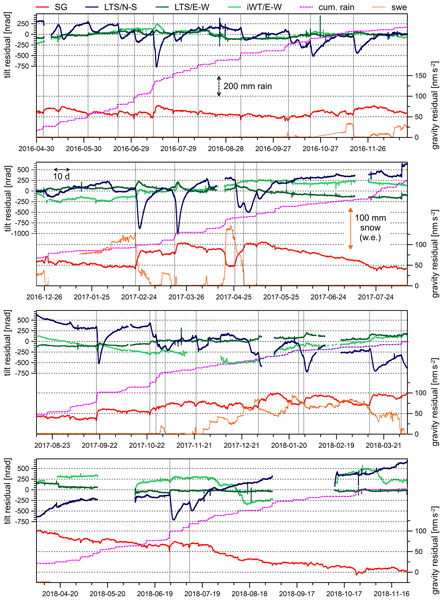
Gravity and tilt time series acquired at Conrad Observatory (Austria) reflect gravity and deformation associated with short- and long-term environmental processes, revealing a complex water transport process after heavy rain and rapid snowmelt. Gravity residuals are sensitive to the Newtonian effect of water mass transport. Tilt residual anomalies capture strain–tilt coupling effects due to surface or subsurface deformation from precipitation or pressure changes in the adjacent fracture system.
Jan Reda, Benoit Heumez, and Jürgen Matzka
Geosci. Instrum. Method. Data Syst., 14, 319–324, https://doi.org/10.5194/gi-14-319-2025, https://doi.org/10.5194/gi-14-319-2025, 2025
Short summary
Short summary
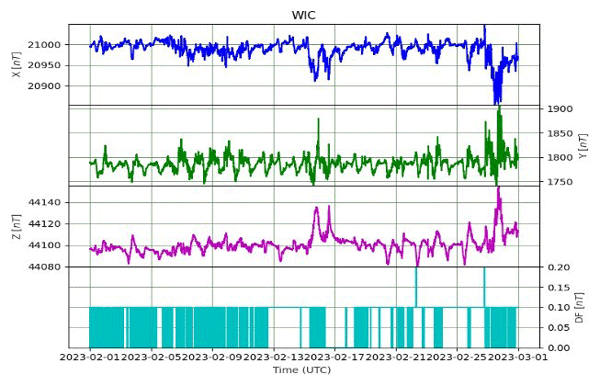
INTERMAGNET (International Real-time Magnetic Observatory Network) is a global network of over 100 magnetic observatories, working with the International Association of Geomagnetism and Aeronomy (IAGA). Its one-minute measurement data undergo a strict two-stage review by expert teams, ensuring high accuracy and consistency. Verified data are published online and as DOI. This gives researchers and practitioners fast access to reliable data for science and practical applications.
Benoit Heumez, Frédérick Pesquiera, Abdelkader Telali, and Vincent Lesur
Geosci. Instrum. Method. Data Syst., 14, 225–235, https://doi.org/10.5194/gi-14-225-2025, https://doi.org/10.5194/gi-14-225-2025, 2025
Short summary
Short summary
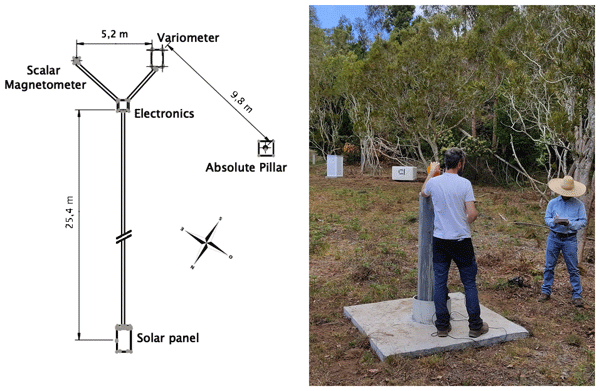
A new magnetic observatory has been established on La Réunion Island in the Indian Ocean. This isolated observatory serves to monitor the evolution of the magnetic field in that region. It is also useful for large-scale modelling of the core field and other contributions to the geomagnetic field. The vector magnetic field components are measured every second, transmitted every 5 min to the Institut de physique du globe de Paris, and made immediately available to users (see www.bcmt.fr).
Marc Hansen, Daniela Banyś, Mark Clilverd, David Wenzel, Tero Raita, and Mohammed Mainul Hoque
Ann. Geophys., 43, 55–65, https://doi.org/10.5194/angeo-43-55-2025, https://doi.org/10.5194/angeo-43-55-2025, 2025
Short summary
Short summary
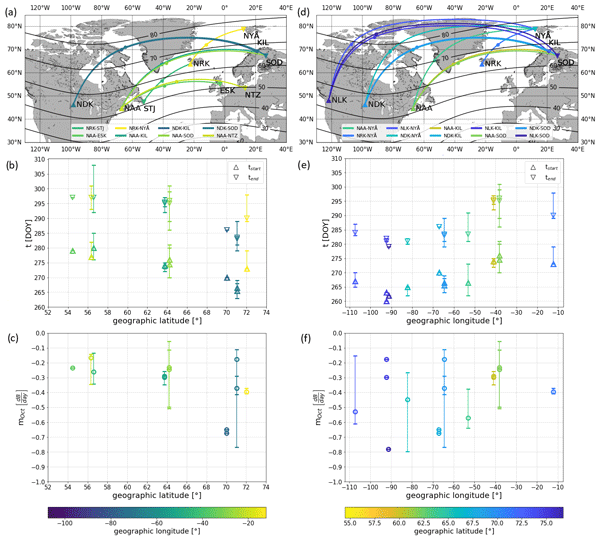
The amplitude of subionospheric very low-frequency (VLF) radio signals does not show a symmetrical behavior over the year, which would be expected from its dependency on the solar position. The VLF amplitude rather shows a distinctive sharp decrease around October, which is hence called the "October effect". This study is the first to systematically investigate this October effect, which shows a clear latitudinal dependency.
Mizuki Fukizawa, Yoshimasa Tanaka, Yasunobu Ogawa, Keisuke Hosokawa, Tero Raita, and Kirsti Kauristie
Ann. Geophys., 41, 511–528, https://doi.org/10.5194/angeo-41-511-2023, https://doi.org/10.5194/angeo-41-511-2023, 2023
Short summary
Short summary
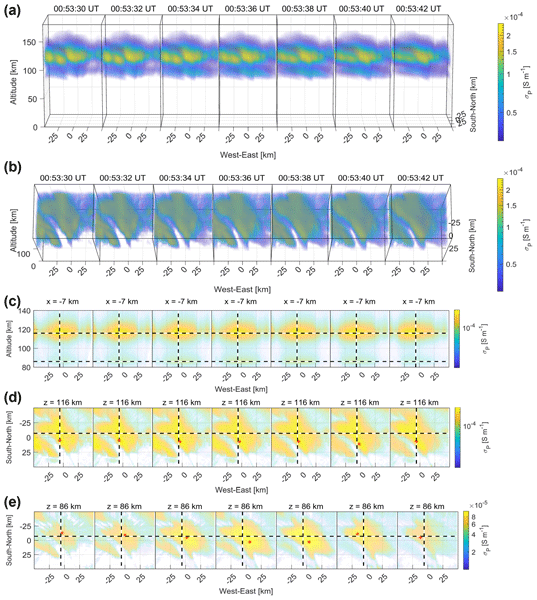
We use computed tomography to reconstruct the three-dimensional distributions of the Hall and Pedersen conductivities of pulsating auroras, a key research target for understanding the magnetosphere–ionosphere coupling process. It is suggested that the high-energy electron precipitation associated with pulsating auroras may have a greater impact on the closure of field-aligned currents in the ionosphere than has been previously reported.
Mizuki Fukizawa, Takeshi Sakanoi, Yoshimasa Tanaka, Yasunobu Ogawa, Keisuke Hosokawa, Björn Gustavsson, Kirsti Kauristie, Alexander Kozlovsky, Tero Raita, Urban Brändström, and Tima Sergienko
Ann. Geophys., 40, 475–484, https://doi.org/10.5194/angeo-40-475-2022, https://doi.org/10.5194/angeo-40-475-2022, 2022
Short summary
Short summary
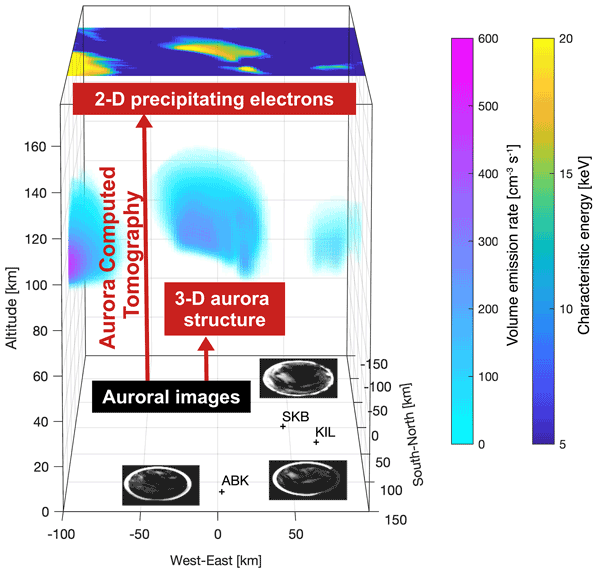
The pulsating auroral generation mechanism has been investigated by observing precipitating electrons using rockets or satellites. However, it is difficult for such observations to distinguish temporal changes from spatial ones. In this study, we reconstructed the horizontal 2-D distribution of precipitating electrons using only auroral images. The 3-D aurora structure was also reconstructed. We found that there were both spatial and temporal changes in the precipitating electron energy.
Bruno Meurers, Gábor Papp, Hannu Ruotsalainen, Judit Benedek, and Roman Leonhardt
Hydrol. Earth Syst. Sci., 25, 217–236, https://doi.org/10.5194/hess-25-217-2021, https://doi.org/10.5194/hess-25-217-2021, 2021
Short summary
Short summary
Gravity and tilt time series acquired at Conrad Observatory (Austria) reflect gravity and deformation associated with short- and long-term environmental processes, revealing a complex water transport process after heavy rain and rapid snowmelt. Gravity residuals are sensitive to the Newtonian effect of water mass transport. Tilt residual anomalies capture strain–tilt coupling effects due to surface or subsurface deformation from precipitation or pressure changes in the adjacent fracture system.
Cited articles
FAIRsharing.org: INTERMAGNET; International Real-time Magnetic Observatory Network, FAIRsharing [data set], https://doi.org/10.25504/FAIRsharing.68d251, 1987. a
Hunter, J. D.: Matplotlib: A 2D graphics environment, Computing in Science & Engineering, 9, 90–95, https://doi.org/10.1109/MCSE.2007.55, 2007. a
Jankowski, J. and Sucksdorff, C.: Guide for Magnetic Measurements and Observatory Practice, International Association of Geomagnetism and Aeronomy, Paris, ISBN 0965068625, 9780965068628, 1996. a
Leonhardt, R.: geomagpy/IMBOT: IMBOT 2.0.3 (2.0.3), Zenodo [code], https://doi.org/10.5281/zenodo.17235429, 2025. a
Leonhardt, R., Matzka, J., and Wack, M.: MagPy – A python based software for analyzing geomagnetic observatory measurements, in: Proceedings of the XVth IAGA Workshop on Geomagnetic Observatory Instruments, Data Acquisition, and Processing, edited by: Hejda, P., Chulliat, A., and Catalán, M., vol. 3/13, 169–172, San Fernando, Cadiz, 2013. a
MacMillan, S. and Olson, N.: Observatory data and the Swarm mission, Earth Planets Space, 65, 1355–1362, 2013. a
Menvielle, M., Papitashvili, N., Häkkinen, L., and Sucksdorff, C.: Computer Production of K indices : Review and Comparison of Methods, Geophysical Journal International, 123, 866–886, 1995. a
Sucksdorff, C., Pirjola, R., and Häkkinen, L.: Computer production of K-values based on linear elimination, Geophysical Transactions, 36, 333–345, 1991. a
Short summary
IMBOT, the INTERMAGNET ROBOT, has been developed to perform automated routines to convert and evaluate data submission to INTERMAGNET, a global network of geomagnetic observatories. IMBOT makes data review faster and more reliable, providing high-quality data for the geomagnetic community.
IMBOT, the INTERMAGNET ROBOT, has been developed to perform automated routines to convert and...