
Articles | Volume 15, issue 1
https://doi.org/10.5194/gi-15-17-2026
© Author(s) 2026. This work is distributed under
the Creative Commons Attribution 4.0 License.
the Creative Commons Attribution 4.0 License.
https://doi.org/10.5194/gi-15-17-2026
© Author(s) 2026. This work is distributed under
the Creative Commons Attribution 4.0 License.
the Creative Commons Attribution 4.0 License.
Research article
| 
09 Jan 2026
Research article |
| 09 Jan 2026
| 09 Jan 2026
Frequency control and monitoring of the ALOMAR RMR lidar's pulsed high-power Nd:YAG lasers

Leibniz Institute of Atmospheric Physics at the University of Rostock, Kühlungsborn, Germany
Gerd Baumgarten
Leibniz Institute of Atmospheric Physics at the University of Rostock, Kühlungsborn, Germany
Michael Gerding
Leibniz Institute of Atmospheric Physics at the University of Rostock, Kühlungsborn, Germany
Torsten Köpnick
Leibniz Institute of Atmospheric Physics at the University of Rostock, Kühlungsborn, Germany
Reik Ostermann
Leibniz Institute of Atmospheric Physics at the University of Rostock, Kühlungsborn, Germany
Bernd Kaifler
German Aerospace Center, Institute of Atmospheric Physics, Oberpfaffenhofen, Germany
Related authors
Jens Fiedler and Gerd Baumgarten
Atmos. Meas. Tech., 17, 5841–5859, https://doi.org/10.5194/amt-17-5841-2024, https://doi.org/10.5194/amt-17-5841-2024, 2024
Short summary
Short summary
This article describes the current status of a lidar installed at ALOMAR in northern Norway. It has investigated the Arctic middle atmosphere on a climatological basis for 30 years. We discuss major upgrades of the system implemented during recent years, including methods for reliable remote operation of this complex lidar. We also show examples that illustrate the performance of the lidar during measurements at different altitude ranges and timescales.
Michael Gerding, Robin Wing, Eframir Franco-Diaz, Gerd Baumgarten, Jens Fiedler, Torsten Köpnick, and Reik Ostermann
Atmos. Meas. Tech., 17, 2789–2809, https://doi.org/10.5194/amt-17-2789-2024, https://doi.org/10.5194/amt-17-2789-2024, 2024
Short summary
Short summary
This paper describes a new lidar system developed in Germany intended to study wind and temperature at night in the middle atmosphere. The paper explains how we have set up the system to work automatically and gives technical details for anyone who wants to build a similar system. We present a case study showing temperatures and winds at different altitudes. In a future article, we will present how we process the data and deal with uncertainties.
Ronald Eixmann, Thorben H. Lüke-Mense, Jan Froh, Michael Gerding, Josef Höffner, Christian Löns, Robin Wing, Christian von Savigny, and Gerd Baumgarten
Atmos. Meas. Tech., 19, 5309–5324, https://doi.org/10.5194/amt-19-5309-2026, https://doi.org/10.5194/amt-19-5309-2026, 2026
Short summary
Short summary
We introduce a new lidar-based measurement technique that can observe small particles in the middle atmosphere, up to 30 km altitude, both during the day and at night. The compact instrument, with a volume of about one cubic meter, provides high-accuracy vertical profiles of aerosols and can be deployed at different locations worldwide. Comparisons with satellite data show strong agreement, highlighting its potential for longterm monitoring of stratospheric aerosols.
Juha Vierinen, Dabrowka Knach, Jorge Luis Chau, Gerd Baumgarten, Devin Huyghebaert, Matthias Clahsen, Nico Pfeffer, Toralf Renkwitz, Robin Wing, Kenneth Obenberger, Björn Gustavsson, and Daniel Kastinen
EGUsphere, https://doi.org/10.5194/egusphere-2026-2857, https://doi.org/10.5194/egusphere-2026-2857, 2026
Short summary
Short summary
We observed the re-entry of a Falcon 9 rocket upper stage over Europe using a network of cameras and radars normally used to study meteors. The measurements showed how hot ionized gas formed around the debris during hypervelocity entry, producing strong radio echoes high in the atmosphere. As the number of satellites and rocket launches increases, these observations can help improve monitoring of space waste re-entering the atmosphere and its possible environmental effects.
Peter Dalin, Hidehiko Suzuki, Nikolay Pertsev, Vladimir Perminov, Linda Megner, Johan Kero, Peter Voelger, Jonas Hedin, Gerd Baumgarten, Anne Réchou, and Denis Efremov
Ann. Geophys., 44, 331–351, https://doi.org/10.5194/angeo-44-331-2026, https://doi.org/10.5194/angeo-44-331-2026, 2026
Short summary
Short summary
A transatlantic scientific balloon flight (TRANSAT) was conducted in June 2024. The TRANSAT balloon floated in the stratosphere at approximately 40 km altitude between Sweden and Canada for about 4 days. An optical imager was installed on the TRANSAT balloon to study noctilucent cloud (NLC). Nearly continuous observations of NLC were obtained during the entire flight. A complex NLC structures exhibiting different motions were found to result from wind rotation with altitude between 80 and 94 km.
Mohamed Mossad, Irina Strelnikova, Robin Wing, Gerd Baumgarten, and Michael Gerding
Atmos. Chem. Phys., 25, 14839–14864, https://doi.org/10.5194/acp-25-14839-2025, https://doi.org/10.5194/acp-25-14839-2025, 2025
Short summary
Short summary
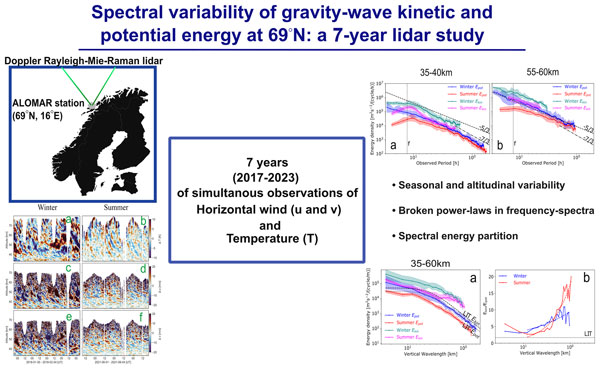
We studied gravity waves using a unique lidar that measures both temperature and wind. This is the first long-term study of how their energies vary with height and season in the middle atmosphere near the Arctic. Waves were stronger and varied more in winter, while in summer slow waves tied to Earth's rotation dominated. We also observed new patterns in how energy is shared between both energy types and height-dependent changes in wave behaviour. These results refine our view of such waves.
Natalie Kaifler, Bernd Kaifler, Markus Rapp, Guiping Liu, Diego Janches, Gerd Baumgarten, and Jose-Luis Hormaechea
Atmos. Chem. Phys., 24, 14029–14044, https://doi.org/10.5194/acp-24-14029-2024, https://doi.org/10.5194/acp-24-14029-2024, 2024
Short summary
Short summary
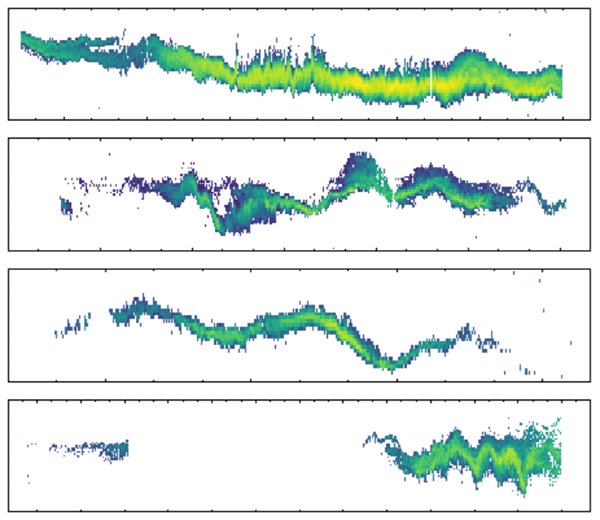
Noctilucent clouds (NLCs) are silvery clouds that can be viewed during twilight and indicate atmospheric conditions like temperature and water vapor in the upper mesosphere. High-resolution measurements from a remote sensing laser instrument provide NLC height, brightness, and occurrence rate since 2017. Most observations occur in the morning hours, likely caused by strong tidal winds, and NLC ice particles are thus transported from elsewhere to the observing location in the Southern Hemisphere.
Jens Fiedler and Gerd Baumgarten
Atmos. Meas. Tech., 17, 5841–5859, https://doi.org/10.5194/amt-17-5841-2024, https://doi.org/10.5194/amt-17-5841-2024, 2024
Short summary
Short summary
This article describes the current status of a lidar installed at ALOMAR in northern Norway. It has investigated the Arctic middle atmosphere on a climatological basis for 30 years. We discuss major upgrades of the system implemented during recent years, including methods for reliable remote operation of this complex lidar. We also show examples that illustrate the performance of the lidar during measurements at different altitude ranges and timescales.
Robert Reichert, Natalie Kaifler, and Bernd Kaifler
Atmos. Meas. Tech., 17, 4659–4673, https://doi.org/10.5194/amt-17-4659-2024, https://doi.org/10.5194/amt-17-4659-2024, 2024
Short summary
Short summary
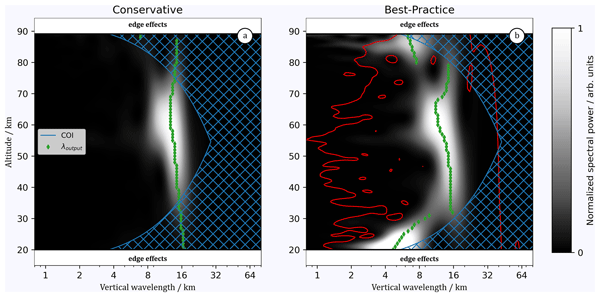
Imagine you want to determine how quickly the pitch of a passing ambulance’s siren changes. If the vehicle is traveling slowly, the pitch changes only slightly, but if it is traveling fast, the pitch also changes rapidly. In a similar way, the wind in the middle atmosphere modulates the wavelength of atmospheric gravity waves. We have investigated the question of how strong the maximum wind may be so that the change in wavelength can still be determined with the help of wavelet transformation.
Michael Gerding, Robin Wing, Eframir Franco-Diaz, Gerd Baumgarten, Jens Fiedler, Torsten Köpnick, and Reik Ostermann
Atmos. Meas. Tech., 17, 2789–2809, https://doi.org/10.5194/amt-17-2789-2024, https://doi.org/10.5194/amt-17-2789-2024, 2024
Short summary
Short summary
This paper describes a new lidar system developed in Germany intended to study wind and temperature at night in the middle atmosphere. The paper explains how we have set up the system to work automatically and gives technical details for anyone who wants to build a similar system. We present a case study showing temperatures and winds at different altitudes. In a future article, we will present how we process the data and deal with uncertainties.
Thorben H. Mense, Josef Höffner, Gerd Baumgarten, Ronald Eixmann, Jan Froh, Alsu Mauer, Alexander Munk, Robin Wing, and Franz-Josef Lübken
Atmos. Meas. Tech., 17, 1665–1677, https://doi.org/10.5194/amt-17-1665-2024, https://doi.org/10.5194/amt-17-1665-2024, 2024
Short summary
Short summary
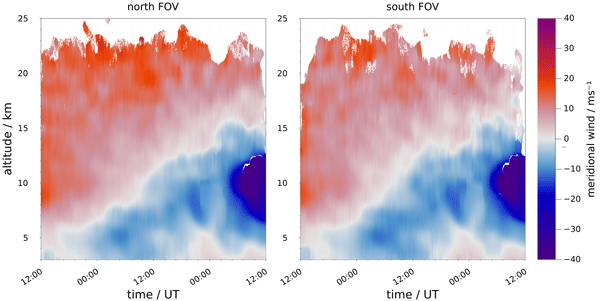
A novel lidar system with five beams measured horizontal and vertical winds together, reaching altitudes up to 25 km. Developed in Germany, it revealed accurate horizontal wind data compared to forecasts, but vertical wind estimates differed. The lidar's capability to detect small-scale wind patterns was highlighted, advancing atmospheric research.
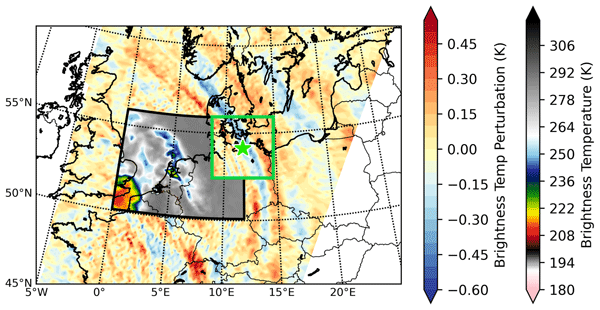
Eframir Franco-Diaz, Michael Gerding, Laura Holt, Irina Strelnikova, Robin Wing, Gerd Baumgarten, and Franz-Josef Lübken
Atmos. Chem. Phys., 24, 1543–1558, https://doi.org/10.5194/acp-24-1543-2024, https://doi.org/10.5194/acp-24-1543-2024, 2024
Short summary
Short summary
We use satellite, lidar, and ECMWF data to study storm-related waves that propagate above Kühlungsborn, Germany, during summer. Although these events occur in roughly half of the years of the satellite data we analyzed, we focus our study on two case study years (2014 and 2015). These events could contribute significantly to middle atmospheric circulation and are not accounted for in weather and climate models.
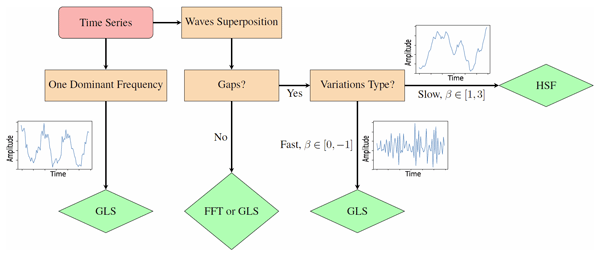
Mohamed Mossad, Irina Strelnikova, Robin Wing, and Gerd Baumgarten
Atmos. Meas. Tech., 17, 783–799, https://doi.org/10.5194/amt-17-783-2024, https://doi.org/10.5194/amt-17-783-2024, 2024
Short summary
Short summary
This numerical study addresses observational gaps' impact on atmospheric gravity wave spectra. Three methods, fast Fourier transform (FFT), generalized Lomb–Scargle periodogram (GLS), and Haar structure function (HSF), were tested on synthetic data. HSF is best for spectra with negative slopes. GLS excels for flat and positive slopes and identifying dominant frequencies. Accurately estimating these aspects is crucial for understanding gravity wave dynamics and energy transfer in the atmosphere.
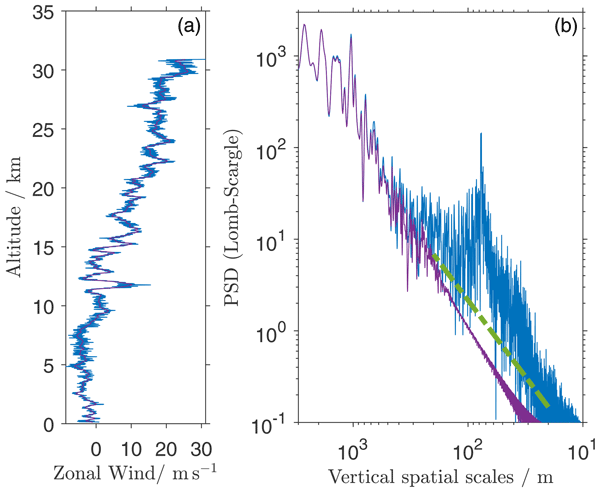
Jens Faber, Michael Gerding, and Torsten Köpnick
Atmos. Meas. Tech., 16, 4183–4193, https://doi.org/10.5194/amt-16-4183-2023, https://doi.org/10.5194/amt-16-4183-2023, 2023
Short summary
Short summary
Weather forecasters around the world use uncrewed balloons to measure wind and temperature for their weather models. In these measurements, wind is recorded from the shift of the balloon by the moving air. However, the balloons and the measurement devices also move by themselves in still air. This creates artificial wind measurements that are normally removed from the data. We show new techniques to avoid these movements and increase the altitude resolution of the wind measurement by 6 times.
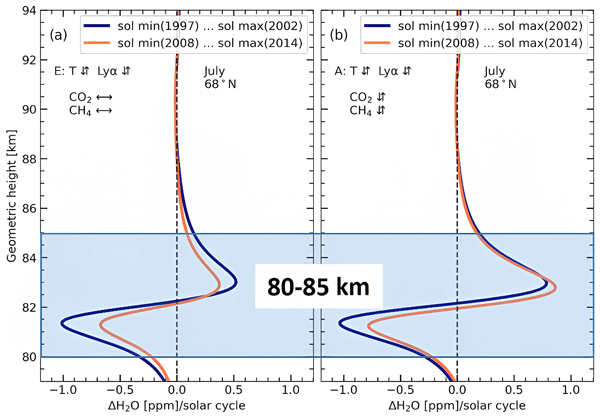
Ashique Vellalassery, Gerd Baumgarten, Mykhaylo Grygalashvyly, and Franz-Josef Lübken
Ann. Geophys., 41, 289–300, https://doi.org/10.5194/angeo-41-289-2023, https://doi.org/10.5194/angeo-41-289-2023, 2023
Short summary
Short summary
The solar cycle affects the H2O concentration in the upper mesosphere mainly in two ways: directly through photolysis and, at the time and place of NLC formation, indirectly through temperature changes. The H2O–Lyman-α response is modified by NLC formation, resulting in a positive response at the ice formation region (due to the temperature change effect on the ice formation rate) and a negative response at the sublimation zone (due to the photolysis effect).
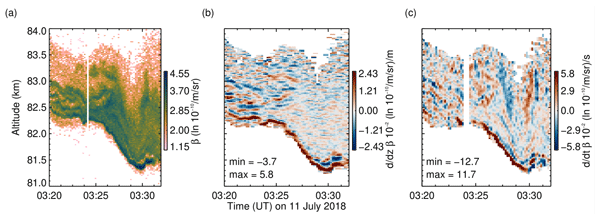
Natalie Kaifler, Bernd Kaifler, Markus Rapp, and David C. Fritts
Atmos. Chem. Phys., 23, 949–961, https://doi.org/10.5194/acp-23-949-2023, https://doi.org/10.5194/acp-23-949-2023, 2023
Short summary
Short summary
We used a lidar to measure polar mesospheric clouds from a balloon floating in the upper stratosphere. The thin-layered ice clouds at 83 km altitude are perturbed by waves. The high-resolution lidar soundings reveal small-scale structures induced by the breaking of those waves. We study these patterns and find that they occur very often. We show their morphology and discuss associated dynamical physical processes, which help to interpret case studies and to guide modelling.

Natalie Kaifler, Bernd Kaifler, Markus Rapp, and David C. Fritts
Earth Syst. Sci. Data, 14, 4923–4934, https://doi.org/10.5194/essd-14-4923-2022, https://doi.org/10.5194/essd-14-4923-2022, 2022
Short summary
Short summary
We measured polar mesospheric clouds (PMCs), our Earth’s highest clouds at the edge of space, with a Rayleigh lidar from a stratospheric balloon. We describe how we derive the cloud’s brightness and discuss the stability of the gondola pointing and the sensitivity of our measurements. We present our high-resolution PMC dataset that is used to study dynamical processes in the upper mesosphere, e.g. regarding gravity waves, mesospheric bores, vortex rings, and Kelvin–Helmholtz instabilities.
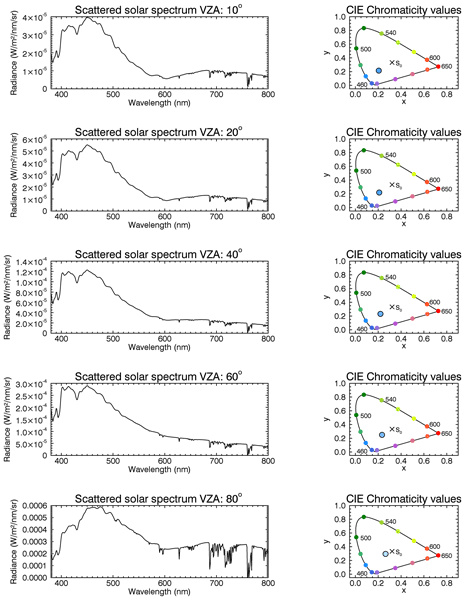
Anna Lange, Gerd Baumgarten, Alexei Rozanov, and Christian von Savigny
Ann. Geophys., 40, 407–419, https://doi.org/10.5194/angeo-40-407-2022, https://doi.org/10.5194/angeo-40-407-2022, 2022
Short summary
Short summary
We investigate the influence of different parameters on the colour of noctilucent clouds (highest clouds in the atmosphere), using radiative transfer calculations. We determined the effect of the particle size, optical depth, single scattering/multiple scattering and ozone. For sufficiently large optical depth and for specific viewing geometries, ozone plays only a minor role in the blueish colour of noctilucent clouds (new result).
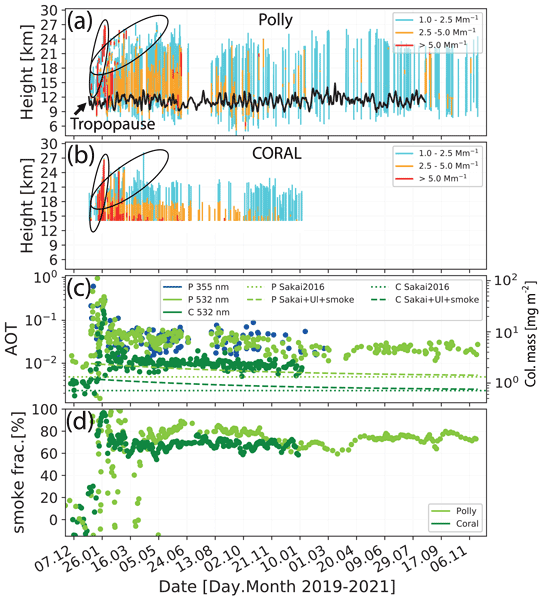
Kevin Ohneiser, Albert Ansmann, Bernd Kaifler, Alexandra Chudnovsky, Boris Barja, Daniel A. Knopf, Natalie Kaifler, Holger Baars, Patric Seifert, Diego Villanueva, Cristofer Jimenez, Martin Radenz, Ronny Engelmann, Igor Veselovskii, and Félix Zamorano
Atmos. Chem. Phys., 22, 7417–7442, https://doi.org/10.5194/acp-22-7417-2022, https://doi.org/10.5194/acp-22-7417-2022, 2022
Short summary
Short summary
We present and discuss 2 years of long-term lidar observations of the largest stratospheric perturbation by wildfire smoke ever observed. The smoke originated from the record-breaking Australian fires in 2019–2020 and affects climate conditions and even the ozone layer in the Southern Hemisphere. The obvious link between dense smoke occurrence in the stratosphere and strong ozone depletion found in the Arctic and in the Antarctic in 2020 can be regarded as a new aspect of climate change.
Stefanie Knobloch, Bernd Kaifler, and Markus Rapp
Atmos. Meas. Tech. Discuss., https://doi.org/10.5194/amt-2021-310, https://doi.org/10.5194/amt-2021-310, 2022
Preprint withdrawn
Short summary
Short summary
The study tests the quality of temperature measurements from the airborne Rayleigh lidar ALIMA. The ALIMA system was first used during the SouthTRAC campaign in September 2019 in the vicinity of the Southern Andes, Drake Passage and Antarctic Peninsula. The raw lidar measurements are additionally simulated based on reanalysis data for one research flight. Different types of uncertainty influencing the accuracy of the temperature measurements are studied, e.g. atmospheric and technical sources.
Cited articles
Baumgarten, G.: Doppler Rayleigh/Mie/Raman lidar for wind and temperature measurements in the middle atmosphere up to 80 km, Atmos. Meas. Tech., 3, 1509–1518, https://doi.org/10.5194/amt-3-1509-2010, 2010. a
Faust, B. and Klynning, L.: Low-cost wavemeter with a solid Fizeau interferometer and fiber-optic input, Appl. Optics, 30, 5254–5259, https://doi.org/10.1364/AO.30.005254, 1991. a
Fiedler, J. and Baumgarten, G.: The ALOMAR Rayleigh/Mie/Raman lidar: status after 30 years of operation, Atmos. Meas. Tech., 17, 5841–5859, https://doi.org/10.5194/amt-17-5841-2024, 2024. a, b, c, d
Gerding, M., Wing, R., Franco-Diaz, E., Baumgarten, G., Fiedler, J., Köpnick, T., and Ostermann, R.: The Doppler wind, temperature, and aerosol RMR lidar system at Kühlungsborn, Germany – Part 1: Technical specifications and capabilities, Atmos. Meas. Tech., 17, 2789–2809, https://doi.org/10.5194/amt-17-2789-2024, 2024. a
Hahn, J. W., Park, S. N., and Rhee, C.: Fabry-Perot wavemeter for shot-by-shot analysis of pulsed lasers, Appl. Optics, 32, 1095–1099, https://doi.org/10.1364/AO.32.001095, 1993. a
Jesse, O.: Die Beobachtung der leuchtenden Wolken, Meteorol. Z., 4, 179–181, 1887. a
Jones, F. E.: Radar as an aid to the study of the atmosphere, Aeronaut. J., 53, 433–448, 1949. a
Koo, J.-Y. and Akamatsu, I.: A simple real-time wavemeter for pulsed lasers, Meas. Sci. Technol., 2, 54–58, https://doi.org/10.1088/0957-0233/2/1/009, 1991. a
Maiman, T. H.: Stimulated optical radiation in ruby, Nature, 187, 493–494, 1960. a
Morris, M. B., McIlrath, T. J., and Snyder, J. J.: Fizeau wavemeter for pulsed laser wavelength measurement, Appl. Optics, 23, 3862–3868, https://doi.org/10.1364/AO.23.003862, 1984. a
Rahn, L. A.: Feedback stabilization of an injection-seeded Nd:YAG laser, Appl. Optics, 24, 940–942, 1985. a
Schaefer, H., Heinecke, D., Liebherr, T., and Battles, D.: An absolute frequency reference unit for space borne spectroscopy, in: International Conference on Space Optics – ICSO 2018, Proc. of SPIE, Vol. 11180, https://doi.org/10.1117/12.2536012, 2019. a
Schröder, T., Lemmerz, C., Reitebuch, O., Wirth, W., Wührer, C., and Treichel, R.: Frequency jitter and spectral width of an injection-seeded Q-switched Nd:YAG laser for a Doppler wind lidar, Appl. Phys. B, 87, 437–444, https://doi.org/10.1007/s00340-007-2627-5, 2007. a
Wang, K., Gao, C., Lin, Z., Wang, Q., Gao, M., Huang, S., and Chen, C.: 1645 nm coherent Doppler wind lidar with a single-frequency Er:YAG laser, Opt. Express, 28, 14694–14704, 2020. a
White, R. T., He, Y., Orr, B. J., Kono, M., and Baldwin, K. G. H.: Control of frequency chirp in nanosecond-pulsed laser spectroscopy. 1. Optical-heterodyne chirp analysis techniques, J. Opt. Sec. Am. B, 21, 1577–1585, 2004. a
Xia, H., Dou, X., Sun, D., Shu, Z., Xue, X., Han, Y., Hu, D., Han, Y., and Cheng, T.: Mid-altitude wind measurements with mobile Rayleigh Doppler lidar incorporating system-level optical frequency control method, Opt. Express, 20, 15286–15300, 2012. a
Short summary
We developed a system for frequency control and monitoring of pulsed high-power lasers. It works in real-time, controls the laser cavity length, and performs a spectral analyzes of each individual laser pulse. The motivation for this work was to improve the retrieval of Doppler winds measured by lidar in the middle atmosphere by taking the frequency stability of the lidar transmitter into account.
We developed a system for frequency control and monitoring of pulsed high-power lasers. It works...


