Articles | Volume 15, issue 1
https://doi.org/10.5194/gi-15-165-2026
© Author(s) 2026. This work is distributed under
the Creative Commons Attribution 4.0 License.
https://doi.org/10.5194/gi-15-165-2026
© Author(s) 2026. This work is distributed under
the Creative Commons Attribution 4.0 License.
A database-driven research data framework for integrating and processing high-dimensional geoscientific data

Institute of Geography, University of Cologne, 50923 Cologne, Germany
W. Marijn van der Meij
Institute of Geography, University of Cologne, 50923 Cologne, Germany
Mirijam Zickel
Institute of Geography, University of Cologne, 50923 Cologne, Germany
Tony Reimann
Institute of Geography, University of Cologne, 50923 Cologne, Germany
Related authors
No articles found.
Shuran Gao, Zhuodong Zhang, W. Marijn van der Meij, Yuxin Feng, Min Wu, and Yihua Song
EGUsphere, https://doi.org/10.5194/egusphere-2026-1837, https://doi.org/10.5194/egusphere-2026-1837, 2026
This preprint is open for discussion and under review for SOIL (SOIL).
Short summary
Short summary
In the study, we reprocessed mapping results using a catchment-based method to reveal how properties change vertically with depth and horizontally across the landscape. Vertically, variations arise from factors like parent material, topography and tree uprooting. Horizontally, soils reflect erosion by wind and water. We identified sensitive areas. By combining two approach, we can better visualize soil variability, supporting better land management decisions in environmentally sensitive zones.
W. Marijn van der Meij and Peter Finke
SOIL, 12, 165–186, https://doi.org/10.5194/soil-12-165-2026, https://doi.org/10.5194/soil-12-165-2026, 2026
Short summary
Short summary
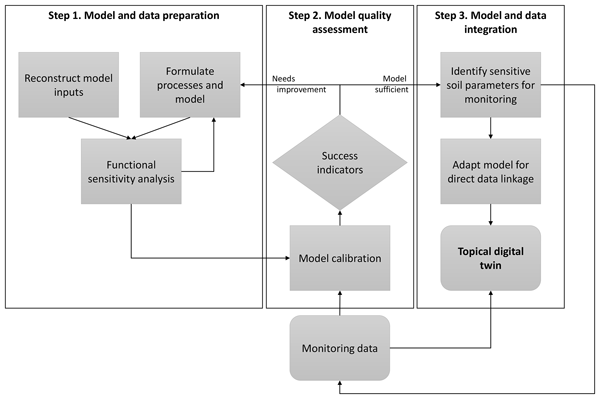
We used soil evolution model SoilGen to simulate long-term soil organic carbon (SOC) sequestration under varying environmental conditions and internal protection mechanisms. Our results revealed a strong role of pedogenetic and environmental history on current-day and future SOC sequestration potential. We propose a framework for developing topical digital twins of long-term soil processes to monitor and project future development of specific soil properties under global change.
Linda Andrea Elisabeth Maßon, Simon Matthias May, Svenja Riedesel, Willem Marijn van der Meij, Stephan Opitz, Andreas Peffeköver, and Tony Reimann
EGUsphere, https://doi.org/10.5194/egusphere-2025-5895, https://doi.org/10.5194/egusphere-2025-5895, 2025
Short summary
Short summary
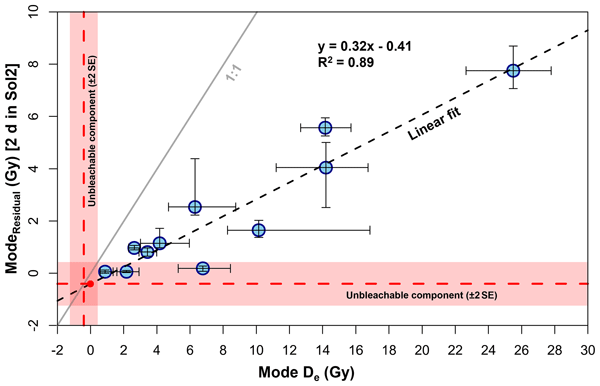
We investigated geomorphological activity and stability of surfaces and soils along a climatic transect in the Atacama Desert. Single grain luminescence data and sediment analyses reveal recent deposition and shallow post-depositional mixing. Two distinct phases of enhanced activity align with previously reported wetter intervals, demonstrating the sensitivity of arid landscape dynamics to climatic variability.
Linda A. E. Maßon, Svenja Riedesel, Stephan Opitz, Anja Zander, Anthony Bell, Hanna Cieszynski, and Tony Reimann
Geochronology, 7, 475–492, https://doi.org/10.5194/gchron-7-475-2025, https://doi.org/10.5194/gchron-7-475-2025, 2025
Short summary
Short summary
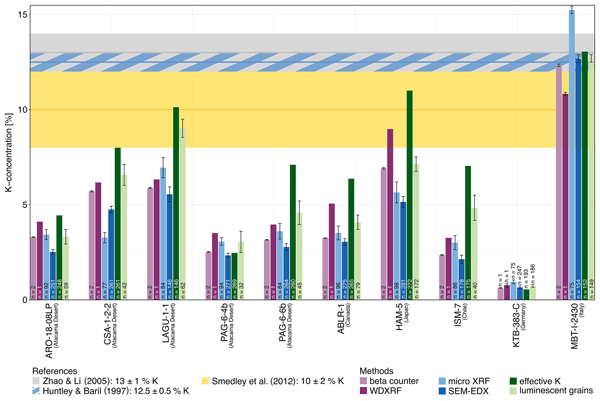
We evaluate different methods for the potassium (K) concentration determination in feldspars and the impact of the K concentrations on dose rate calculations for feldspar luminescence dating. Our results show discrepancies between published K concentrations and our measured K concentrations. Therefore, we emphasize measuring K concentrations via bulk measurements and single-grain techniques to obtain more accurate results.
Arindam Biswas, Svenja Riedesel, Louise Karman-Besson, Max Hellers, Anne Guyez, Stéphane Bonnet, and Tony Reimann
EGUsphere, https://doi.org/10.5194/egusphere-2025-4809, https://doi.org/10.5194/egusphere-2025-4809, 2025
Short summary
Short summary
We evaluate luminescence signal resetting in single-grain K-feldspar from modern fluvial analogues in Chile. Our results show that resetting efficiency is inversely related to the size of the natural luminescence signal. Additionally, high scatter in remaining natural signals at deposition challenges their use while dating old sedimentary deposits. We assess three correction methods for age calculation and explore various aspects relevant to luminescence-based sediment tracing applications.
W. Marijn van der Meij
Earth Surf. Dynam., 13, 845–860, https://doi.org/10.5194/esurf-13-845-2025, https://doi.org/10.5194/esurf-13-845-2025, 2025
Short summary
Short summary
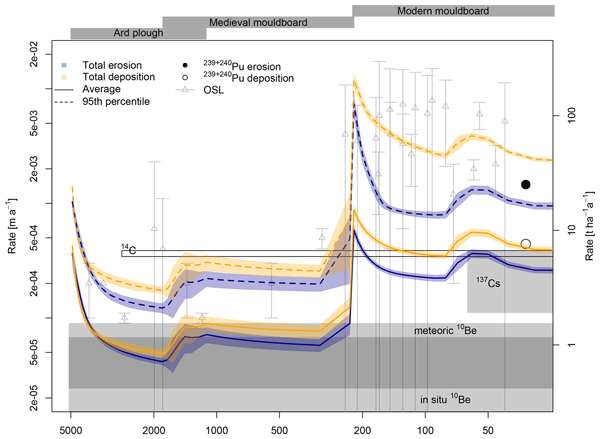
A soil-landscape evolution model was used to calculate hillslope erosion rates from OSL-based (Optically Stimulated Luminescence) deposition ages through inverse modelling, with consideration of uncertainties in model input. The results show that erosion rates differ systematically from the deposition rates, highlighting important shortcomings of assessing land degradation through measurable deposition rates.
W. Marijn van der Meij, Svenja Riedesel, and Tony Reimann
SOIL, 11, 51–66, https://doi.org/10.5194/soil-11-51-2025, https://doi.org/10.5194/soil-11-51-2025, 2025
Short summary
Short summary
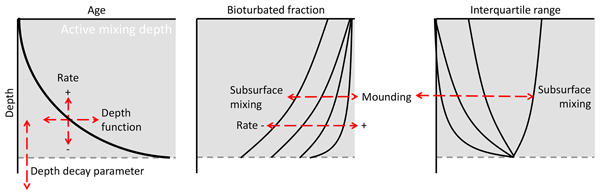
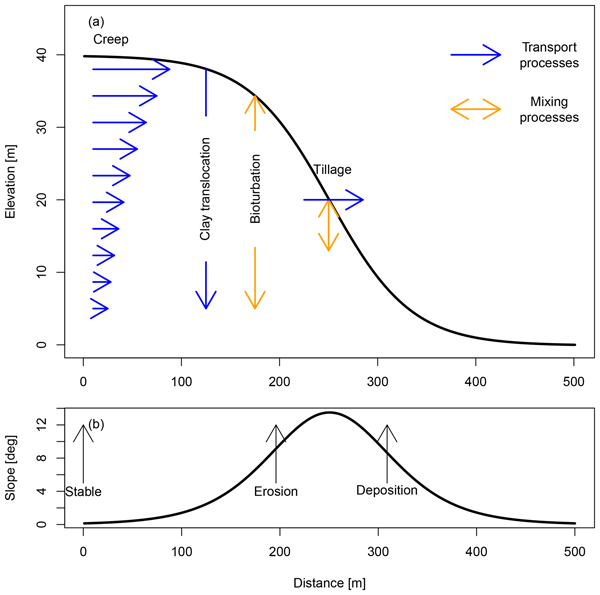
Soil mixing (bioturbation) plays a key role in soil functions, but the underlying processes are poorly understood and difficult to quantify. In this study, we use luminescence, a light-sensitive soil mineral property, and numerical models to better understand different types of bioturbation. We provide a conceptual model that helps to determine which types of bioturbation processes occur in a soil and a numerical model that can derive quantitative process rates from luminescence measurements.
Jungyu Choi, Roy van Beek, Elizabeth L. Chamberlain, Tony Reimann, Harm Smeenge, Annika van Oorschot, and Jakob Wallinga
SOIL, 10, 567–586, https://doi.org/10.5194/soil-10-567-2024, https://doi.org/10.5194/soil-10-567-2024, 2024
Short summary
Short summary
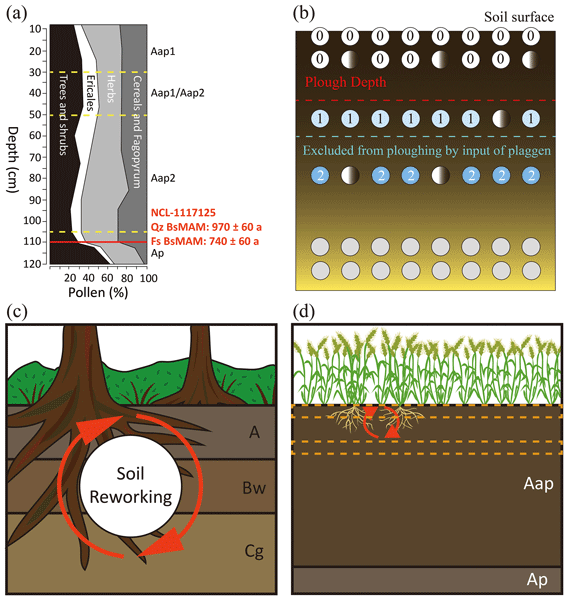
This research applies luminescence dating methods to a plaggic anthrosol in the eastern Netherlands to understand the formation history of the soil. To achieve this, we combined both quartz and feldspar luminescence dating methods. We developed a new method for feldspar to largely avoid the problem occurring from poorly bleached grains by examining two different signals from a single grain. Through our research, we were able to reconstruct the timing and processes of plaggic anthrosol formation.
Martin Kehl, Katharina Seeger, Stephan Pötter, Philipp Schulte, Nicole Klasen, Mirijam Zickel, Andreas Pastoors, and Erich Claßen
E&G Quaternary Sci. J., 73, 41–67, https://doi.org/10.5194/egqsj-73-41-2024, https://doi.org/10.5194/egqsj-73-41-2024, 2024
Short summary
Short summary
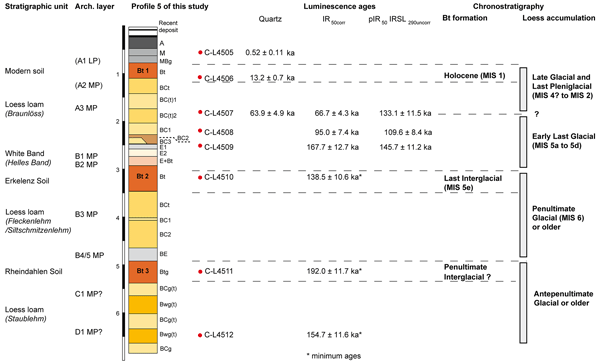
The loess–palaeosol sequence (LPS) at Rheindahlen provides a detailed sedimentary archive of past climate change. Furthermore, it contains Palaeolithic find horizons indicating repeated occupations by Neanderthals. The age of loess layers and the timing of human occupation are a matter of strong scientific debate. We present new data to shed light on formation processes and deposition ages. Previous chronostratigraphic estimates are revised providing a reliable chronostratigraphic framework .
Mirijam Zickel, Marie Gröbner, Astrid Röpke, and Martin Kehl
E&G Quaternary Sci. J., 73, 69–93, https://doi.org/10.5194/egqsj-73-69-2024, https://doi.org/10.5194/egqsj-73-69-2024, 2024
Short summary
Short summary
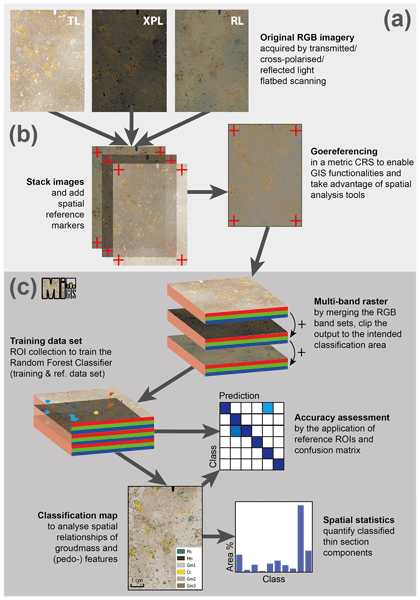
With our open-source toolbox, MiGIS for QGIS 3, we intend to advance digital micromorphological analysis. This approach focuses on the classification of micromorphological constituents based on their distinct colour values (multi-RGB signatures), acquired using flatbed scanning of thin sections in different modes (transmitted, cross-polarised, and reflected light). The resulting thin section maps enable feature quantification, visualisation of spatial patterns, and reproducibility.
Anna-Maartje de Boer, Wolfgang Schwanghart, Jürgen Mey, Basanta Raj Adhikari, and Tony Reimann
Geochronology, 6, 53–70, https://doi.org/10.5194/gchron-6-53-2024, https://doi.org/10.5194/gchron-6-53-2024, 2024
Short summary
Short summary
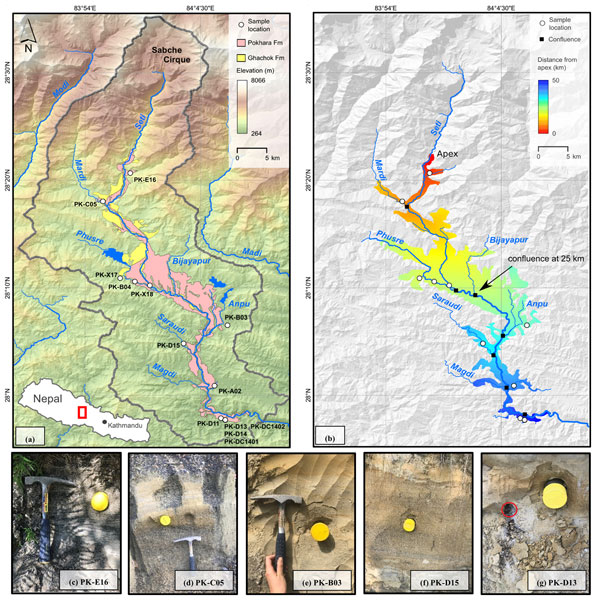
This study tested the application of single-grain feldspar luminescence for dating and reconstructing sediment dynamics of an extreme mass movement event in the Himalayan mountain range. Our analysis revealed that feldspar signals can be used to estimate the age range of the deposits if the youngest subpopulation from a sample is retrieved. The absence of clear spatial relationships with our bleaching proxies suggests that sediments were transported under extremely limited light exposure.
Jürgen Mey, Wolfgang Schwanghart, Anna-Maartje de Boer, and Tony Reimann
Geochronology, 5, 377–389, https://doi.org/10.5194/gchron-5-377-2023, https://doi.org/10.5194/gchron-5-377-2023, 2023
Short summary
Short summary
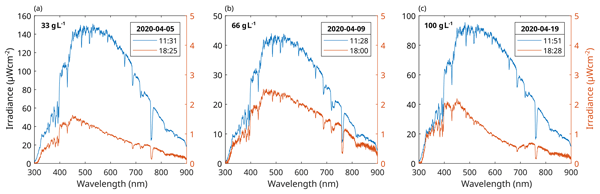
This study presents the results of an outdoor flume experiment to evaluate the effect of turbidity on the bleaching of fluvially transported sediment. Our main conclusions are that even small amounts of sediment lead to a substantial change in the intensity and frequency distribution of light within the suspension and that flow turbulence is an important prerequisite for bleaching grains during transport.
W. Marijn van der Meij, Arnaud J. A. M. Temme, Steven A. Binnie, and Tony Reimann
Geochronology, 5, 241–261, https://doi.org/10.5194/gchron-5-241-2023, https://doi.org/10.5194/gchron-5-241-2023, 2023
Short summary
Short summary
We present our model ChronoLorica. We coupled the original Lorica model, which simulates soil and landscape evolution, with a geochronological module that traces cosmogenic nuclide inventories and particle ages through simulations. These properties are often measured in the field to determine rates of landscape change. The coupling enables calibration of the model and the study of how soil, landscapes and geochronometers change under complex boundary conditions such as intensive land management.
W. Marijn van der Meij
SOIL, 8, 381–389, https://doi.org/10.5194/soil-8-381-2022, https://doi.org/10.5194/soil-8-381-2022, 2022
Short summary
Short summary
The development of soils and landscapes can be complex due to changes in climate and land use. Computer models are required to simulate this complex development. This research presents a new method to analyze and visualize the results of these models. This is done with the use of evolutionary pathways (EPs), which describe how soil properties change in space and through time. I illustrate the EPs with examples from the field and give recommendations for further use of EPs in soil model studies.
Cited articles
Chaudhuri, S. and Dayal, U.: An Overview of Data Warehousing and OLAP Technology, SIGMOD Rec., 26, 65–74, https://doi.org/10.1145/248603.248616, 1997. a
Codd, E. F.: A Relational Model of Data for Large Shared Data Banks, Commun. ACM, 13, 377–387, https://doi.org/10.1145/362384.362685, 1970. a
Crusoe, M. R., Abeln, S., Iosup, A., Amstutz, P., Chilton, J., Tijanić, N., Ménager, H., Soiland-Reyes, S., Gavrilović, B., Goble, C., and Community, T. C.: Methods Included: Standardizing Computational Reuse and Portability with the Common Workflow Language, Commun. ACM, 65, 54–63, https://doi.org/10.1145/3486897, 2022. a
Curdt, C., Hoffmeister, D., Kramm, T., Lang, U., and Bareth, G.: Etablierung von Forschungsdatenmanagement-Services in geowissenschaftlichen Sonderforschungsbereichen am Beispiel des SFB/Transregio 32, SFB 1211 und SFB/ Transregio 228, https://doi.org/10.17192/BFDM.2019.2.8103, 2019. a
De Castro, P., Herb, U., Rothfritz, L., and Schöpfel, J.: IGSN – Building and Expanding a Community-Driven PID System, Tech. rep., Zenodo, https://doi.org/10.5281/zenodo.7330498, 2023. a
Degen, D., Veroy, K., and Wellmann, F.: Certified Reduced Basis Method in Geosciences: Addressing the Challenge of High-Dimensional Problems, Computat. Geosci., 24, 241–259, https://doi.org/10.1007/s10596-019-09916-6, 2020. a, b
Deutsche Forschungsgemeinschaft: Guidelines for Safeguarding Good Research Practice. Code of Conduct, Zenodo, https://doi.org/10.5281/zenodo.6472827, 2022. a
European Commission, Directorate General for Research and Innovation, and PwC EU Services: Cost-Benefit Analysis for FAIR Research Data: Cost of Not Having FAIR Research Data, Publications Office, LU, https://doi.org/10.2777/02999, 2018. a
Faniel, I. M. and Jacobsen, T. E.: Reusing Scientific Data: How Earthquake Engineering Researchers Assess the Reusability of Colleagues' Data, Comp. Supp. Coop. Wor., 19, 355–375, https://doi.org/10.1007/s10606-010-9117-8, 2010. a, b, c
Fitschen, T., Schlemmer, A., Hornung, D., Tom Wörden, H., Parlitz, U., and Luther, S.: CaosDB – Research Data Management for Complex, Changing, and Automated Research Workflows, Data, 4, 83, https://doi.org/10.3390/data4020083, 2019. a
Gahegan, M.: Fourth Paradigm GIScience? Prospects for Automated Discovery and Explanation from Data, Int. J. Geogr. Inf. Sci., 34, 1–21, https://doi.org/10.1080/13658816.2019.1652304, 2020. a
Gärtner, H., Bergmann, A., and Schmidt, J.: Object-Oriented Modeling of Data Sources as a Tool for the Integration of Heterogeneous Geoscientific Information, Comput. Geosci., 27, 975–985, https://doi.org/10.1016/S0098-3004(00)00135-7, 2001. a, b, c, d
Glaser, B., Kienlin, T., Röpke, A., and Deutsche Forschungsgemeinschaft: Separiert Oder Integriert? Studien Zur Entwicklung, Organisation Und Sozialen Struktur Der Komplexen Bronzezeitlichen Tellsiedlung von Toboliu, Westrumänien. Teil 2: Naturwissenschaftliche Untersuchungen, https://gepris.dfg.de/gepris/projekt/436834905 (last access: 14 May 2026), 2020. a
Guizzardi, G.: Ontology, Ontologies and the “I” of FAIR, Data Intelligence, 2, 181–191, https://doi.org/10.1162/dint_a_00040, 2020. a
Handy, D. and van der Meij, M.: Cologne-Geomorphological-Software-Lab/CGDB: Implemented Dagster Boilerplate (v1.1.0), Zenodo [code], https://doi.org/10.5281/zenodo.17869730, 2026. a
Hornung, D., Spreckelsen, F., and Weiß, T.: Agile Research Data Management with Open Source: LinkAhead, ing.grid, 1, https://doi.org/10.48694/INGGRID.3866, 2024. a
IUSS Working Group (WRB): World Reference Base for Soil Resources. International Soil Classification System for Naming Soils and Creating Legends for Soil Maps, 4th edn., International Union of Soil Sciences (IUSS), Vienna, Austria, ISBN 979-8-9862451-1-9, 2022. a
Kingdon, A., Nayembil, M. L., Richardson, A. E., and Smith, A. G.: A Geodata Warehouse: Using Denormalisation Techniques as a Tool for Delivering Spatially Enabled Integrated Geological Information to Geologists, Comput. Geosci., 96, 87–97, https://doi.org/10.1016/j.cageo.2016.07.016, 2016. a, b, c, d
Klöcking, M., Wyborn, L., Lehnert, K. A., Ware, B., Prent, A. M., Profeta, L., Kohlmann, F., Noble, W., Bruno, I., Lambart, S., Ananuer, H., Barber, N. D., Becker, H., Brodbeck, M., Deng, H., Deng, K., Elger, K., De Souza Franco, G., Gao, Y., Ghasera, K. M., Hezel, D. C., Huang, J., Kerswell, B., Koch, H., Lanati, A. W., Ter Maat, G., Martínez-Villegas, N., Nana Yobo, L., Redaa, A., Schäfer, W., Swing, M. R., Taylor, R. J., Traun, M. K., Whelan, J., and Zhou, T.: Community Recommendations for Geochemical Data, Services and Analytical Capabilities in the 21st Century, Geochim. Cosmochim. Ac., 351, 192–205, https://doi.org/10.1016/j.gca.2023.04.024, 2023. a, b, c, d, e, f, g, h, i
Klump, J., Lehnert, K., Ulbricht, D., Devaraju, A., Elger, K., Fleischer, D., Ramdeen, S., and Wyborn, L.: Towards Globally Unique Identification of Physical Samples: Governance and Technical Implementation of the IGSN Global Sample Number, Data Science Journal, 20, 33, https://doi.org/10.5334/dsj-2021-033, 2021. a
Kottek, M., Grieser, J., Beck, C., Rudolf, B., and Rubel, F.: World Map of the Köppen-Geiger Climate Classification Updated, Meteorol. Z., 15, 259–263, https://doi.org/10.1127/0941-2948/2006/0130, 2006. a
Lannom, L., Koureas, D., and Hardisty, A. R.: FAIR Data and Services in Biodiversity Science and Geoscience, Data Intelligence, 2, 122–130, https://doi.org/10.1162/dint_a_00034, 2020. a, b
Leo, S., Crusoe, M. R., Rodríguez-Navas, L., Sirvent, R., Kanitz, A., De Geest, P., Wittner, R., Pireddu, L., Garijo, D., Fernández, J. M., Colonnelli, I., Gallo, M., Ohta, T., Suetake, H., Capella-Gutierrez, S., De Wit, R., Kinoshita, B. P., and Soiland-Reyes, S.: Recording Provenance of Workflow Runs with RO-Crate, PLOS ONE, 19, e0309210, https://doi.org/10.1371/journal.pone.0309210, 2024. a
Li, Z., Yang, C., Jin, B., Yu, M., Liu, K., Sun, M., and Zhan, M.: Enabling Big Geoscience Data Analytics with a Cloud-Based, MapReduce-Enabled and Service-Oriented Workflow Framework, PLOS ONE, 10, e0116781, https://doi.org/10.1371/journal.pone.0116781, 2015. a, b, c, d
Liakos, L. and Panagos, P.: Challenges in the Geo-Processing of Big Soil Spatial Data, Land, 11, 2287, https://doi.org/10.3390/land11122287, 2022. a
Mitchell, S. N., Lahiff, A., Cummings, N., Hollocombe, J., Boskamp, B., Field, R., Reddyhoff, D., Zarebski, K., Wilson, A., Viola, B., Burke, M., Archibald, B., Bessell, P., Blackwell, R., Boden, L. A., Brett, A., Brett, S., Dundas, R., Enright, J., Gonzalez-Beltran, A. N., Harris, C., Hinder, I., David Hughes, C., Knight, M., Mano, V., McMonagle, C., Mellor, D., Mohr, S., Marion, G., Matthews, L., McKendrick, I. J., Mark Pooley, C., Porphyre, T., Reeves, A., Townsend, E., Turner, R., Walton, J., and Reeve, R.: FAIR Data Pipeline: Provenance-Driven Data Management for Traceable Scientific Workflows, Philos. T. Roy. Soc. A, 380, 20210300, https://doi.org/10.1098/rsta.2021.0300, 2022. a, b, c
Mork, R., Martin, P., and Zhao, Z.: Contemporary Challenges for Data-Intensive Scientific Workflow Management Systems, in: Proceedings of the 10th Workshop on Workflows in Support of Large-Scale Science, 1–11, ACM, Austin Texas, ISBN 978-1-4503-3989-6, https://doi.org/10.1145/2822332.2822336, 2015. a
Nikparvar, B. and Thill, J.-C.: Machine Learning of Spatial Data, ISPRS Int. J. Geo-Inform., 10, 1–32, https://doi.org/10.3390/ijgi10090600, 2021. a
Picatto, H., Heiler, G., and Klimek, P.: Cost-Effective Big Data Orchestration Using Dagster: A Multi-Platform Approach, arXiv [preprint], https://doi.org/10.48550/arxiv.2408.11635, 2024. a, b, c
Raasveldt, M. and Mühleisen, H.: DuckDB: An Embeddable Analytical Database, in: Proceedings of the 2019 International Conference on Management of Data, 1981–1984, ACM, Amsterdam, the Netherlands, ISBN 978-1-4503-5643-5, https://doi.org/10.1145/3299869.3320212, 2019. a
Raj, A., Bosch, J., Olsson, H. H., and Wang, T. J.: Modelling Data Pipelines, in: 2020 46th Euromicro Conference on Software Engineering and Advanced Applications (SEAA), 13–20, IEEE, Portoroz, Slovenia, ISBN 978-1-7281-9532-2, https://doi.org/10.1109/SEAA51224.2020.00014, 2020. a
Soiland-Reyes, S., Sefton, P., Crosas, M., Castro, L. J., Coppens, F., Fernández, J. M., Garijo, D., Grüning, B., La Rosa, M., Leo, S., Ó Carragáin, E., Portier, M., Trisovic, A., RO-Crate Community, Groth, P., and Goble, C.: Packaging Research Artefacts with RO-Crate, Data Science, 5, 97–138, https://doi.org/10.3233/DS-210053, 2022. a, b
Soil Science Division Staff: Soil Survey Manual, no. 18 in USDA Handbook, Government Printing Office, Washington, D.C., ISBN 9780160937439, 2017. a
Stocker, M., Paasonen, P., Fiebig, M., Zaidan, M. A., and Hardisty, A.: Curating Scientific Information in Knowledge Infrastructures, Data Science Journal, 17, 21, https://doi.org/10.5334/dsj-2018-021, 2018. a
Suter, F., Coleman, T., Altintaş, İ., Badia, R. M., Balis, B., Chard, K., Colonnelli, I., Deelman, E., Di Tommaso, P., Fahringer, T., Goble, C., Jha, S., Katz, D. S., Köster, J., Leser, U., Mehta, K., Oliver, H., Peterson, J.-L., Pizzi, G., Pottier, L., Sirvent, R., Suchyta, E., Thain, D., Wilkinson, S. R., Wozniak, J. M., and Ferreira Da Silva, R.: A Terminology for Scientific Workflow Systems, Future Gener. Comp. Sy., 174, 107974, https://doi.org/10.1016/j.future.2025.107974, 2026. a, b
Tedersoo, L., Küngas, R., Oras, E., Köster, K., Eenmaa, H., Leijen, Ä., Pedaste, M., Raju, M., Astapova, A., Lukner, H., Kogermann, K., and Sepp, T.: Data Sharing Practices and Data Availability upon Request Differ across Scientific Disciplines, Scientific Data, 8, 192, https://doi.org/10.1038/s41597-021-00981-0, 2021. a, b
Thomer, A. K. and Wickett, K. M.: Relational Data Paradigms: What Do We Learn by Taking the Materiality of Databases Seriously?, Big Data & Society, 7, 205395172093483, https://doi.org/10.1177/2053951720934838, 2020. a, b, c
Vance, T. C., Huang, T., and Butler, K. A.: Big Data in Earth Science: Emerging Practice and Promise, Science, 383, eadh9607, https://doi.org/10.1126/science.adh9607, 2024. a, b, c
Van Den Brink, L., Barnaghi, P., Tandy, J., Atemezing, G., Atkinson, R., Cochrane, B., Fathy, Y., García Castro, R., Haller, A., Harth, A., Janowicz, K., Kolozali, Ş., Van Leeuwen, B., Lefrançois, M., Lieberman, J., Perego, A., Le-Phuoc, D., Roberts, B., Taylor, K., and Troncy, R.: Best Practices for Publishing, Retrieving, and Using Spatial Data on the Web, Semant. Web, 10, 95–114, https://doi.org/10.3233/SW-180305, 2018. a, b
Wilkinson, M. D., Dumontier, M., Aalbersberg, I. J., Appleton, G., Axton, M., Baak, A., Blomberg, N., Boiten, J.-W., Da Silva Santos, L. B., Bourne, P. E., Bouwman, J., Brookes, A. J., Clark, T., Crosas, M., Dillo, I., Dumon, O., Edmunds, S., Evelo, C. T., Finkers, R., Gonzalez-Beltran, A., Gray, A. J., Groth, P., Goble, C., Grethe, J. S., Heringa, J., 'T Hoen, P. A., Hooft, R., Kuhn, T., Kok, R., Kok, J., Lusher, S. J., Martone, M. E., Mons, A., Packer, A. L., Persson, B., Rocca-Serra, P., Roos, M., Van Schaik, R., Sansone, S.-A., Schultes, E., Sengstag, T., Slater, T., Strawn, G., Swertz, M. A., Thompson, M., Van Der Lei, J., Van Mulligen, E., Velterop, J., Waagmeester, A., Wittenburg, P., Wolstencroft, K., Zhao, J., and Mons, B.: The FAIR Guiding Principles for Scientific Data Management and Stewardship, Scientific Data, 3, 160018, https://doi.org/10.1038/sdata.2016.18, 2016. a, b, c, d
Willmes, C., Kürner, D., and Bareth, G.: Building Research Data Management Infrastructure Using Open Source Software, T. GIS, 18, 496–509, https://doi.org/10.1111/tgis.12060, 2014. a
Short summary
Geoscientific projects often struggle to manage complex data effectively, resulting in valuable information being lost due to poor findability and accessibility. To address this, we present a comprehensive research data framework for storing and processing data throughout a project, from fieldwork to data analysis. This ensures that datasets are clearly defined, reproducible and adhere to the FAIR principles (findability, accessibility, interoperability and reusability).
Geoscientific projects often struggle to manage complex data effectively, resulting in valuable...