
Articles | Volume 15, issue 2
https://doi.org/10.5194/gi-15-253-2026
© Author(s) 2026. This work is distributed under
the Creative Commons Attribution 4.0 License.
the Creative Commons Attribution 4.0 License.
https://doi.org/10.5194/gi-15-253-2026
© Author(s) 2026. This work is distributed under
the Creative Commons Attribution 4.0 License.
the Creative Commons Attribution 4.0 License.
Research article
| 
08 Oct 2026
Research article |
| 08 Oct 2026
| 08 Oct 2026
The ECOSENSE forest: a distributed sensor and data management system for real-time monitoring of ecosystem processes and stresses
Jasmin Tesch
CORRESPONDING AUTHOR

Chair of Hydrology, Institute of Earth and Environmental Sciences, University of Freiburg, Freiburg, 79098, Germany
Kathrin Kühnhammer
CORRESPONDING AUTHOR
Chair of Ecosystem Physiology, Institute of Earth and Environmental Sciences, University of Freiburg, Freiburg, 79110, Germany
Delon Wagner
Chair of Ecosystem Physiology, Institute of Earth and Environmental Sciences, University of Freiburg, Freiburg, 79110, Germany
Andreas Christen
Chair of Environmental Meteorology, Institute of Earth and Environmental Sciences, University of Freiburg, Freiburg, 79085, Germany
Carsten Dormann
Chair of Biometry and Environmental System Analysis, Institute of Earth and Environmental Sciences, University of Freiburg, Freiburg, 79106, Germany
Julian Frey
Chair of Forest Growth and Dendroecology, Institute of Forest Sciences, University of Freiburg, Freiburg, 79106, Germany
Rüdiger Grote
Institute of Meteorology and Climate Research, Atmospheric Environmental Research (IMKIFU), Karlsruhe Institute of Technology (KIT), Garmisch-Partenkirchen, 82467, Germany
Teja Kattenborn
Chair of Sensor-based Geoinformatics (geosense), Faculty of Environment and Natural Resources, University of Freiburg, Freiburg, 79106, Germany
Markus Sulzer
Chair of Environmental Meteorology, Institute of Earth and Environmental Sciences, University of Freiburg, Freiburg, 79085, Germany
Ulrike Wallrabe
Laboratory for Microactuators, Department of Microsystems Engineering – IMTEK, University of Freiburg, Freiburg, 79110, Germany
Markus Weiler
Chair of Hydrology, Institute of Earth and Environmental Sciences, University of Freiburg, Freiburg, 79098, Germany
Christiane Werner
Chair of Ecosystem Physiology, Institute of Earth and Environmental Sciences, University of Freiburg, Freiburg, 79110, Germany
Samaneh Baghbani
Laboratory for Electrical Instrumentation and Embedded Systems – IMTEK, University of Freiburg, Freiburg, 79110, Germany
Julian Brzozon
Chair of Soil Ecology, Institute of Forest Sciences, University of Freiburg, Freiburg, 79098, Germany
Laura Maria Comella
Institute of Energy Efficient Mobility, Karlsruhe University of Applied Sciences, Karlsruhe, 76133, Germany
Lea Dedden
Chair of Hydrology, Institute of Earth and Environmental Sciences, University of Freiburg, Freiburg, 79098, Germany
Stefanie Dumberger
Chair of Ecosystem Physiology, Institute of Earth and Environmental Sciences, University of Freiburg, Freiburg, 79110, Germany
Yasmina Frey
Laboratory for Microactuators, Department of Microsystems Engineering – IMTEK, University of Freiburg, Freiburg, 79110, Germany
Matthias Gassilloud
Chair of Sensor-based Geoinformatics (geosense), Faculty of Environment and Natural Resources, University of Freiburg, Freiburg, 79106, Germany
Timo Gerach
Laboratory for the Design of Microsystems – IMTEK, University of Freiburg, Freiburg, 79110, Germany
Anna Göritz
Chair of Sensor-based Geoinformatics (geosense), Faculty of Environment and Natural Resources, University of Freiburg, Freiburg, 79106, Germany
Simon Haberstroh
Chair of Ecosystem Physiology, Institute of Earth and Environmental Sciences, University of Freiburg, Freiburg, 79110, Germany
Johannes Klüppel
Laboratory for the Design of Microsystems – IMTEK, University of Freiburg, Freiburg, 79110, Germany
Luis Kremer
Chair of Sensor-based Geoinformatics (geosense), Faculty of Environment and Natural Resources, University of Freiburg, Freiburg, 79106, Germany
Jürgen Kreuzwieser
Chair of Ecosystem Physiology, Institute of Earth and Environmental Sciences, University of Freiburg, Freiburg, 79110, Germany
Hojin Lee
Chair of Ecosystem Physiology, Institute of Earth and Environmental Sciences, University of Freiburg, Freiburg, 79110, Germany
Joachim Maack
Chair of Sensor-based Geoinformatics (geosense), Faculty of Environment and Natural Resources, University of Freiburg, Freiburg, 79106, Germany
Julian Müller
Chair of Ecosystem Physiology, Institute of Earth and Environmental Sciences, University of Freiburg, Freiburg, 79110, Germany
Oswald Prucker
Laboratory for Chemistry & Physics of Interfaces, Department of Microsystems Engineering – IMTEK, University of Freiburg, Freiburg, 79110, Germany
Sanam K. Rajak
Laboratory for Chemistry & Physics of Interfaces, Department of Microsystems Engineering – IMTEK, University of Freiburg, Freiburg, 79110, Germany
Jürgen Rühe
Laboratory for Chemistry & Physics of Interfaces, Department of Microsystems Engineering – IMTEK, University of Freiburg, Freiburg, 79110, Germany
Stefan J. Rupitsch
Laboratory for Electrical Instrumentation and Embedded Systems – IMTEK, University of Freiburg, Freiburg, 79110, Germany
Helmer Schack-Kirchner
Chair of Soil Ecology, Institute of Forest Sciences, University of Freiburg, Freiburg, 79098, Germany
Christian Scharinger
XR Future Forests Lab, Faculty of Environment and Natural Resources, University of Freiburg, Freiburg, 79106, Germany
Uttunga Shinde
Laboratory for the Design of Microsystems – IMTEK, University of Freiburg, Freiburg, 79110, Germany
Till Steinmann
Laboratory for Electrical Instrumentation and Embedded Systems – IMTEK, University of Freiburg, Freiburg, 79110, Germany
Clara Stock
Chair of Ecosystem Physiology, Institute of Earth and Environmental Sciences, University of Freiburg, Freiburg, 79110, Germany
Josef Strack
Chair of Ecosystem Physiology, Institute of Earth and Environmental Sciences, University of Freiburg, Freiburg, 79110, Germany
Related authors
No articles found.
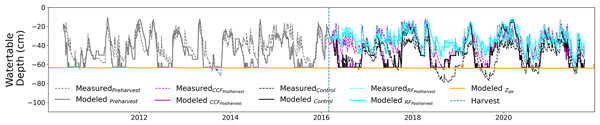
Ahmed Hasan Shahriyer, David Kraus, Tiina Markkanen, Mika Korkiakoski, Helena Rautakoski, Suvi Orttenvuori, Yao Gao, Henri Kajasilta, Rüdiger Grote, Annalea Lohila, and Tuula Aalto
Geosci. Model Dev., 19, 8815–8838, https://doi.org/10.5194/gmd-19-8815-2026, https://doi.org/10.5194/gmd-19-8815-2026, 2026
Short summary
Short summary
Using the process-based model LandscapeDNDC, we successfully simulated the hydrological and carbon-cycle responses of a drained peatland ecosystem under control, rotational forestry and continuous cover forestry management. The developed framework provides a valuable tool for evaluating future management scenarios and supporting the development of forest management strategies aimed at achieving climate neutrality in peatland ecosystems.
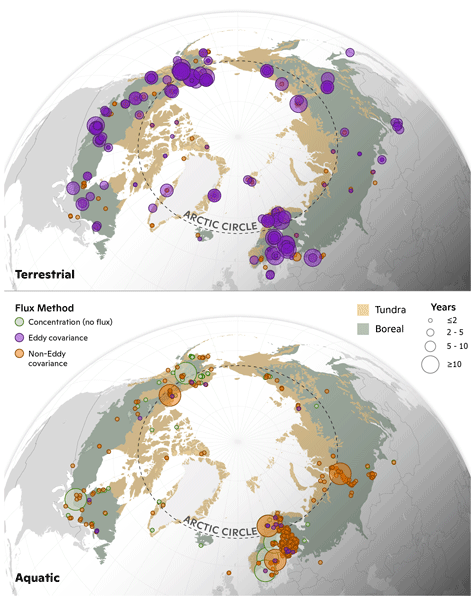
Anna-Maria Virkkala, Isabel Wargowsky, Judith Vogt, McKenzie A. Kuhn, Simran Madaan, Tiffany Windholz, Kyle A. Arndt, Gerard Rocher-Ros, Mathias Göckede, David Olefeldt, Edward A. G. Schuur, David Bastviken, Richard O'Keefe, Brendan M. Rogers, Jennifer D. Watts, Kelcy Kent, Kristoffer Aalstad, Kelly Aho, Joonatan Ala-Könni, Haley Alcock, Inge Althuizen, Christopher D. Arp, Jun Asanuma, Mika Aurela, Sivakiruthika Balathandayuthabani, Katrin Attermeyer, Alan Barr, Maialen Barret, Ochirbat Batkhishig, Christina Biasi, Mats P. Björkman, Andrew Black, Elena Blanc-Betes, Pascal Bodmer, Julia Boike, Abdullah Bolek, Frédéric Bouchard, Ingeborg Bussmann, Lea Cabrol, Eleonora Canfora, Sean Carey, Karel Castro-Morales, Namyi Chae, Andreas Christen, Torben R. Christensen, Casper T. Christiansen, Housen Chu, Graham Clark, Francois Clayer, Patrick Crill, Christopher Cunada, Scott J. Davidson, Joshua F. Dean, Sigrid Dengel, Matteo Detto, Catherine Dieleman, Florent Domine, Egor Dyukarev, Colin Edgar, Bo Elberling, Craig A. Emmerton, Eugenie Euskirchen, Grant Falvo, Thomas Friborg, Michelle Garneau, Mariasilvia Giamberini, Mikhail V. Glagolev, Miquel A. Gonzalez-Meler, Gustaf Granath, Jón Guðmundsson, Konsta Happonen, Yoshinobu Harazono, Lorna Harris, Josh Hashemi, Nicholas Hasson, Janna Heerah, Liam Heffernan, Manuel Helbig, Warren Helgason, Michal Heliasz, Greg Henry, Geert Hensgens, Tetsuya Hiyama, Beth Holmes, Macall Hock, David Holl, Jutta Holst, Thomas Holst, Gabriel Hould-Gosselin, Elyn Humphreys, Jacqueline Hung, Jussi Huotari, Hiroki Ikawa, Danil V. Ilyasov, Mamoru Ishikawa, Go Iwahana, Hiroki Iwata, Marcin Antoni Jackowicz-Korczynski, Joachim Jansen, Järvi Järveoja, Vincent E. J. Jassey, Rasmus Jensen, Katharina Jentzsch, Robert G. Jespersen, Carl-Fredrik Johannesson, Cheristy P. Jones, Anders Jonsson, Ji Young Jung, Sari Juutinen, Evan Kane, Jan Karlsson, Sergey Karsanaev, Kuno Kasak, Julia Kelly, Kasha Kempton, Marcus Klaus, George W. Kling, Natascha Kljun, Jacqueline Knutson, Hideki Kobayashi, John Kochendorfer, Kukka-Maaria Kohonen, Pasi Kolari, Mika Korkiakoski, Aino Korrensalo, Pirkko Kortelainen, Egle Koster, Kajar Koster, Ayumi Kotani, Praveena Krishnan, Juliya Kurbatova, Lars Kutzbach, Min Jung Kwon, Ethan D. Kyzivat, Jessica Lagroix, Theodore Langhorst, Elena Lapshina, Tuula Larmola, Klaus S. Larsen, Isabelle Laurion, Justin Ledman, Hanna Lee, A. Joshua Leffler, Lance Lesack, Anders Lindroth, David Lipson, Annalea Lohila, Efrén López-Blanco, Vincent L. St. Louis, Erik Lundin, Miska Luoto, Takashi Machimura, Marta Magnani, Avni Malhotra, Marja Maljanen, Ivan Mammarella, Elisa Männistö, Luca Belelli Marchesini, Phil Marsh, Pertti J. Martikainen, Maija E. Marushchak, Mikhail Mastepanov, Alex Mavrovic, Trofim Maximov, Christina Minions, Daniel F. Nadeau, Marco Montemayor, Tomoaki Morishita, Patrick Murphy, Erin Nicholls, Mats B. Nilsson, Anastasia Niyazova, Jenni Nordén, Koffi Dodji Noumonvi, Hannu Nykänen, Walter Oechel, Anne Ojala, Tomohiro Okadera, Sujan Pal, Alexey V. Panov, Tim Papakyriakou, Dario Papale, Sang-Jong Park, Frans-Jan W. Parmentier, Gilberto Pastorello, Mike Peacock, Matthias Peichl, Roman Petrov, Kyra St. Pierre, Norbert Pirk, Jessica Plein, Vilmantas Preskienis, Anatoly Prokushkin, Jukka Pumpanen, Hilary A. Rains, Niklas Rakos, Aleksi Räsänen, Helena Rautakoski, Riikka Rinnan, Janne Rinne, Adrian Rocha, Nigel Roulet, Alexandre Roy, Anna Rutgersson, Aleksandr F. Sabrekov, Torsten Sachs, Erik Sahlée, Alejandro Salazar, Henrique Oliveira Sawakuchi, Christopher Schulze, Roger Seco, Armando Sepulveda-Jauregui, Svetlana Serikova, Abbey Serrone, Hanna M. Silvennoinen, Sofie Sjogersten, June Skeeter, Jo Snöälv, Sebastian Sobek, Oliver Sonnentag, Emily H. Stanley, Maria Strack, Lena Strom, Patrick Sullivan, Ryan Sullivan, Anna Sytiuk, Torbern Tagesson, Pierre Taillardat, Julie Talbot, Suzanne E. Tank, Mario Tenuta, Irina Terenteva, Frederic Thalasso, Antoine Thiboult, Halldor Thorgeirsson, Fenix Garcia Tigreros, Margaret Torn, Amy Townsend-Small, Claire Treat, Alain Tremblay, Carlo Trotta, Eeva-Stiina Tuittila, Merritt Turetsky, Masahito Ueyama, Muhammad Umair, Aki Vähä, Lona van Delden, Maarten van Hardenbroek, Andrej Varlagin, Ruth K. Varner, Tarmo Virtanen, Elena Veretennikova, Timo Vesala, Carolina Voigt, Jorien E. Vonk, Robert Wagner, Katey Walter Anthony, Qinxue Wang, Masataka Watanabe, Hailey Webb, Jeffrey M. Welker, Andreas Westergaard-Nielsen, Sebastian Westermann, Jeffrey R. White, Christian Wille, Scott N. Williamson, Scott Zolkos, Donatella Zona, and Susan M. Natali
Earth Syst. Sci. Data, 18, 6357–6409, https://doi.org/10.5194/essd-18-6357-2026, https://doi.org/10.5194/essd-18-6357-2026, 2026
Short summary
Short summary
This dataset includes monthly measurements of carbon dioxide and methane exchange between land, water, and the atmosphere from over 1000 sites in Arctic and boreal regions. It combines measurements from a variety of ecosystems, including wetlands, forests, tundra, lakes, and rivers, gathered by over 260 researchers from 1984–2024. This dataset can be used to improve and reduce uncertainty in carbon budgets in order to strengthen our understanding of climate feedbacks in a warming world.
Alohotsy Rafalimanana, Thomas Lauvaux, Charbel Abdallah, Mali Chariot, Michel Ramonet, Josselin Doc, Olivier Laurent, Morgan Lopez, Anja Raznjevic, Maarten Krol, Leena Järvi, Andreas Christen, Dana Looschelders, Leslie David, Olivier Sanchez, Laura Bignotti, Benjamin Loubet, Sue Grimmond, and William Morrison
EGUsphere, https://doi.org/10.5194/egusphere-2026-2581, https://doi.org/10.5194/egusphere-2026-2581, 2026
Short summary
Short summary
Using WRF-Chem simulations over Greater Paris at resolutions from 900 m to 100 m (LES), we show that horizontal resolution critically shapes urban CO2 plume structure. Mesoscale runs underestimate spatial contrasts by a factor of 2–3, with representativeness errors of 29–61 % (near-surface) and 21–59 % (XCO2). LES improves intra-urban variability and enables more accurate spatial attribution of emissions, a key step toward reliable top-down estimates for city-scale climate mitigation.
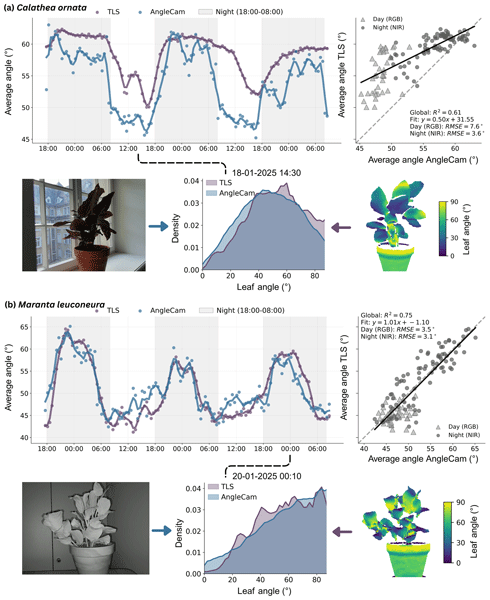
Luis Kremer, Jan Pisek, Ronny Richter, Julian Frey, Daniel Lusk, Christiane Werner, Christian Wirth, and Teja Kattenborn
Biogeosciences, 23, 5607–5624, https://doi.org/10.5194/bg-23-5607-2026, https://doi.org/10.5194/bg-23-5607-2026, 2026
Short summary
Short summary
To adapt to changing environmental conditions, plants can adjust their leaf angles. We developed AngleCam V2, an AI method that estimates leaf inclination angles from photos taken during day and night. Trained on thousands of images from about 200 species, it monitors daily changes in leaf angle, aligns with laser-scanning data, and detects systematic shifts under water limitation. AngleCam V2 provides an open-source tool for monitoring leaf angle dynamics over time, taxa, and environments.
Lea Dedden and Markus Weiler
EGUsphere, https://doi.org/10.5194/egusphere-2026-4703, https://doi.org/10.5194/egusphere-2026-4703, 2026
Short summary
Short summary
Using a dense 400 sensor network over 2.5 years, we studied how tree types influence forest soil moisture. We found soil moisture varies largely in space and time. In pure tree plots, the moisture variability peaks during intermediate wetness – when vegetation influence is strongest – but remains low during dry and wet phases. Consistently wet and dry zones indicate that spatial pattern are temporally stable. This work highlights small-scale spatiotemporal variability of forest water fluxes.
Jonas Pyschik, Veronica Cordero, Jakob Wilk, Veronika Lechner, Emanuel Thoenes, Stefan Achleitner, Bernhard Kohl, Markus Weiler, and Stefan Hergarten
EGUsphere, https://doi.org/10.5194/egusphere-2026-4469, https://doi.org/10.5194/egusphere-2026-4469, 2026
Short summary
Short summary
When it rains, much of the water reaching a stream has been stored in the soil for a long time, but why was unclear. We sprinkled two forested slopes with labelled water and used electrical imaging to watch it move. Only a small share moved quickly to the slope base; most of the outflow was older water pushed out by the pressure of the new rain. Much of the new water stayed in the topsoil and was released weeks later, affecting how soils carry nutrients and pollutants to streams.
Dana Looschelders, Andreas Christen, Sue Grimmond, Simone Kotthaus, and William Morrison
EGUsphere, https://doi.org/10.5194/egusphere-2026-2444, https://doi.org/10.5194/egusphere-2026-2444, 2026
Short summary
Short summary
Using seven automatic lidar-ceilometers located on a 105 km transect in the Paris region, we investigate modifications of the mixed-layer height (MLH) dynamics. Over and downwind of Paris, MLHs are deeper and grow faster during the morning transition. In summer, the spatial extent of urban effects (> 60 km downwind) and absolute MLH spatial differences are larger. In winter, relative MLH differences are larger. The MLH is deeper in the city at the start of the morning transition.
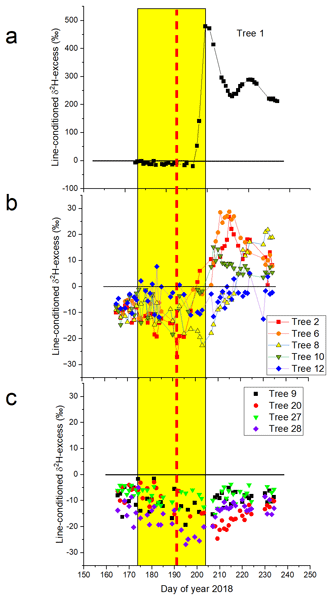
John D. Marshall, Maren Dubbert, Teresa E. Gimeno, Ruth-Kristina Magh, Kathrin Kühnhammer, David Dubbert, Paul Koeniger, Matthias Cuntz, and Matthias Beyer
Hydrol. Earth Syst. Sci., 30, 4757–4770, https://doi.org/10.5194/hess-30-4757-2026, https://doi.org/10.5194/hess-30-4757-2026, 2026
Short summary
Short summary
Water transport in forest soils occurs both vertically and horizontally. We added a stable isotope label to a small forest plot and monitored its passage vertically into the soil and horizontally into stems of surrounding trees. The labelled water was detected in the upper layers of the soil and in trees up to 6.7 m away, but was mostly taken up by one tree adjacent to the plot. These results affect how we think about summing over individual trees to describe the water economy of a whole forest.
Emanuel Thoenes, Theresa Blume, Markus Weiler, Bernhard Kohl, Luisa Hopp, and Stefan Achleitner
Hydrol. Earth Syst. Sci., 30, 4405–4436, https://doi.org/10.5194/hess-30-4405-2026, https://doi.org/10.5194/hess-30-4405-2026, 2026
Short summary
Short summary
Subsurface stormflow (SSF) is a key runoff mechanism in upland environments. The analysis of SSF at two trenched hillslopes showed that SSF volume was controlled by total rainfall and initial wetness. Peakflow depended on rainfall amount, with initial wetness and rainfall intensity being important for small and large events, respectively. The rate at which SSF increased was linked to rainfall intensity and amount.
Heinke Paulsen and Markus Weiler
Hydrol. Earth Syst. Sci., 30, 4305–4319, https://doi.org/10.5194/hess-30-4305-2026, https://doi.org/10.5194/hess-30-4305-2026, 2026
Short summary
Short summary
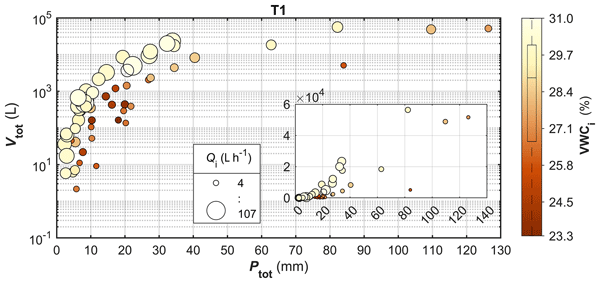
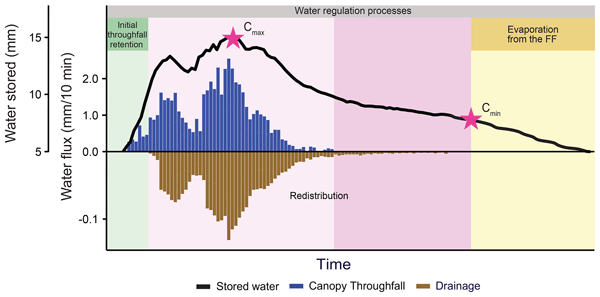
Using 12 Forest floor (FF) lysimeters at three beech‑dominated sites, we recorded 1570 rain events and measured throughfall, drainage, and evaporation. Initial retention depended on pre‑event moisture, not litter thickness. Low‑intensity, long‑duration rains filled the FF more efficiently than brief, intense storms. Evaporation was low and consistent across sites, showing the FF protects the soil. Spatial data revealed frequent water redistribution, creating heterogeneous flow paths.
Pia Labenski, Allan Buras, Rüdiger Grote, Martin Thurner, and Nadine K. Ruehr
EGUsphere, https://doi.org/10.5194/egusphere-2026-3082, https://doi.org/10.5194/egusphere-2026-3082, 2026
This preprint is open for discussion and under review for Biogeosciences (BG).
Short summary
Short summary
During the 2018–2023 droughts, European forests showed widespread premature leaf shedding, but its drivers and impacts remain poorly understood. Using satellite observations across beech and oak forests, we identified drought thresholds triggering this response and showed it reflects cumulative stress rather than protection. Early senescing forests showed elevated canopy mortality, establishing it as an indicator of forest vulnerability with implications for monitoring and management.
Alohotsy Rafalimanana, Thomas Lauvaux, Charbel Abdallah, Mali Chariot, Michel Ramonet, Josselin Doc, Olivier Laurent, Morgan Lopez, Anja Raznjevic, Maarten Krol, Leena Järvi, Andreas Christen, Dana Looschelders, Leslie David, Olivier Sanchez, Laura Bignotti, Benjamin Loubet, Sue Grimmond, and William Morrison
EGUsphere, https://doi.org/10.5194/egusphere-2026-2109, https://doi.org/10.5194/egusphere-2026-2109, 2026
Short summary
Short summary
This study explores how city design and buildings affect CO2 levels in the air over Paris. Using a transport model, we tested different urban canopy models to represent the city environment and its influence on air motion. We found that realistic descriptions of urban surfaces are crucial, especially in winter, for accurately showing how CO2 builds up and disperses, leading to better satellite monitoring of city CO2 emissions.
Markus Weiler, Julia Krumm, Ingo Haag, Hannes Leistert, Max Schmit, Andreas Steinbrich, and Andreas Hänsler
Nat. Hazards Earth Syst. Sci., 26, 2673–2689, https://doi.org/10.5194/nhess-26-2673-2026, https://doi.org/10.5194/nhess-26-2673-2026, 2026
Short summary
Short summary
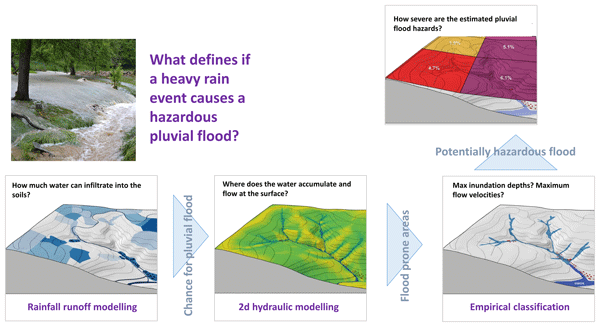
Pluvial (flash) floods, caused by intense local rainfall, result in surface runoff and overland flow, making them different from fluvial floods. A new Pluvial Flood Index (PFI) combines precipitation, hydrological, and hydrodynamic processes to assess surface flooding hazards. The PFI, based on flood hazard areas, helps forecast flash floods and supports real-time warning systems, aiding municipal decision-making, preparedness, and planning.
Lea Dedden and Markus Weiler
Hydrol. Earth Syst. Sci., 30, 3245–3261, https://doi.org/10.5194/hess-30-3245-2026, https://doi.org/10.5194/hess-30-3245-2026, 2026
Short summary
Short summary
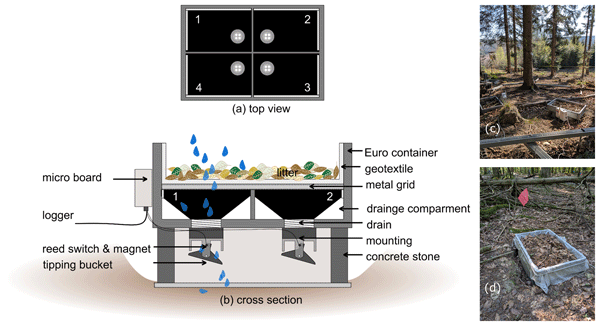
Throughfall in forests varies in space and time creating distinct patterns. We developed a novel throughfall monitoring approach for continuous, automated measurement that features 60 self-built and cost effective throughfall samplers. Collected data show the potential of the approach to capture throughfall variability at small distances, among and within rainfall events and between different trees species.
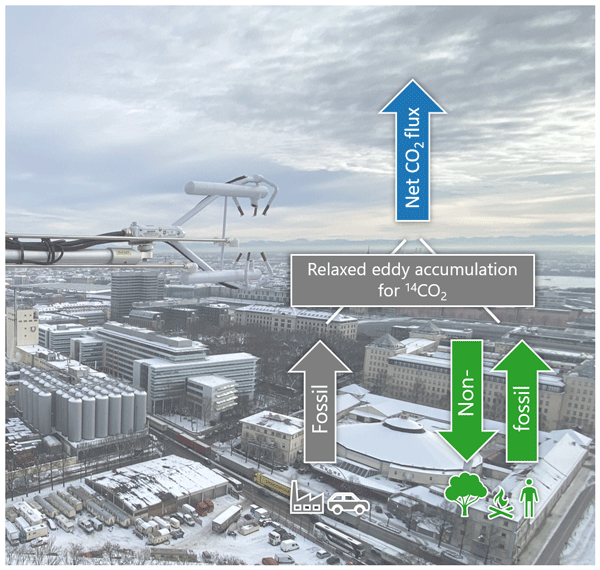
Ann-Kristin Kunz, Samuel Hammer, Patrick Aigner, Laura Bignotti, Lars Borchardt, Jia Chen, Julian Della Coletta, Lukas Emmenegger, Markus Eritt, Xochilt Gutiérrez, Josh Hashemi, Rainer Hilland, Christopher Holst, Armin Jordan, Natascha Kljun, Richard Kneißl, Changxing Lan, Virgile Legendre, Ingeborg Levin, Benjamin Loubet, Matthias Mauder, Betty Molinier, Susanne Preunkert, Michel Ramonet, Stavros Stagakis, and Andreas Christen
Atmos. Chem. Phys., 26, 4967–5003, https://doi.org/10.5194/acp-26-4967-2026, https://doi.org/10.5194/acp-26-4967-2026, 2026
Short summary
Short summary
We present radiocarbon (14C)-based fossil fuel CO2 fluxes from relaxed eddy accumulation measurements on tall towers in the cities of Zurich, Paris, and Munich. By separating net CO2 fluxes into fossil and non-fossil components, these data reveal significant and variable contributions from human, plant, and soil respiration, as well as point-source emissions. These unique insights into CO2 flux composition offer crucial information for observation-based validation of urban emission estimates.
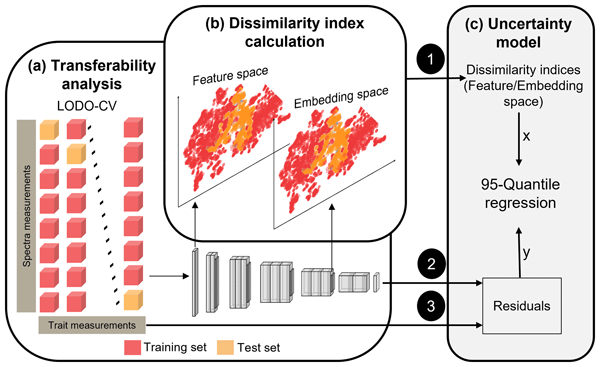
Eya Cherif, Teja Kattenborn, Luke A. Brown, Michael Ewald, Katja Berger, Phuong D. Dao, Tobias B. Hank, Etienne Laliberté, Bing Lu, and Hannes Feilhauer
Biogeosciences, 23, 2235–2259, https://doi.org/10.5194/bg-23-2235-2026, https://doi.org/10.5194/bg-23-2235-2026, 2026
Short summary
Short summary
Hyperspectral imagery combined with machine learning enables accurate large-scale mapping of plant traits but struggles with uncertainty when facing unfamiliar environmental conditions. This study introduces a distance-based method that measures dissimilarities between new and training data to reliably quantify uncertainty. Results show it effectively identifies uncertain predictions, greatly improving the reliability of global vegetation monitoring compared to traditional methods.

Simon Lotz, Teja Kattenborn, Julian Frey, Salim Soltani, Anna Göritz, Tom Jaksztat, and Negin Katal
Biogeosciences, 23, 1949–1963, https://doi.org/10.5194/bg-23-1949-2026, https://doi.org/10.5194/bg-23-1949-2026, 2026
Short summary
Short summary
Digital hemispherical photography(DHP) is a valuable tool for monitoring leaf area index(LAI), a key factor in ecosystem productivity and climate interactions. We compared DHP with litter traps in a temperate forest and found that at a view zenith angle around 20°, both methods aligned best. We applied a calibration model to assess site variability which significantly improved accuracy. Our findings enhance the reliability of ground-based LAI monitoring, supporting better ecosystem assessments.
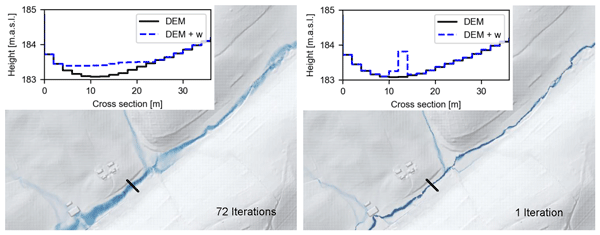
Hannes Leistert, Andreas Hänsler, Max Schmit, Andreas Steinbrich, and Markus Weiler
Geosci. Model Dev., 19, 2023–2037, https://doi.org/10.5194/gmd-19-2023-2026, https://doi.org/10.5194/gmd-19-2023-2026, 2026
Short summary
Short summary
The newly developed model AccRo (Accumulation-based Runoff and Pluvial Flood Estimation Tool) is a computationally efficient method to derive key parameters for estimating pluvial flood hazards. Here, we compare results of AccRo with the data of two hydrodynamic models for different cases. We find that AccRo is able to represent the simulations of the hydrodynamic models in high quality, but with much lower computational effort, making it a valuable tool for assessing pluvial flood hazards.
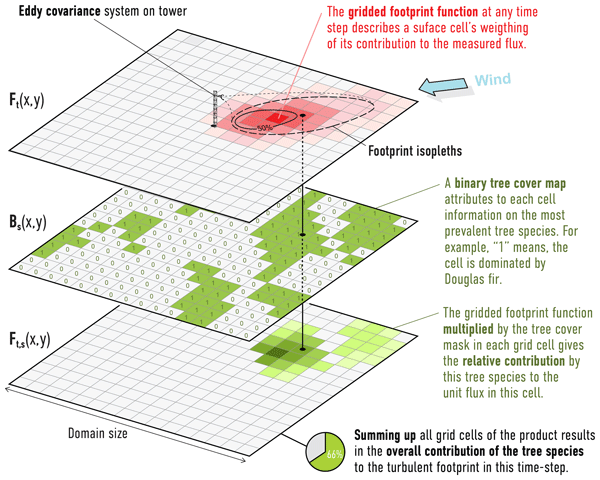
Hassane Moutahir, Markus Sulzer, Ralf Kiese, Andreas Christen, Markus Weiler, Lea Dedden, Julian Brzozon, Pia Labenski, Prajwal Khanal, Ladislav Šigut, and Rüdiger Grote
Biogeosciences, 23, 1719–1738, https://doi.org/10.5194/bg-23-1719-2026, https://doi.org/10.5194/bg-23-1719-2026, 2026
Short summary
Short summary
Eddy covariance (EC) data are vital for studying carbon and water fluxes but often mask species-specific responses in mixed forests. At a Black Forest site with beech and Douglas fir, we combined EC data with ecosystem modeling to separate species contributions. Results show EC fluxes reflect species abundance within flux footprints, though responses vary seasonally. Accounting for these differences is key for gap-filling, accurate budgets, and understanding mixed forests’ climate resilience.

Sebastian Gnann, Bailey J. Anderson, and Markus Weiler
Hydrol. Earth Syst. Sci., 30, 779–795, https://doi.org/10.5194/hess-30-779-2026, https://doi.org/10.5194/hess-30-779-2026, 2026
Short summary
Short summary
The extent to which streamflow varies in response to variability in precipitation and potential evaporation is essential for understanding climate change impacts on water resources. This so-called streamflow sensitivity is often estimated directly from observational data, but the robustness of these estimates remains unclear. Through systematic examination of existing approaches, we highlight uncertainties inherent in all approaches and discuss their origins.
Jonas Pyschik and Markus Weiler
Hydrol. Earth Syst. Sci., 30, 485–501, https://doi.org/10.5194/hess-30-485-2026, https://doi.org/10.5194/hess-30-485-2026, 2026
Short summary
Short summary
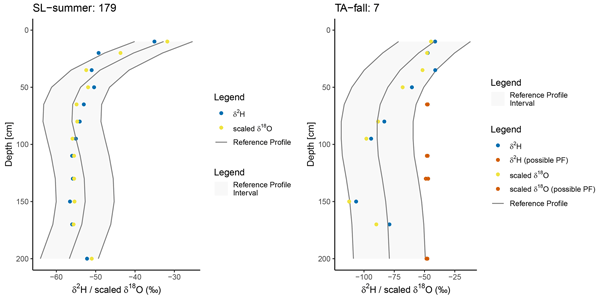
This study introduces a new method of detecting how water moves quickly through certain paths in soil, bypassing the usual, slower flow. By analysing natural water markers in soil samples taken at different depths, we identified unusual flow patterns. Our method is simple and non-invasive, and can be used to cover large areas. This helps us to better understand how water travels through the ground, which is important for managing water resources and protecting the environment.
Hojin Lee, Tim Stippich, Jan Petersen, David Meine, Julian Brzozon, Markus Sulzer, Lea Dedden, Andreas Christen, Teja Kattenborn, Christiane Werner, and Jürgen Kreuzwieser
EGUsphere, https://doi.org/10.5194/egusphere-2025-5426, https://doi.org/10.5194/egusphere-2025-5426, 2025
Short summary
Short summary
We studied the effect of waterlogging on volatile organic compounds exchange between forest floor and atmosphere. Waterlogging strongly increased emissions of toluene and p-cymene. Studies on soil cores under controlled conditions demonstrated that anoxia leads to emission of these compounds. Our results suggest that anoxic hotspots of high toluene emission can influence atmospheric mixing ratios of toluene in forest air despite large areas of the forest floor act as a sink of this compound.
Russell H. Glazer, Sue Grimmond, Lewis Blunn, Daniel Fenner, Humphrey Lean, Andreas Christen, Will Morrison, Dana Looschelders, and Jonathan K. P. Shonk
Weather Clim. Dynam., 6, 1723–1742, https://doi.org/10.5194/wcd-6-1723-2025, https://doi.org/10.5194/wcd-6-1723-2025, 2025
Short summary
Short summary
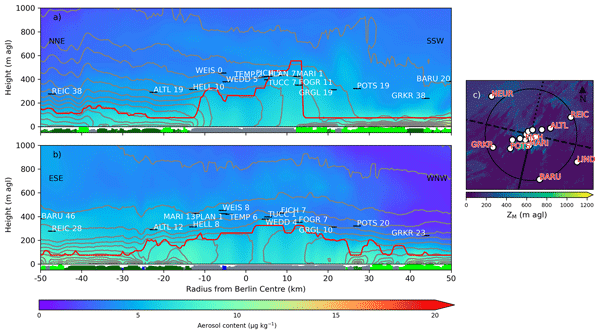
In this study we use very high resolution numerical weather prediction model simulations of the Berlin, Germany region along with assessment of field campaign observations to understand better the impact of urban areas on the near-surface boundary layer. We find that there a clear affect of urban areas up to 15 km downwind of the city centre in both the field campaign observations and the high resolution model.
William Morrison, Dana Looschelders, Jonnathan Céspedes, Bernie Claxton, Marc-Antoine Drouin, Jean-Charles Dupont, Aurélien Faucheux, Martial Haeffelin, Christopher C. Holst, Simone Kotthaus, Valéry Masson, James McGregor, Jeremy Price, Matthias Zeeman, Sue Grimmond, and Andreas Christen
Earth Syst. Sci. Data, 17, 6507–6529, https://doi.org/10.5194/essd-17-6507-2025, https://doi.org/10.5194/essd-17-6507-2025, 2025
Short summary
Short summary
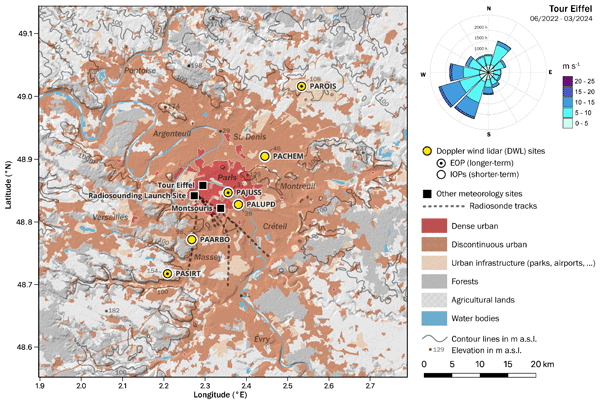
We conducted research using sophisticated wind sensors to better understand wind patterns in Paris. By installing these sensors across the city, we gathered detailed data on wind speeds and directions from 2022 to 2024. This information helps improve weather and climate models, making them more accurate for city environments. Our findings offer valuable insights for scientists studying urban air and weather, improving predictions and understanding of city-scale atmospheric processes.
Steffen Schröder, Thomas M. Wendt, and Stefan J. Rupitsch
J. Sens. Sens. Syst., 14, 265–273, https://doi.org/10.5194/jsss-14-265-2025, https://doi.org/10.5194/jsss-14-265-2025, 2025
Short summary
Short summary
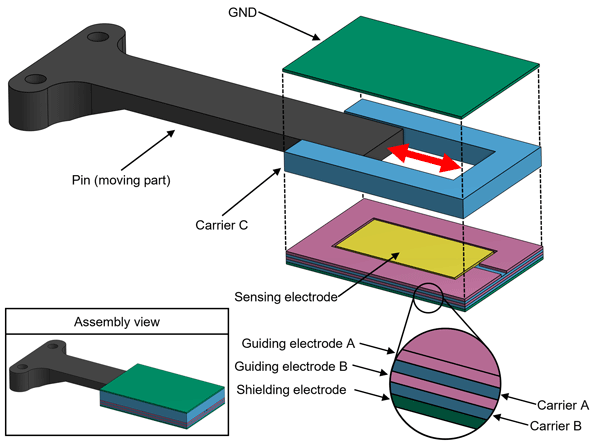
This research presents a capacitive displacement sensor concept, designed for integration into a pin array gripper. The design is optimised for additive manufacturing, offering new design possibilities and enabling the creation of fully additive manufactured pin grippers with integrated displacement sensors. A prototype sensor was fabricated using additive manufacturing, and experimental results confirm the simulations and the functionality of the fabricated sensor for different pin materials.
Katharina Epp, Markus Sulzer, Daniel Steinmann, Matthias Zeeman, Andreas Matzarakis, and Andreas Christen
EGUsphere, https://doi.org/10.5194/egusphere-2025-3871, https://doi.org/10.5194/egusphere-2025-3871, 2025
Short summary
Short summary
Indoor heat was continuously monitored in 60 rooms across 11 buildings of a hospital complex using a sensor network measuring physiologically equivalent temperatures. Substantial heat was found in structures built in 1950–1990, in upper-floors and windowless rooms. Climate simulations were coupled with data-driven machine-learning models to predict future indoor heat frequency and intensity. We conclude that widespread adaptation is required to secure hospital operations during hot summers.
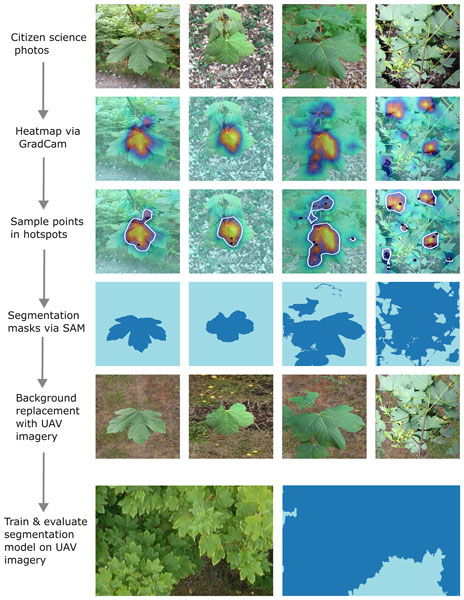
Salim Soltani, Lauren E. Gillespie, Moises Exposito-Alonso, Olga Ferlian, Nico Eisenhauer, Hannes Feilhauer, and Teja Kattenborn
Biogeosciences, 22, 6545–6561, https://doi.org/10.5194/bg-22-6545-2025, https://doi.org/10.5194/bg-22-6545-2025, 2025
Short summary
Short summary
We introduce an automated approach for generating segmentation masks for citizen science plant photos, making them applicable to computer vision models. This framework effectively transforms citizen science data into a data treasure for segmentation models for plant species identification in aerial imagery. Using automatically labeled photos, we train segmentation models for mapping tree species in drone imagery, showcasing their potential for forestry, agriculture, and biodiversity monitoring.
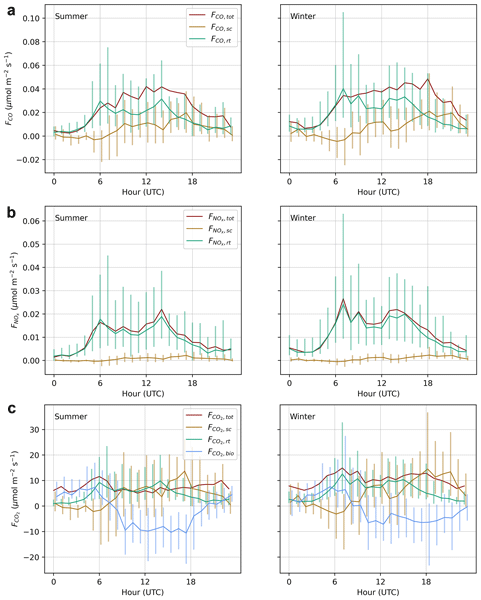
Rainer Hilland, Josh Hashemi, Stavros Stagakis, Dominik Brunner, Lionel Constantin, Natascha Kljun, Ann-Kristin Kunz, Betty Molinier, Samuel Hammer, Lukas Emmenegger, and Andreas Christen
Atmos. Chem. Phys., 25, 14279–14299, https://doi.org/10.5194/acp-25-14279-2025, https://doi.org/10.5194/acp-25-14279-2025, 2025
Short summary
Short summary
We present a study of simultaneously measured fluxes of carbon dioxide (CO2) and co-emitted species in the city of Zurich. Flux measurements of CO2 alone cannot be attributed to specific emission sectors, such as road transport or residential heating. We present a model which uses the measured ratios of CO2 to carbon monoxide (CO) and nitrogen oxides (NOx) as well as sector-specific reference ratios, to attribute measured fluxes to their emission sectors.
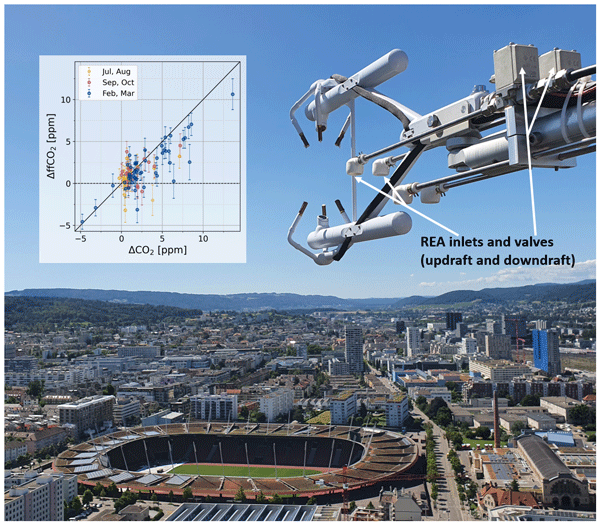
Ann-Kristin Kunz, Lars Borchardt, Andreas Christen, Julian Della Coletta, Markus Eritt, Xochilt Gutiérrez, Josh Hashemi, Rainer Hilland, Armin Jordan, Richard Kneißl, Virgile Legendre, Ingeborg Levin, Susanne Preunkert, Pascal Rubli, Stavros Stagakis, and Samuel Hammer
Atmos. Meas. Tech., 18, 5349–5373, https://doi.org/10.5194/amt-18-5349-2025, https://doi.org/10.5194/amt-18-5349-2025, 2025
Short summary
Short summary
We present, to our knowledge, the first relaxed eddy accumulation system explicitly tailored to a radiocarbon (14C)-based partitioning of fossil and non-fossil urban CO2 fluxes. Laboratory tests and in-depth quality and performance checks prove that the system meets the technical requirements. A pilot application on a tall tower in the city of Zurich, Switzerland, demonstrates the ability to separate fossil and non-fossil CO2 components within the typical precision of 14C measurements.
Theresa Blume, Peter Chifflard, Stefan Achleitner, Andreas Hartmann, Stefan Hergarten, Luisa Hopp, Bernhard Kohl, Florian Leese, Ilja van Meerveld, Christian Reinhardt-Imjela, and Markus Weiler
EGUsphere, https://doi.org/10.5194/egusphere-2025-4424, https://doi.org/10.5194/egusphere-2025-4424, 2025
Short summary
Short summary
Subsurface stormflow (SSF) is one of the least studied and therefore least understood runoff generation processes because detecting and quantifying SSF is extremely challenging. We present an ongoing concerted experimental effort to systematically investigate SSF across four catchments using a variety of methods covering different spatial scales. Centerpiece of this effort is the construction of 12 large trenches to capture and monitor SSF.
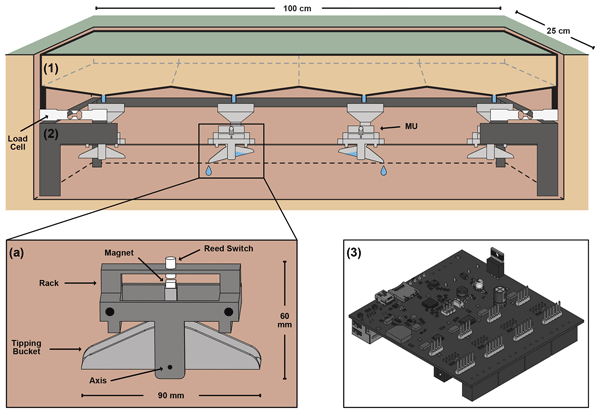
Heinke Paulsen and Markus Weiler
Hydrol. Earth Syst. Sci., 29, 2309–2319, https://doi.org/10.5194/hess-29-2309-2025, https://doi.org/10.5194/hess-29-2309-2025, 2025
Short summary
Short summary
This technical note describes the development of a weighing forest floor grid lysimeter. The device is needed to investigate the dynamics of the water balance components of the organic layer in forests, quantifying precipitation, drainage, evaporation, and storage. We designed a setup that can be easily rebuilt and that is cost-effective, which allows for customized applications. Performance metrics from laboratory results and initial field data are presented.
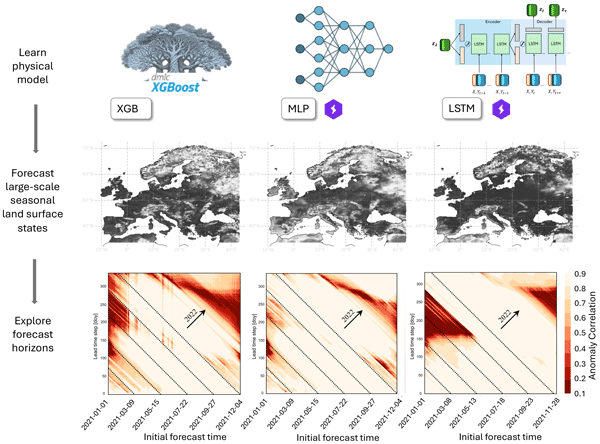
Marieke Wesselkamp, Matthew Chantry, Ewan Pinnington, Margarita Choulga, Souhail Boussetta, Maria Kalweit, Joschka Bödecker, Carsten F. Dormann, Florian Pappenberger, and Gianpaolo Balsamo
Geosci. Model Dev., 18, 921–937, https://doi.org/10.5194/gmd-18-921-2025, https://doi.org/10.5194/gmd-18-921-2025, 2025
Short summary
Short summary
We compared spatiotemporal forecasts of three machine learning models that learned water and energy
states on the land surface from a physical model scheme. The forecasting models were developed with reanalysis data and simulations on a European scale and transferred to the globe. We found that all approaches deliver highly accurate approximations of the physical dynamic at long time horizons, implying their usefulness to advance land surface forecasting with synthetic data.
states on the land surface from a physical model scheme. The forecasting models were developed with reanalysis data and simulations on a European scale and transferred to the globe. We found that all approaches deliver highly accurate approximations of the physical dynamic at long time horizons, implying their usefulness to advance land surface forecasting with synthetic data.

Sinan Süme, Katrin-Misel Ponomarjova, Thomas M. Wendt, and Stefan J. Rupitsch
J. Sens. Sens. Syst., 14, 37–46, https://doi.org/10.5194/jsss-14-37-2025, https://doi.org/10.5194/jsss-14-37-2025, 2025
Short summary
Short summary
This contribution deals with the exploration of human–robot collaboration using an infrared sensor and artificial intelligence (AI) to improve the safety and efficiency of the collaboration. The main contribution is the unique thermal dataset WLRI-HRC generated in a manufacturing environment and the evaluation of the dataset using different AI network methods.
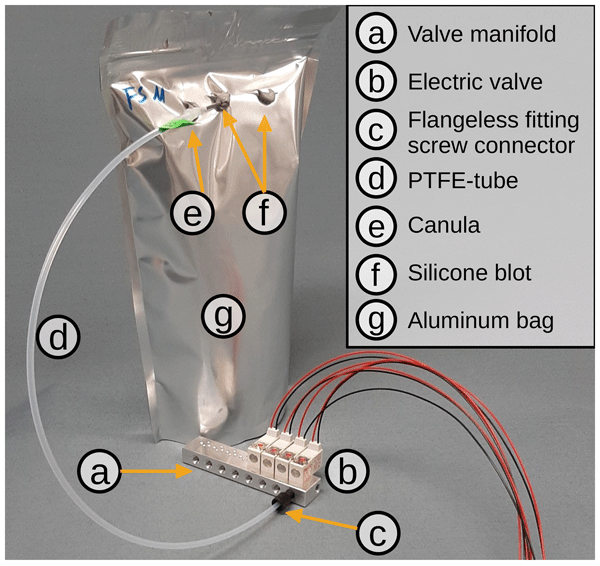
Jonas Pyschik, Stefan Seeger, Barbara Herbstritt, and Markus Weiler
Hydrol. Earth Syst. Sci., 29, 525–534, https://doi.org/10.5194/hess-29-525-2025, https://doi.org/10.5194/hess-29-525-2025, 2025
Short summary
Short summary
We developed a device (named VapAuSa) that automates stable water isotope analysis. Stable water isotopes are a natural tracer that many researchers use to investigate water (re-)distribution processes in environmental systems. VapAuSa helps to analyse such environmental samples by automating a formerly tedious manual process, allowing for higher sample throughput. This enables larger sampling campaigns, as more samples can be processed before reaching their limited storage time.
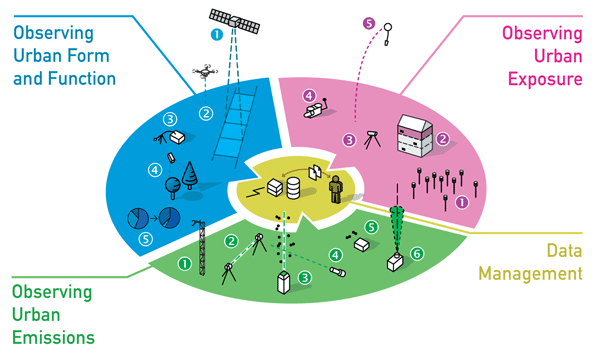
Matthias Zeeman, Andreas Christen, Sue Grimmond, Daniel Fenner, William Morrison, Gregor Feigel, Markus Sulzer, and Nektarios Chrysoulakis
Geosci. Instrum. Method. Data Syst., 13, 393–424, https://doi.org/10.5194/gi-13-393-2024, https://doi.org/10.5194/gi-13-393-2024, 2024
Short summary
Short summary
This study presents an overview of a data system for documenting, processing, managing, and publishing data streams from research networks of atmospheric and environmental sensors of varying complexity in urban environments. Our solutions aim to deliver resilient, near-time data using freely available software.
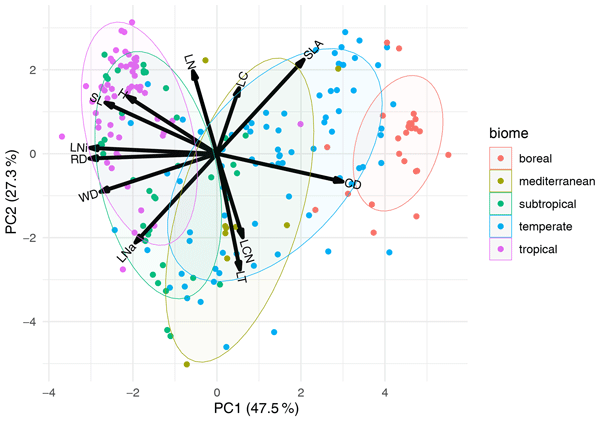
Simon Scheiter, Sophie Wolf, and Teja Kattenborn
Biogeosciences, 21, 4909–4926, https://doi.org/10.5194/bg-21-4909-2024, https://doi.org/10.5194/bg-21-4909-2024, 2024
Short summary
Short summary
Biomes are widely used to map vegetation patterns at large spatial scales and to assess impacts of climate change, yet there is no consensus on a generally valid biome classification scheme. We used crowd-sourced species distribution data and trait data to assess whether trait information is suitable for delimiting biomes. Although the trait data were heterogeneous and had large gaps with respect to the spatial distribution, we found that a global trait-based biome classification was possible.
Robin Schwemmle, Hannes Leistert, Andreas Steinbrich, and Markus Weiler
Geosci. Model Dev., 17, 5249–5262, https://doi.org/10.5194/gmd-17-5249-2024, https://doi.org/10.5194/gmd-17-5249-2024, 2024
Short summary
Short summary
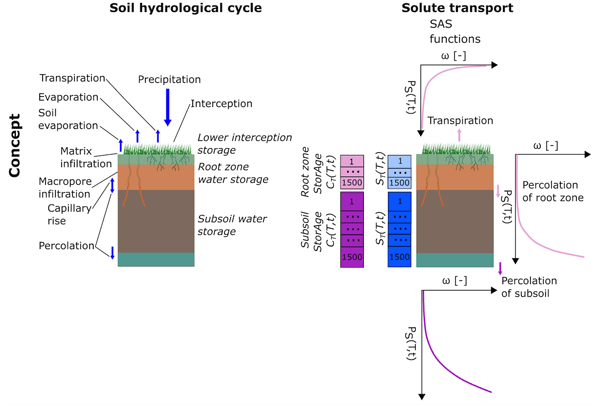
The new process-based hydrological toolbox model, RoGeR (https://roger.readthedocs.io/), can be used to estimate the components of the hydrological cycle and the related travel times of pollutants through parts of the hydrological cycle. These estimations may contribute to effective water resources management. This paper presents the toolbox concept and provides a simple example of providing estimations to water resources management.
Daniel Nadal-Sala, Rüdiger Grote, David Kraus, Uri Hochberg, Tamir Klein, Yael Wagner, Fedor Tatarinov, Dan Yakir, and Nadine K. Ruehr
Biogeosciences, 21, 2973–2994, https://doi.org/10.5194/bg-21-2973-2024, https://doi.org/10.5194/bg-21-2973-2024, 2024
Short summary
Short summary
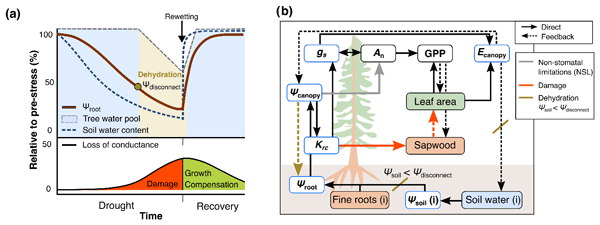
A hydraulic model approach is presented that can be added to any physiologically based ecosystem model. Simulated plant water potential triggers stomatal closure, photosynthesis decline, root–soil resistance increases, and sapwood and foliage senescence. The model has been evaluated at an extremely dry site stocked with Aleppo pine and was able to represent gas exchange, soil water content, and plant water potential. The model also responded realistically regarding leaf senescence.
Salim Soltani, Olga Ferlian, Nico Eisenhauer, Hannes Feilhauer, and Teja Kattenborn
Biogeosciences, 21, 2909–2935, https://doi.org/10.5194/bg-21-2909-2024, https://doi.org/10.5194/bg-21-2909-2024, 2024
Short summary
Short summary
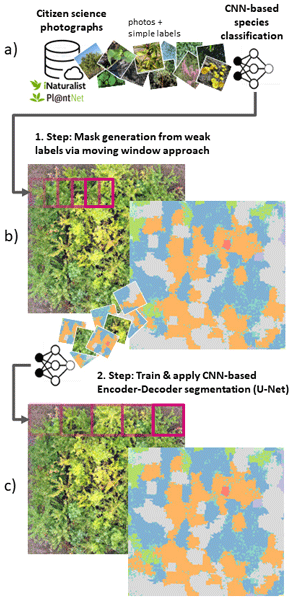
In this research, we developed a novel method using citizen science data as alternative training data for computer vision models to map plant species in unoccupied aerial vehicle (UAV) images. We use citizen science plant photographs to train models and apply them to UAV images. We tested our approach on UAV images of a test site with 10 different tree species, yielding accurate results. This research shows the potential of citizen science data to advance our ability to monitor plant species.
Ferdinand Briegel, Jonas Wehrle, Dirk Schindler, and Andreas Christen
Geosci. Model Dev., 17, 1667–1688, https://doi.org/10.5194/gmd-17-1667-2024, https://doi.org/10.5194/gmd-17-1667-2024, 2024
Short summary
Short summary
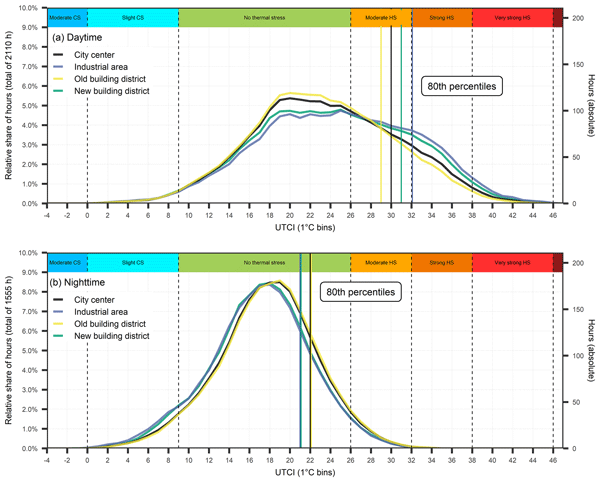
We present a new approach to model heat stress in cities using artificial intelligence (AI). We show that the AI model is fast in terms of prediction but accurate when evaluated with measurements. The fast-predictive AI model enables several new potential applications, including heat stress prediction and warning; downscaling of potential future climates; evaluation of adaptation effectiveness; and, more fundamentally, development of guidelines to support urban planning and policymaking.
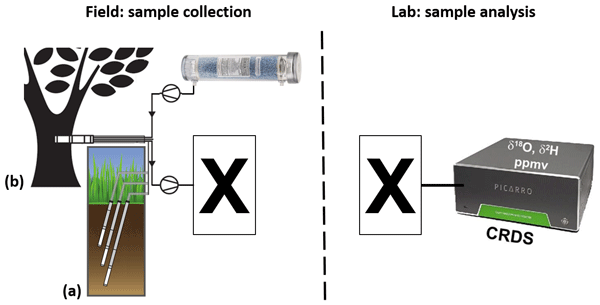
Barbara Herbstritt, Benjamin Gralher, Stefan Seeger, Michael Rinderer, and Markus Weiler
Hydrol. Earth Syst. Sci., 27, 3701–3718, https://doi.org/10.5194/hess-27-3701-2023, https://doi.org/10.5194/hess-27-3701-2023, 2023
Short summary
Short summary
We present a method to collect water vapor samples into bags in the field without an in-field analyser, followed by isotope analysis in the lab. This new method resolves even fine-scaled natural isotope variations. It combines low-cost and lightweight components for maximum spatial and temporal flexibility regarding environmental setups. Hence, it allows for sampling even in terrains that are rather difficult to access, enabling future extended isotope datasets in soil sciences and ecohydrology.
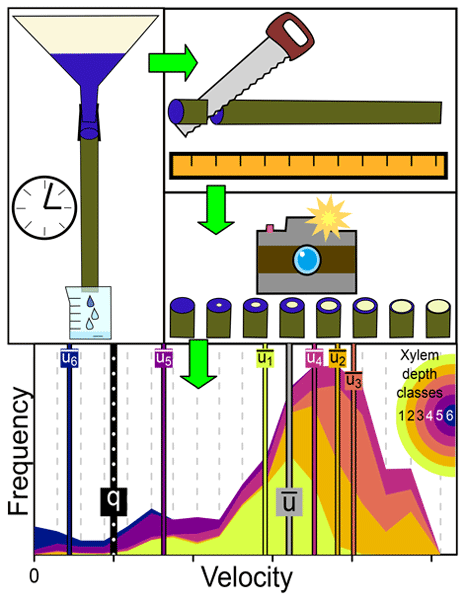
Stefan Seeger and Markus Weiler
Hydrol. Earth Syst. Sci., 27, 3393–3404, https://doi.org/10.5194/hess-27-3393-2023, https://doi.org/10.5194/hess-27-3393-2023, 2023
Short summary
Short summary
This study proposes a low-budget method to quantify the radial distribution of water transport velocities within trees at a high spatial resolution. We observed a wide spread of water transport velocities within a tree stem section, which were on average 3 times faster than the flux velocity. The distribution of transport velocities has implications for studies that use water isotopic signatures to study root water uptake and usually assume uniform or even implicitly infinite velocities.
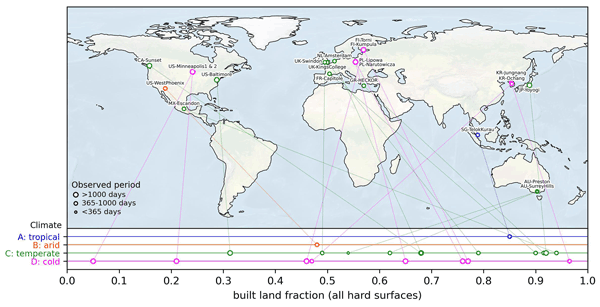
Mathew Lipson, Sue Grimmond, Martin Best, Winston T. L. Chow, Andreas Christen, Nektarios Chrysoulakis, Andrew Coutts, Ben Crawford, Stevan Earl, Jonathan Evans, Krzysztof Fortuniak, Bert G. Heusinkveld, Je-Woo Hong, Jinkyu Hong, Leena Järvi, Sungsoo Jo, Yeon-Hee Kim, Simone Kotthaus, Keunmin Lee, Valéry Masson, Joseph P. McFadden, Oliver Michels, Wlodzimierz Pawlak, Matthias Roth, Hirofumi Sugawara, Nigel Tapper, Erik Velasco, and Helen Claire Ward
Earth Syst. Sci. Data, 14, 5157–5178, https://doi.org/10.5194/essd-14-5157-2022, https://doi.org/10.5194/essd-14-5157-2022, 2022
Short summary
Short summary
We describe a new openly accessible collection of atmospheric observations from 20 cities around the world, capturing 50 site years. The observations capture local meteorology (temperature, humidity, wind, etc.) and the energy fluxes between the land and atmosphere (e.g. radiation and sensible and latent heat fluxes). These observations can be used to improve our understanding of urban climate processes and to test the accuracy of urban climate models.
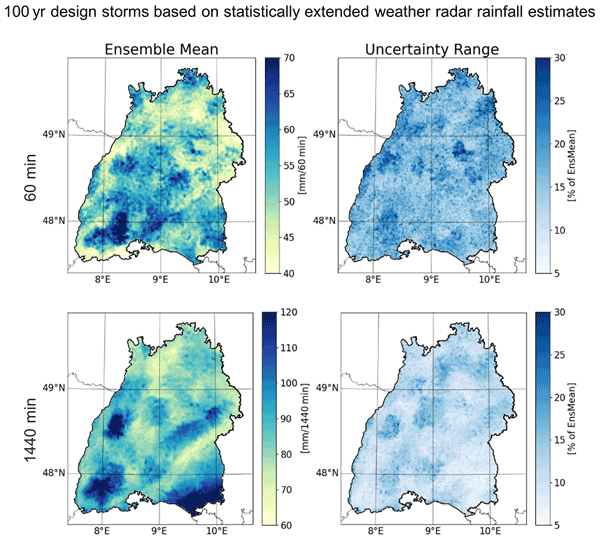
Andreas Hänsler and Markus Weiler
Hydrol. Earth Syst. Sci., 26, 5069–5084, https://doi.org/10.5194/hess-26-5069-2022, https://doi.org/10.5194/hess-26-5069-2022, 2022
Short summary
Short summary
Spatially explicit quantification of design storms is essential for flood risk assessment and planning. However, available datasets are mainly based on spatially interpolated station-based design storms. Since the spatial interpolation of the data inherits a large potential for uncertainty, we develop an approach to be able to derive spatially explicit design storms on the basis of weather radar data. We find that our approach leads to an improved spatial representation of design storms.
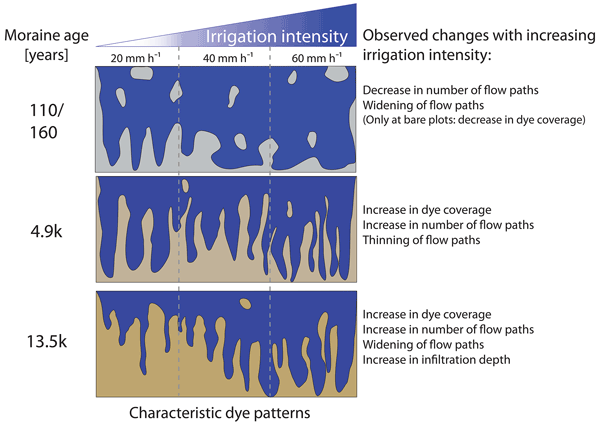
Anne Hartmann, Markus Weiler, Konrad Greinwald, and Theresa Blume
Hydrol. Earth Syst. Sci., 26, 4953–4974, https://doi.org/10.5194/hess-26-4953-2022, https://doi.org/10.5194/hess-26-4953-2022, 2022
Short summary
Short summary
Analyzing the impact of soil age and rainfall intensity on vertical subsurface flow paths in calcareous soils, with a special focus on preferential flow occurrence, shows how water flow paths are linked to the organization of evolving landscapes. The observed increase in preferential flow occurrence with increasing moraine age provides important but rare data for a proper representation of hydrological processes within the feedback cycle of the hydro-pedo-geomorphological system.
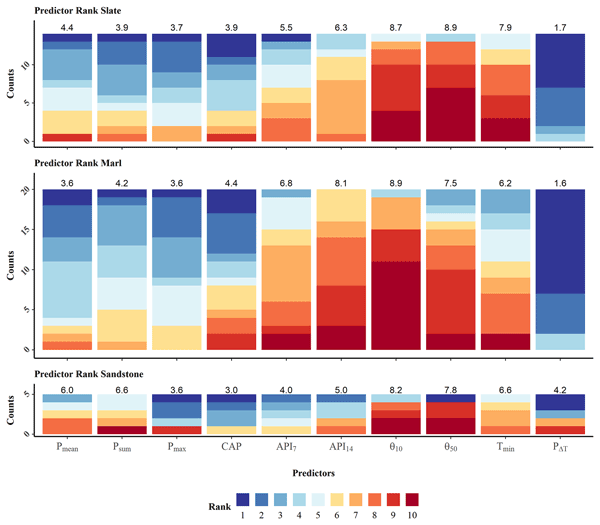
Nils Hinrich Kaplan, Theresa Blume, and Markus Weiler
Hydrol. Earth Syst. Sci., 26, 2671–2696, https://doi.org/10.5194/hess-26-2671-2022, https://doi.org/10.5194/hess-26-2671-2022, 2022
Short summary
Short summary
This study is analyses how characteristics of precipitation events and soil moisture and temperature dynamics during these events can be used to model the associated streamflow responses in intermittent streams. The models are used to identify differences between the dominant controls of streamflow intermittency in three distinct geologies of the Attert catchment, Luxembourg. Overall, soil moisture was found to be the most important control of intermittent streamflow in all geologies.
Cited articles
Adadi, A. and Berrada, M.: Peeking Inside the Black-Box: A Survey on Explainable Artificial Intelligence (XAI), IEEE Access, 6, 52138–52160, https://doi.org/10.1109/ACCESS.2018.2870052, 2018.
Anderegg, W. R. L., Konings, A. G., Trugman, A. T., Yu, K., Bowling, D. R., Gabbitas, R., Karp, D. S., Pacala, S., Sperry, J. S., Sulman, B. N., and Zenes, N.: Hydraulic diversity of forests regulates ecosystem resilience during drought, Nature, 561, 538–541, https://doi.org/10.1038/s41586-018-0539-7, 2018.
Baghbani, S., Sarlak, A., and Rupitsch, S. J.: B7.1 – Enhanced Signal Detection for Chlorophyll a Fluorescence Signal, in: SMSI 2025 Conference, Sensor and Measurement Science International, 119–120, https://doi.org/10.5162/SMSI2025/B7.1, 2025.
Baghbani, S., Akkoc, U., Klueppel, J., Stock, C., Comella, L. M., Werner, C., and Rupitsch, S. J.: Development of a Low-Cost, Autonomous Pulse Amplitude Modulated (PAM) Chlorophyll Fluorometer for In Situ Monitoring of Photosystem II Efficiency, IEEE Sens. J., 26, 24225–24238, https://doi.org/10.1109/JSEN.2026.3710005, 2026.
Bäumker, E., Miguel Garcia, A., and Woias, P.: Minimizing power consumption of LoRa® and LoRaWAN for low-power wireless sensor nodes, J. Phys. Conf. Ser., 1407, 012092, https://doi.org/10.1088/1742-6596/1407/1/012092, 2019.
Beck, H. E., McVicar, T. R., Vergopolan, N., Berg, A., Lutsko, N. J., Dufour, A., Zeng, Z., Jiang, X., van Dijk, A. I. J. M., and Miralles, D. G.: High-resolution (1 km) Köppen–Geiger maps for 1901–2099 based on constrained CMIP6 projections, Sci. Data, 10, 724, https://doi.org/10.1038/s41597-023-02549-6, 2023.
Brase, J.: DataCite – A Global Registration Agency for Research Data, in: 2009 Fourth International Conference on Cooperation and Promotion of Information Resources in Science and Technology, 257–261, https://doi.org/10.1109/COINFO.2009.66, 2009.
Briegel, F., Lee, S. C., Black, T. A., Jassal, R. S., and Christen, A.: Factors controlling long-term carbon dioxide exchange between a Douglas-fir stand and the atmosphere identified using an artificial neural network approach, Ecol. Model., 435, 109266, https://doi.org/10.1016/j.ecolmodel.2020.109266, 2020.
Brodribb, T. J., Bienaimé, D., and Marmottant, P.: Revealing catastrophic failure of leaf networks under stress, P. Natl. Acad. Sci. USA, 113, 4865–4869, https://doi.org/10.1073/pnas.1522569113, 2016.
Brown, T. B., Hultine, K. R., Steltzer, H., Denny, E. G., Denslow, M. W., Granados, J., Henderson, S., Moore, D., Nagai, S., SanClements, M., Sánchez-Azofeifa, A., Sonnentag, O., Tazik, D., and Richardson, A. D.: Using phenocams to monitor our changing Earth: toward a global phenocam network, Front. Ecol. Environ., 14, 84–93, https://doi.org/10.1002/fee.1222, 2016.
Brzozon, J., Lang, F., Schwarzkopf, P., Kattenborn, T., Frey, J., and Schack-Kirchner, H.: Predictions of spatio-temporal patterns of soil respiration in a mixed forest: Downscaled meteorological data outperform local parameters, bioRxiv [preprint], https://doi.org/10.64898/2026.01.21.700858, 2026.
Cade, S. M., Clemitshaw, K. C., Molina-Herrera, S., Grote, R., Haas, E., Wilkinson, M., Morison, J. I. L., and Yamulki, S.: Evaluation of LandscapeDNDC Model Predictions of CO2 and N2O Fluxes from an Oak Forest in SE England, Forests, 12, 1517, https://doi.org/10.3390/f12111517, 2021.
Calders, K., Brede, B., Newnham, G., Culvenor, D., Armston, J., Bartholomeus, H., Griebel, A., Hayward, J., Junttila, S., Lau, A., Levick, S., Morrone, R., Origo, N., Pfeifer, M., Verbesselt, J., and Herold, M.: StrucNet: a global network for automated vegetation structure monitoring, Remote Sens. Ecol. Conserv., 9, 587–598, https://doi.org/10.1002/rse2.333, 2023.
Cameron, D. R., Van Oijen, M., Werner, C., Butterbach-Bahl, K., Grote, R., Haas, E., Heuvelink, G. B. M., Kiese, R., Kros, J., Kuhnert, M., Leip, A., Reinds, G. J., Reuter, H. I., Schelhaas, M. J., De Vries, W., and Yeluripati, J.: Environmental change impacts on the C- and N-cycle of European forests: a model comparison study, Biogeosciences, 10, 1751–1773, https://doi.org/10.5194/bg-10-1751-2013, 2013.
De Frenne, P., Zellweger, F., Rodríguez-Sánchez, F., Scheffers, B. R., Hylander, K., Luoto, M., Vellend, M., Verheyen, K., and Lenoir, J.: Global buffering of temperatures under forest canopies, Nat. Ecol. Evol., 3, 744–749, https://doi.org/10.1038/s41559-019-0842-1, 2019.
De Frenne, P., Lenoir, J., Luoto, M., Scheffers, B. R., Zellweger, F., Aalto, J., Ashcroft, M. B., Christiansen, D. M., Decocq, G., De Pauw, K., Govaert, S., Greiser, C., Gril, E., Hampe, A., Jucker, T., Klinges, D. H., Koelemeijer, I. A., Lembrechts, J. J., Marrec, R., Meeussen, C., Ogée, J., Tyystjärvi, V., Vangansbeke, P., and Hylander, K.: Forest microclimates and climate change: Importance, drivers and future research agenda, Glob. Change Biol., 27, 2279–2297, https://doi.org/10.1111/gcb.15569, 2021.
De Frenne, P., Beugnon, R., Klinges, D., Lenoir, J., Niittynen, P., Pincebourde, S., Senior, R. A., Aalto, J., Chytrý, K., Gillingham, P. K., Greiser, C., Gril, E., Haesen, S., Kearney, M., Kopecký, M., le Roux, P. C., Luoto, M., Maclean, I., Man, M., Penczykowski, R., van den Brink, L., Van de Vondel, S., De Pauw, K., Lembrechts, J. J., Kemppinen, J., and Van Meerbeek, K.: Ten practical guidelines for microclimate research in terrestrial ecosystems, Methods Ecol. Evol., 16, 269–294, 2025.
Dedden, L. and Weiler, M.: Technical note: An innovative monitoring approach to measure spatio-temporal throughfall patterns in forests, Hydrol. Earth Syst. Sci., 30, 3245–3261, https://doi.org/10.5194/hess-30-3245-2026, 2026.
Dumberger, S., Kinzinger, L., Weiler, M., Werner, C., and Haberstroh, S.: Dynamic Shifts in Radial Sap Flow of Two Temperate Tree Species in Response to the Dry Summer 2022, Ecohydrology, 18, e70054, https://doi.org/10.1002/eco.70054, 2025.
Dumberger, S., Frey, Y., Stock, C., Wehlings-Schmitz, S., Wagner, D., Kühnhammer, K., Dedden, L., Weiler, M., Sulzer, M., Christen, A., Kreuzwieser, J., Wallrabe, U., Werner, C., and Haberstroh, S.: Seasonal dynamics and sun/shade heterogeneity of leaf gas exchange and VOC emissions inside a tall temperate forest canopy, Tree Physiol., 46, tpag111, https://doi.org/10.1093/treephys/tpag111, 2026.
DWD: Vieljährige Mittelwerte – Temperatur und Niederschlag, https://dwd.de/DE/leistungen/klimadatendeutschland/vielj_mittelwerte.html (last access: 2 September 2025), 2023.
Ehbrecht, M., Seidel, D., Annighöfer, P., Kreft, H., Köhler, M., Zemp, D. C., Puettmann, K., Nilus, R., Babweteera, F., Willim, K., Stiers, M., Soto, D., Boehmer, H. J., Fisichelli, N., Burnett, M., Juday, G., Stephens, S. L., and Ammer, C.: Global patterns and climatic controls of forest structural complexity, Nat. Commun., 12, 519, https://doi.org/10.1038/s41467-020-20767-z, 2021.
Epic Games: Unreal Engine, Version 5.6, https://unrealengine.com/ (last access: 5 October 2026), 2025.
Eriksson, L., Nordlund, A. M., Olsson, O., and Westin, K.: Recreation in Different Forest Settings: A Scene Preference Study, Forests, 3, 923–943, https://doi.org/10.3390/f3040923, 2012.
FAO and UNEP: The State of the World's Forests 2020, FAO and UNEP, 2020.
Foken, T., Leuning, R., Oncley, S. R., Mauder, M., and Aubinet, M.: Corrections and Data Quality Control, in: Eddy Covariance: a practical guide to measurement and data analysis, edited by: Aubinet, M., Vesala, T., and Papale, D., Springer Netherlands, Dordrecht, 85–131, https://doi.org/10.1007/978-94-007-2351-1_4, 2012.
Frey, Y., Simon, L., Dumberger, S., Werner, C., and Wallrabe, U.: Sensor Evaluation for Leaf Temperature within a minimally invasive leaf cuvette, Sensor. Actuats A-Phys., 396, 117045, https://doi.org/10.1016/j.sna.2025.117045, 2025a.
Frey, Y., Dumberger, S., Haberstroh, S., Werner, C., and Wallrabe, U.: The ECOvette: Unveiling Plant Dynamics Through Direct Leaf Emission Analysis, ACS EST Eng., 5, 3096–3106, https://doi.org/10.1021/acsestengg.5c00462, 2025b.
Friend, A. D., Arneth, A., Kiang, N. Y., Lomas, M., Ogée, J., Rödenbeck, C., Running, S. W., Santaren, J.-D., Sitch, S., Viovy, N., Ian Woodward, F., and Zaehle, S.: FLUXNET and modelling the global carbon cycle, Glob. Change Biol., 13, 610–633, https://doi.org/10.1111/j.1365-2486.2006.01223.x, 2007.
Gassilloud, M., Koch, B., and Göritz, A.: Occlusion mapping reveals the impact of flight and sensing parameters on vertical forest structure exploration with cost-effective UAV based laser scanning, Int. J. Appl. Earth Obs. Geoinf., 139, 104493, https://doi.org/10.1016/j.jag.2025.104493, 2025.
George, J.-P., Bürkner, P.-C., Sanders, T. G. M., Neumann, M., Cammalleri, C., Vogt, J. V., and Lang, M.: Long-term forest monitoring reveals constant mortality rise in European forests, Plant Biol., 24, 1108–1119, https://doi.org/10.1111/plb.13469, 2022.
Gielen, B., de Beeck, M. O., Loustau, D., Ceulemans, R., Jordan, A., and Papale, D.: Integrated carbon observation system (ICOS): An infrastructure to monitor the european greenhouse gas balance, in: Terrestrial Ecosystem Research Infrastructures, CRC Press, 505–520, https://doi.org/10.1201/9781315368252-25, 2017.
Grafana Labs: Grafana v11.5.1, https://grafana.com/docs (last access: 24 September 2025), 2025.
Grote, R., Korhonen, J., and Mammarella, I.: Challenges for evaluating process-based models of gas exchange, For. Syst., 20, 389–406, https://doi.org/10.5424/fs/20112003-11084, 2011a.
Grote, R., Kiese, R., Grünwald, T., Ourcival, J.-M., and Granier, A.: Modelling forest carbon balances considering tree mortality and removal, Agr. Forest Meteorol., 151, 179–190, https://doi.org/10.1016/j.agrformet.2010.10.002, 2011b.
Haas, E., Klatt, S., Fröhlich, A., Kraft, P., Werner, C., Kiese, R., Grote, R., Breuer, L., and Butterbach-Bahl, K.: LandscapeDNDC: a process model for simulation of biosphere–atmosphere–hydrosphere exchange processes at site and regional scale, Landsc. Ecol., 28, 615–636, https://doi.org/10.1007/s10980-012-9772-x, 2013.
Haberstroh, S., Werner, C., Grün, M., Kreuzwieser, J., Seifert, T., Schindler, D., and Christen, A.: Central European 2018 hot drought shifts scots pine forest to its tipping point, Plant Biol., 24, 1186–1197, https://doi.org/10.1111/plb.13455, 2022.
Haberstroh, S., Christen, A., Sulzer, M., Scarpa, F., and Werner, C.: Recurrent hot droughts cause persistent legacy effects in a temperate Scots Pine forest, Plant Biol., 28, 622–636, https://doi.org/10.1111/plb.70066, 2026.
Hartmann, H., Bastos, A., Das, A. J., Esquivel-Muelbert, A., Hammond, W. M., Martínez-Vilalta, J., McDowell, N. G., Powers, J. S., Pugh, T. A. M., Ruthrof, K. X., and Allen, C. D.: Climate Change Risks to Global Forest Health: Emergence of Unexpected Events of Elevated Tree Mortality Worldwide, Annu. Rev. Plant Biol., 73, 673–702, https://doi.org/10.1146/annurev-arplant-102820-012804, 2022.
Havermann, F., Ghirardo, A., Schnitzler, J.-P., Nendel, C., Hoffmann, M., Kraus, D., and Grote, R.: Modeling Intra- and Interannual Variability of BVOC Emissions From Maize, Oil-Seed Rape, and Ryegrass, JAMES, 14, e2021MS002683, https://doi.org/10.1029/2021MS002683, 2022.
International Tree Mortality Network: Towards a global understanding of tree mortality, New Phytol., 245, 2377–2392, https://doi.org/10.1111/nph.20407, 2025.
IUSS Working Group WRB: World Reference Base for Soil Resources. International soil classification system for naming soils and creating legends for soil maps, 4th edn., International Union of Soil Sciences (IUSS), Vienna, Austria, 2022.
Kattenborn, T., Richter, R., Guimarães-Steinicke, C., Feilhauer, H., and Wirth, C.: AngleCam: Predicting the temporal variation of leaf angle distributions from image series with deep learning, Methods Ecol. Evol., 13, 2531–2545, https://doi.org/10.1111/2041-210X.13968, 2022.
Kattenborn, T., Wieneke, S., Montero, D., Mahecha, M. D., Richter, R., Guimarães-Steinicke, C., Wirth, C., Ferlian, O., Feilhauer, H., Sachsenmaier, L., Eisenhauer, N., and Dechant, B.: Temporal dynamics in vertical leaf angles can confound vegetation indices widely used in Earth observations, Commun. Earth Environ., 5, 550, https://doi.org/10.1038/s43247-024-01712-0, 2024.
Klüppel, J., Jurczak, M., Wallrabe, U., and Comella, L. M.: Calibration of Multi-Spectral Photosynthetically Active Radiation Sensor, Measurement, 270, 120734, https://doi.org/10.1016/j.measurement.2026.120734, 2026.
Kremer, L., Pisek, J., Richter, R., Frey, J., Lusk, D., Werner, C., Wirth, C., and Kattenborn, T.: AngleCam V2: Predicting leaf inclination angles across taxa from daytime and nighttime photos, Biogeosciences, 23, 5607–5624, https://doi.org/10.5194/bg-23-5607-2026, 2026.
Kreuzwieser, J., Lee, H., Köhler, A., Christen, A., Sulzer, M., Schack-Kirchner, H., Brzozon, J., Lang, F., Daber, L. E., Bechtold, R., and Werner, C.: Biotic and abiotic factors controlling terpenoid exchange from soil of a mixed temperate forest ecosystem, Soil Biol. Biochem., 211, 109991, https://doi.org/10.1016/j.soilbio.2025.109991, 2025.
Kunz, A.-K., Borchardt, L., Christen, A., Della Coletta, J., Eritt, M., Gutiérrez, X., Hashemi, J., Hilland, R., Jordan, A., Kneißl, R., Legendre, V., Levin, I., Preunkert, S., Rubli, P., Stagakis, S., and Hammer, S.: A relaxed eddy accumulation flask sampling system for 14C-based partitioning of fossil and non-fossil CO2 fluxes, Atmos. Meas. Tech., 18, 5349–5373, https://doi.org/10.5194/amt-18-5349-2025, 2025.
Lee, H., Stippich, T., Petersen, J., Meine, D., Brzozon, J., Sulzer, M., Dedden, L., Christen, A., Kattenborn, T., Werner, C., and Kreuzwieser, J.: Strong toluene and p-cymene emission from waterlogged hotspots of a temperate mixed-forest soil, EGUsphere [preprint], https://doi.org/10.5194/egusphere-2025-5426, 2025.
Lee, H., Cadman, F. A., Dumberger, S., Frey, J., Soltani, S., Kattenborn, T., Haberstroh, S., Werner, C., and Kreuzwieser, J.: Unexpectedly high aldehyde emissions from stems of six major European tree species, Agr. Forest Meteorol., 385, 111193, https://doi.org/10.1016/j.agrformet.2026.111193, 2026.
Mahecha, M. D., Reichstein, M., Jung, M., Seneviratne, S. I., Zaehle, S., Beer, C., Braakhekke, M. C., Carvalhais, N., Lange, H., Le Maire, G., and Moors, E.: Comparing observations and process-based simulations of biosphere-atmosphere exchanges on multiple timescales, J. Geophys. Res.-Biogeo., 115, https://doi.org/10.1029/2009JG001016, 2010.
Mahecha, M. D., Bastos, A., Bohn, F. J., Eisenhauer, N., Feilhauer, H., Hickler, T., Kalesse-Los, H., Migliavacca, M., Otto, F. E. L., Peng, J., Sippel, S., Tegen, I., Weigelt, A., Wendisch, M., Wirth, C., Al-Halbouni, D., Deneke, H., Doktor, D., Dunker, S., Duveiller, G., Ehrlich, A., Foth, A., García-García, A., Guerra, C. A., Guimarães-Steinicke, C., Hartmann, H., Henning, S., Herrmann, H., Hu, P., Ji, C., Kattenborn, T., Kolleck, N., Kretschmer, M., Kühn, I., Luttkus, M. L., Maahn, M., Mönks, M., Mora, K., Pöhlker, M., Reichstein, M., Rüger, N., Sánchez-Parra, B., Schäfer, M., Stratmann, F., Tesche, M., Wehner, B., Wieneke, S., Winkler, A. J., Wolf, S., Zaehle, S., Zscheischler, J., and Quaas, J.: Biodiversity and Climate Extremes: Known Interactions and Research Gaps, Earths Future, 12, e2023EF003963, https://doi.org/10.1029/2023EF003963, 2024.
Mahnken, M., Cailleret, M., Collalti, A., Trotta, C., Biondo, C., D'Andrea, E., Dalmonech, D., Marano, G., Mäkelä, A., Minunno, F., Peltoniemi, M., Trotsiuk, V., Nadal-Sala, D., Sabaté, S., Vallet, P., Aussenac, R., Cameron, D. R., Bohn, F. J., Grote, R., Augustynczik, A. L. D., Yousefpour, R., Huber, N., Bugmann, H., Merganičová, K., Merganic, J., Valent, P., Lasch-Born, P., Hartig, F., Vega del Valle, I. D., Volkholz, J., Gutsch, M., Matteucci, G., Krejza, J., Ibrom, A., Meesenburg, H., Rötzer, T., van der Maaten-Theunissen, M., van der Maaten, E., and Reyer, C. P. O.: Accuracy, realism and general applicability of European forest models, Glob. Change Biol., 28, 6921–6943, https://doi.org/10.1111/gcb.16384, 2022.
Maier, M. and Schack-Kirchner, H.: Using the gradient method to determine soil gas flux: A review, Agr. Forest Meteorol., 192–193, 78–95, https://doi.org/10.1016/j.agrformet.2014.03.006, 2014.
Mengist, W. and Soromessa, T.: Assessment of forest ecosystem service research trends and methodological approaches at global level: a meta-analysis, Environ. Syst. Res., 8, 22, https://doi.org/10.1186/s40068-019-0150-4, 2019.
Messier, C., Bauhus, J., Sousa-Silva, R., Auge, H., Baeten, L., Barsoum, N., Bruelheide, H., Caldwell, B., Cavender-Bares, J., Dhiedt, E., Eisenhauer, N., Ganade, G., Gravel, D., Guillemot, J., Hall, J. S., Hector, A., Hérault, B., Jactel, H., Koricheva, J., Kreft, H., Mereu, S., Muys, B., Nock, C. A., Paquette, A., Parker, J. D., Perring, M. P., Ponette, Q., Potvin, C., Reich, P. B., Scherer-Lorenzen, M., Schnabel, F., Verheyen, K., Weih, M., Wollni, M., and Zemp, D. C.: For the sake of resilience and multifunctionality, let's diversify planted forests!, Conserv. Lett., 15, e12829, https://doi.org/10.1111/conl.12829, 2022.
Möhring, J., Kattenborn, T., Mahecha, M. D., Cheng, Y., Schwenke, M. B., Cloutier, M., Denter, M., Frey, J., Gassilloud, M., Göritz, A., Hempel, J., Horion, S., Jucker, T., Junttila, S., Khatri-Chhetri, P., Korznikov, K., Kruse, S., Laliberté, E., Maroschek, M., Neumeier, P., Pérez-Priego, O., Potts, A., Schiefer, F., Seidl, R., Vajna-Jehle, J., Zielewska-Büttner, K., and Mosig, C.: Global, multi-scale standing deadwood segmentation in centimeter-scale aerial images, ISPRS Open Journal of Photogrammetry and Remote Sensing, 18, 100104, https://doi.org/10.1016/j.ophoto.2025.100104, 2025.
Mosig, C., Vajna-Jehle, J., Mahecha, M. D., Cheng, Y., Hartmann, H., Montero, D., Junttila, S., Horion, S., Adu-Bredu, S., Al-Halbouni, D., Allen, M., Altman, J., Angiolini, C., Astrup, R., Barrasso, C., Bartholomeus, H., Brede, B., Buras, A., Carrieri, E., Chirici, G., Cloutier, M., Cushman, K. C., Dalling, J. W., Dempewolf, J., Denter, M., Ecke, S., Eichel, J., Eltner, A., Fabi, M., Fassnacht, F., Feirreira, M. P., Frey, J., Frick, A., Ganz, S., Garbarino, M., Garćıa, M., Gassilloud, M., Ghasemi, M., Giannetti, F., Gonzalez, R., Gosper, C., Greinwald, K., Grieve, S., Gutierrez, J. A., Göritz, A., Hajek, P., Hedding, D., Hempel, J., Hernández, M., Heurich, M., Honkavaara, E., Jucker, T., Kalwij, J. M., Khatri-Chhetri, P., Klemmt, H.-J., Koivumäki, N., Korznikov, K., Kruse, S., Krüger, R., Laliberté, E., Langan, L., Latifi, H., Lehmann, J., Li, L., Lines, E., Lopatin, J., Lucieer, A., Ludwig, M., Ludwig, A., Lyytikäinen-Saarenmaa, P., Ma, Q., Marino, G., Maroschek, M., Meloni, F., Menzel, A., Meyer, H., Miraki, M., Moreno-Fernández, D., Muller-Landau, H. C., Mälicke, M., Möhring, J., Müllerova, J., Neumeier, P., Näsi, R., Oppgenoorth, L., Palmer, M., Paul, T., Potts, A., Prober, S., Puliti, S., Pérez-Priego, O., Reudenbach, C., Rossi, C., Ruehr, N. K., Ruiz-Benito, P., Runge, C. M., Scherer-Lorenzen, M., Schiefer, F., Schladebach, J., Schmehl, M.-T., Schwarz, S., Schwenke, M. B., Seidl, R., Shafeian, E., Simone, L. de, Sohrabi, H., Sotomayor, L., Sparrow, B., Steer, B. S. C., Stenson, M., Stöckigt, B., Su, Y., Suomalainen, J., Torresani, M., Umlauft, J., Vargas-Ramírez, N., Volpi, M., Vásquez, V., Weinstein, B., Ximena, T. C., Zdunic, K., Zielewska-Büttner, K., Oliveira, R. A. de, Wagtendonk, L. van, Dosky, V. von, and Kattenborn, T.: deadtrees.earth – An Open-Access and Interactive Database for Centimeter-Scale Aerial Imagery to Uncover Global Tree Mortality Dynamics, Remote Sens. Environ., 332, 115027, https://doi.org/10.1101/2024.10.18.619094, 2026.
Pan, Y., Birdsey, R. A., Phillips, O. L., Houghton, R. A., Fang, J., Kauppi, P. E., Keith, H., Kurz, W. A., Ito, A., Lewis, S. L., Nabuurs, G.-J., Shvidenko, A., Hashimoto, S., Lerink, B., Schepaschenko, D., Castanho, A., and Murdiyarso, D.: The enduring world forest carbon sink, Nature, 631, 563–569, https://doi.org/10.1038/s41586-024-07602-x, 2024.
Paul-Limoges, E., Wolf, S., Eugster, W., Hörtnagl, L., and Buchmann, N.: Below-canopy contributions to ecosystem CO2 fluxes in a temperate mixed forest in Switzerland, Agr. Forest Meteorol., 247, 582–596, https://doi.org/10.1016/j.agrformet.2017.08.011, 2017.
Pichler, M. and Hartig, F.: Machine learning and deep learning—A review for ecologists, Methods Ecol. Evol., 14, 994–1016, https://doi.org/10.1111/2041-210X.14061, 2023.
Sarkar, C., Turnipseed, A., Shertz, S., Karl, T., Potosnak, M., Bai, J., Serça, D., Bonal, D., Burban, B., Lopes, P. R. C., Vega, O., and Guenther, A. B.: A portable, low-cost relaxed eddy accumulation (REA) system for quantifying ecosystem-level fluxes of volatile organics, Atmos. Environ., 242, 117764, https://doi.org/10.1016/j.atmosenv.2020.117764, 2020.
Schiefer, F., Schmidtlein, S., Hartmann, H., Schnabel, F., and Kattenborn, T.: Large-scale remote sensing reveals that tree mortality in Germany appears to be greater than previously expected, Forestry, 98, 535–549, https://doi.org/10.1093/forestry/cpae062, 2025.
Schuldt, B., Buras, A., Arend, M., Vitasse, Y., Beierkuhnlein, C., Damm, A., Gharun, M., Grams, T. E. E., Hauck, M., Hajek, P., Hartmann, H., Hiltbrunner, E., Hoch, G., Holloway-Phillips, M., Körner, C., Larysch, E., Lübbe, T., Nelson, D. B., Rammig, A., Rigling, A., Rose, L., Ruehr, N. K., Schumann, K., Weiser, F., Werner, C., Wohlgemuth, T., Zang, C. S., and Kahmen, A.: A first assessment of the impact of the extreme 2018 summer drought on Central European forests, BAAE, 45, 86–103, https://doi.org/10.1016/j.baae.2020.04.003, 2020.
Shinde, U. G., Luhmann, T., Klueppel, J., Steinmann, T., Comella, L. M., Yu, W., Rupitsch, S. J., and Woias, P.: Task-Specific Energy Profiling for Microcontroller Selection in Energy-Autonomous Wireless Sensor Nodes, IEEE Sens. J., 1–1, https://doi.org/10.1109/JSEN.2025.3609827, 2025.
Stock, C., Dumberger, S., Kühnhammer, K., Sulzer, M., Christen, A., Haberstroh, S., and Werner, C.: Continuous chlorophyll fluorescence measurements trace sudden cold spell effects on the photochemical efficiency of photosystem II in a temperate mixed forest, Tree Physiol., tpag138, https://doi.org/10.1093/treephys/tpag138, 2026.
Storch, I., Penner, J., Asbeck, T., Basile, M., Bauhus, J., Braunisch, V., Dormann, C. F., Frey, J., Gärtner, S., Hanewinkel, M., Koch, B., Klein, A.-M., Kuss, T., Pregernig, M., Pyttel, P., Reif, A., Scherer-Lorenzen, M., Segelbacher, G., Schraml, U., Staab, M., Winkel, G., and Yousefpour, R.: Evaluating the effectiveness of retention forestry to enhance biodiversity in production forests of Central Europe using an interdisciplinary, multi-scale approach, Ecol. Evol., 10, 1489–1509, https://doi.org/10.1002/ece3.6003, 2020.
Sulzer, M., Brzozon, J., Christen, A., Dedden, L., Dormann, C. F., Dumberger, S., Frey, Y., Gassilloud, M., Göritz, A., Grote, R., Haberstroh, S., Kattenborn, T., Kremer, L., Kreuzwieser, J., Kühnhammer, K., Lang, F., Lee, H., Müller, J., Schack-Kirchner, H., Seifert, T., Stock, C., Strack, J., Tesch, J., Wagner, D., Wallrabe, U., Weiler, M., and Werner, C.: The ECOSENSE forest – enriching tower-based flux measurements of carbon and water exchange with novel distributed sensor networks, in: ARPHA Conference Abstracts, Greenhouse gases and carbon, water, and nitrogen cycles, e149267, https://doi.org/10.3897/aca.8.e149267, 2025.
Turner, D. P., Guzy, M., Lefsky, M. A., Ritts, W. D., Van Tuyl, S., and Law, B. E.: Monitoring Forest Carbon Sequestration with Remote Sensing and Carbon Cycle Modeling, Environ. Manage., 33, 457–466, https://doi.org/10.1007/s00267-003-9103-8, 2004.
Udrescu, S.-M. and Tegmark, M.: AI Feynman: A physics-inspired method for symbolic regression, Sci. Adv., 6, eaay2631, https://doi.org/10.1126/sciadv.aay2631, 2020.
Unity Technologies: Unity, Version 6.2, https://unity.com/ (last access: 5 October 2026), 2025.
Wallrabe, U., Baghbani, S., Comella, L., Frey, Y., Kapp, J., Klüppel, J., Prucker, O., Rajak, S. K., Rühe, J., Rupitsch, S., Schmitt, K., Shinde, U., Steinmann, T., Wöllenstein, J., Woias, P., and Werner, C.: Ecosense – Smart Sensors Alone in the Forest, in: 2025 23rd International Conference on Solid-State Sensors, Actuators and Microsystems (Transducers), Transducers 2025, 656–661, https://doi.org/10.1109/Transducers61432.2025.11111503, 2025.
Wang, K., Franklin, S. E., Guo, X., and Cattet, M.: Remote Sensing of Ecology, Biodiversity and Conservation: A Review from the Perspective of Remote Sensing Specialists, Sensors, 10, 9647–9667, https://doi.org/10.3390/s101109647, 2010.
Werner, C., Meredith, L. K., Ladd, S. N., Ingrisch, J., Kübert, A., van Haren, J., Bahn, M., Bailey, K., Bamberger, I., Beyer, M., Blomdahl, D., Byron, J., Daber, E., Deleeuw, J., Dippold, M. A., Fudyma, J., Gil-Loaiza, J., Honeker, L. K., Hu, J., Huang, J., Klüpfel, T., Krechmer, J., Kreuzwieser, J., Kühnhammer, K., Lehmann, M. M., Meeran, K., Misztal, P. K., Ng, W.-R., Pfannerstill, E., Pugliese, G., Purser, G., Roscioli, J., Shi, L., Tfaily, M., and Williams, J.: Ecosystem fluxes during drought and recovery in an experimental forest, Science, 374, 1514–1518, https://doi.org/10.1126/science.abj6789, 2021.
Werner, C., Wallrabe, U., Christen, A., Comella, L. M., Dormann, C., Göritz, A., Grote, R., Haberstroh, S., Jouda, M., Kiese, R., Koch, B., Korvink, J. G., Kreuzwieser, J., Lang, F., Müller, J., Prucker, O., Reiterer, A., Rühe, J., Rupitsch, S. J., Schack-Kirchner, H., Schmitt, K., Stobbe, N., Weiler, M., Woias, P., and Wöllenstein, J.: ECOSENSE – Multi-scale quantification and modelling of spatio-temporal dynamics of ecosystem processes by smart autonomous sensor networks, RIO, 10, e129357, https://doi.org/10.3897/rio.10.e129357, 2024.
Werner, C., Bahn, M., Grams, T. E. E., Grossiord, C., Haberstroh, S., Lenczner, G., Tuia, D., and Vallicrosa, H.: Impact of emerging compound droughts on forests: A water supply and demand perspective, Plant Biol., 28, 561–577, https://doi.org/10.1111/plb.70080, 2025.
Wilkinson, M. D., Dumontier, M., Aalbersberg, Ij. J., Appleton, G., Axton, M., Baak, A., Blomberg, N., Boiten, J.-W., da Silva Santos, L. B., Bourne, P. E., Bouwman, J., Brookes, A. J., Clark, T., Crosas, M., Dillo, I., Dumon, O., Edmunds, S., Evelo, C. T., Finkers, R., Gonzalez-Beltran, A., Gray, A. J. G., Groth, P., Goble, C., Grethe, J. S., Heringa, J., 't Hoen, P. A. C., Hooft, R., Kuhn, T., Kok, R., Kok, J., Lusher, S. J., Martone, M. E., Mons, A., Packer, A. L., Persson, B., Rocca-Serra, P., Roos, M., van Schaik, R., Sansone, S.-A., Schultes, E., Sengstag, T., Slater, T., Strawn, G., Swertz, M. A., Thompson, M., van der Lei, J., van Mulligen, E., Velterop, J., Waagmeester, A., Wittenburg, P., Wolstencroft, K., Zhao, J., and Mons, B.: The FAIR Guiding Principles for scientific data management and stewardship, Sci. Data, 3, 160018, https://doi.org/10.1038/sdata.2016.18, 2016.
Winter, C., Müller, S., Kattenborn, T., Stahl, K., Szillat, K., Weiler, M., and Schnabel, F.: Forest Dieback in Drinking Water Protection Areas—A Hidden Threat to Water Quality, Earths Future, 13, e2025EF006078, https://doi.org/10.1029/2025EF006078, 2025.
Zhang, Y., Chen, J. M., and Miller, J. R.: Determining digital hemispherical photograph exposure for leaf area index estimation, Agr. Forest Meteorol., 133, 166–181, https://doi.org/10.1016/j.agrformet.2005.09.009, 2005.
Short summary
In the ECOSENSE forest, we developed a robust infrastructure for distributed forest sensing. Reliable power supply, stable network connection, and smart data collection systems enable the operation of hundreds of sensors under challenging conditions. By detailing the infrastructure design and implementation, we provide a transferable blueprint for building complex monitoring sites that support high-resolution, long-term ecosystem observations.
In the ECOSENSE forest, we developed a robust infrastructure for distributed forest sensing....


