Articles | Volume 11, issue 2
https://doi.org/10.5194/gi-11-375-2022
© Author(s) 2022. This work is distributed under
the Creative Commons Attribution 4.0 License.
https://doi.org/10.5194/gi-11-375-2022
© Author(s) 2022. This work is distributed under
the Creative Commons Attribution 4.0 License.
Quad-Mag board for CubeSat applications
Climate and Space Sciences and Engineering, College of Engineering, University of Michigan, Ann Arbor, MI, USA
Leonardo H. Regoli
Climate and Space Sciences and Engineering, College of Engineering, University of Michigan, Ann Arbor, MI, USA
Applied Physics Laboratory, Johns Hopkins University, Laurel, MD, USA
Mark B. Moldwin
Climate and Space Sciences and Engineering, College of Engineering, University of Michigan, Ann Arbor, MI, USA
Lauro V. Ojeda
Mechanical Engineering, College of Engineering, University of Michigan, Ann Arbor, MI, USA
Yining Shi
Climate and Space Sciences and Engineering, College of Engineering, University of Michigan, Ann Arbor, MI, USA
Jacob D. Thoma
Climate and Space Sciences and Engineering, College of Engineering, University of Michigan, Ann Arbor, MI, USA
Jet Propulsion Laboratory, California Institute of Technology, Pasadena, CA, USA
Isaac S. Narrett
Climate and Space Sciences and Engineering, College of Engineering, University of Michigan, Ann Arbor, MI, USA
Earth, Atmospheric, and Planetary Sciences, Massachusetts Institute of Technology, Cambridge, MA, USA
Bret Bronner
Made In Space Incorporated, Moffett Field, CA, USA
Matthew Pellioni
Climate and Space Sciences and Engineering, College of Engineering, University of Michigan, Ann Arbor, MI, USA
General Dynamics Land Systems, Sterling Heights, MI, USA
Related authors
No articles found.
Markus Fraenz, Henning Fischer, Norbert Krupp, Elias Roussos, Philipp Wittmann, Patrick Bambach, Jan-Erik Wahlund, Gabriella Stenberg Wieser, Stas Barabash, Mika Holmberg, Maryam Zeroual, Pontus Brandt, Peter Wurz, Martin Wieser, Yoshifumi Futaana, Manabu Shimoyama, Angele Pontoni, Audrey Vorburger, Andre Galli, Andreas Riedo, George Ho, Donald Mitchell, George Clark, Peter Kollmann, Malamati Gkioulidou, Leonardo Regoli, Robert Wimmer-Schweingruber, Kazushi Asamura, Esa Kallio, Andrea Opitz, Manuel Grande, Andrew Coates, Geraint Jones, Theodoros Sarris, Andrey Fedorov, Nicolas André, and Ján Baláž
EGUsphere, https://doi.org/10.5194/egusphere-2026-2030, https://doi.org/10.5194/egusphere-2026-2030, 2026
This preprint is open for discussion and under review for Annales Geophysicae (ANGEO).
Short summary
Short summary
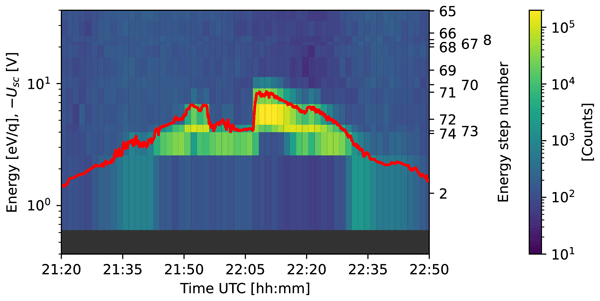
During the first Earth gravity assist maneuver of the JUICE spacecraft in August 2024 the spacecraft passed through the Earth plasmasphere for about 2 hours. The ion spectrometer PEP JEI was able to make a very rare observation of the molecular ion fraction of the cold and dense plasma in the Earth plasmasphere. The observation shows that cold ions can emanate from the Earth ionosphere even at times when no magnetic storm enhances the ion extraction.
Gabriella Stenberg Wieser, Martin Wieser, Stas Barabash, Philipp Wittmann, Leif Kalla, Markus Fränz, Elias Roussos, Audrey Vorburger, Peter Wurz, Jan-Erik Wahlund, Pontus C. Brandt, Yoshifumi Futaana, Manabu Shimoyama, Angèle Pontoni, André Galli, Andreas Riedo, George Ho, Donald G. Mitchell, George Clark, Peter Kollmann, Malamati Gkioulidou, Leonardo Regoli, Norbert Krupp, Robert Wimmer-Schweingruber, Kazushi Asamura, Esa Kallio, Andrea Opitz, Manuel Grande, Andrew Coates, Geraint Jones, Theodoros Sarris, Andrey Fedorov, Nicolas André, and Ján Baláž
EGUsphere, https://doi.org/10.5194/egusphere-2026-2039, https://doi.org/10.5194/egusphere-2026-2039, 2026
This preprint is open for discussion and under review for Annales Geophysicae (ANGEO).
Short summary
Short summary
We used Juice flyby of Earth in August 2024 to evaluate the performance of the Jovian Plasma Dynamics and Composition analyzer (JDC). JDC measures positive and negative ions as well as electrons. When Juice arrives at Jupiter, one of the most challenging tasks for JDC is to record low energy ion populations. We used the data JDC recorded close to Earth, together with measurement in the laboratory on ground, to improve the future observations the sensor will make around Jupiter’s icy moons.
Konstantinos Dialynas, Matina Gkioulidou, Donald Mitchell, Pontus Brandt, George Clark, Elias Roussos, Peter Kollmann, Leonardo Regoli, Frederic Allegrini, Nicolas Andre, Xianzhe Jia, Krishan Khurana, Carol Paty, Stas Barabash, and Peter Wurz
EGUsphere, https://doi.org/10.5194/egusphere-2026-2062, https://doi.org/10.5194/egusphere-2026-2062, 2026
This preprint is open for discussion and under review for Annales Geophysicae (ANGEO).
Short summary
Short summary
We analyze the first ENA images of Earth's magnetosphere that were captured by the PEP/JENI detector on the JUICE spacecraft, at distances of ~17 to ~150 Earth Radii during the Lunar and Earth Gravity Assist (LEGA), to discern substorm dynamics around Earth. We show increased ENA emissions associated with the onsets of substorm events, suggesting direct responses to the increased energetic ion activity.
Pontus C. Brandt, George Clark, Donald G. Mitchell, Peter Kollmann, Matina Gkioulidou, Leonardo Regoli, Kostas Dialynas, Frederic Allegrini, Nicolas Andre, Xianzhe Jia, Krishan Khurana, Carol Paty, Stanislav Barabash, and Peter Wurz
EGUsphere, https://doi.org/10.5194/egusphere-2026-2050, https://doi.org/10.5194/egusphere-2026-2050, 2026
This preprint is open for discussion and under review for Annales Geophysicae (ANGEO).
Short summary
Short summary
This report presents the measurements conducted by two particle sensors onboard the Jupiter Icy Moon Explorer spacecraft during its flyby of the Moon and Earth.
Mark B. Moldwin, Edward Wilcox, Eftyhia Zesta, and Todd M. Bonalsky
Geosci. Instrum. Method. Data Syst., 11, 219–222, https://doi.org/10.5194/gi-11-219-2022, https://doi.org/10.5194/gi-11-219-2022, 2022
Short summary
Short summary
The commercial off-the-shelf (COTS) PNI RM3100 magnetometer was tested for single-event latchup (SEL) at Lawrence Berkeley National Laboratory's heavy-ion beam and did not experience any single-event effects at a linear energy transfer >75 MeV cm2 mg−1. Coupled with previous total ionizing dose (TID) testing at the University of Michigan and NASA Goddard Space Flight Center that showed no degradation in performance up to 150 kRad(SI), the COTS PNI RM3100 is extremely radiation tolerant.
Cited articles
Bandyopadhyay, S., Subramanian, G. P., Foust, R., Morgan, D., Chung, S.-J., and
Hadaegh, F.: A Review of Impending Small Satellite Formation Flying Missions,
53rd AIAA Aerospace Sciences Meeting, 5–9 January 2018, Kissimmee, Florida, https://doi.org/10.2514/6.2015-1623, 2015. a
Baumjohann, W. and Treumann, R. A. (Eds.): Basic space plasma physics, World
Scientific, https://doi.org/10.1142/9789811254062_0001, 2012. a
Boudenot, J.-C.: Radiation Space Environment, 1–9, edited by: Velazco, R., Fouillat, P., and Reis, R., Springer Netherlands,
Dordrecht, https://doi.org/10.1007/978-1-4020-5646-8_1, 2007. a
Brown, P., Beek, T., Carr, C., O'Brien, H., Cupido, E., Oddy, T., and Horbury,
T. S.: Magnetoresistive magnetometer for space science applications,
Meas. Sci. Technol., 23, 025902,
https://doi.org/10.1088/0957-0233/23/2/025902, 2012. a
Brown, P., Whiteside, B. J., Beek, T. J., Fox, P., Horbury, T. S., Oddy, T. M.,
Archer, M. O., Eastwood, J. P., Sanz-Hernández, D., Sample, J. G., Cupido,
E., O'Brien, H., and Carr, C. M.: Space magnetometer based on an
anisotropic magnetoresistive hybrid sensor, Rev. Sci. Instrum.,
85, 125117, https://doi.org/10.1063/1.4904702, 2014. a
Burch, J. L., Moore, T. E., Torbert, R. B., and Giles, B. L.: Magnetospheric
Multiscale Overview and Science Objectives, Magnetospheric Multiscale, 199,
5–21, https://doi.org/10.1007/s11214-015-0164-9, 2016. a
Fear, R. C., Milan, S. E., Maggiolo, R., Fazakerley, A. N., Dandouras, I., and
Mende, S. B.: Direct observation of closed magnetic flux trapped in the
high-latitude magnetosphere, Science, 346, 1506–1510,
https://doi.org/10.1126/science.1257377, 2014. a
Fiori, A. M. and Zenga, M.: Karl Pearson and the Origin of Kurtosis,
Int. Stat. Rev., 77, 40–50,
https://doi.org/10.1111/j.1751-5823.2009.00076.x, 2009. a
Forslund, Å., Belyayev, S., Ivchenko, N., Olsson, G., Edberg, T., and
Marusenkov, A.: Miniaturized digital fluxgate magnetometer for small
spacecraft applications, Meas. Sci. Technol., 19, 015202,
https://doi.org/10.1088/0957-0233/19/1/015202, 2007. a
Friis-Christensen, E., Lühr, H., and Hulot, G.: Swarm: A constellation to
study the Earth's magnetic field, Earth Planets Space, 58, 351–358,
https://doi.org/10.1186/bf03351933, 2006. a
Guo, L., Wang, C., Zhi, S., Feng, Z., Lei, C., and Zhou, Y.: Wide Linearity
Range and Highly Sensitive MEMS-Based Micro-Fluxgate Sensor with Double-Layer
Magnetic Core Made of Fe–Co–B Amorphous Alloy, Micromachines, 8, 352,
https://doi.org/10.3390/mi8120352, 2017. a
Heinzel, G., Rüdiger, A. O., and Schilling, R.: Spectrum and spectral
density estimation by the Discrete Fourier transform (DFT), including a
comprehensive list of window functions and some new at-top windows, edited by: Kawabe, K., Kötter, K., Weidner, A., and Weiland, U., Max Planck Society, https://hdl.handle.net/11858/00-001M-0000-0013-557A-5 (last access: 10 November 2022), 2002. a
Hoffmann, A. P. and Moldwin, M. B.: Separation of Spacecraft Noise From
Geomagnetic Field Observations Through Density-Based Cluster Analysis and
Compressive Sensing, J. Geophys. Res.-Space, 127,
e2022JA030757, https://doi.org/10.1029/2022JA030757, 2022. a
Konte, K., Trafford, R., and Schmalzel, J.: Implementing XEDS for a CubeSat
communication subsystem, in: 2018 IEEE Sensors Applications Symposium (SAS), IEEE,
1–5, https://doi.org/10.1109/SAS.2018.8336757, 2018. a
Li, Y., Lv, X., Geng, L., Yang, C., Sun, W., and Deng, Y.: A chip-based
scientific payload technology for visual detection of proteins and its
application in spaceflight, Acta Astronaut., 170, 601–608,
https://doi.org/10.1016/j.actaastro.2020.02.037, 2020. a
Maruca, B. A., Agudelo Rueda, J. A., Bandyopadhyay, R., Bianco, F. B.,
Chasapis, A., Chhiber, R., DeWeese, H., Matthaeus, W. H., Miles, D. M.,
Qudsi, R. A., Richardson, M. J., Servidio, S., Shay, M. A., Sundkvist, D.,
Verscharen, D., Vines, S. K., Westlake, J. H., and Wicks, R. T.: MagneToRE:
Mapping the 3-D Magnetic Structure of the Solar Wind Using a Large
Constellation of Nanosatellites, Frontiers in Astronomy and Space Sciences,
8, 665885, https://doi.org/10.3389/fspas.2021.665885, 2021. a
Matandirotya, E., Zyl, R. R. V., Gouws, D. J., and Saunderson, E. F.:
Evaluation of a Commercial-Off-the-Shelf Fluxgate Magnetometer for CubeSat
Space Magnetometry, Journal of Small Satellites, 2, 133–146, 2013. a
MEDA: uMAG Series Handheld Fluxgate Magnetometers,
http://www.meda.com/pdf/uMAG Data Sheet rev A.pdf (last access: May 2022),
2005. a
Miles, D. M., Mann, I. R., Ciurzynski, M., Barona, D., Narod, B. B.,
Bennest, J. R., Pakhotin, I. P., Kale, A., Bruner, B., Nokes,
C. D. A., Cupido, C., Haluza-DeLay, T., Elliott, D. G., and Milling,
D. K.: A miniature, low-power scientific fluxgate magnetometer: A
stepping-stone to cube-satellite constellation missions, J.
Geophys. Res.-Space, 121, 11839–11860, https://doi.org/10.1002/2016JA023147,
2016. a
Miles, D. M., Ciurzynski, M., Barona, D., Narod, B. B., Bennest, J. R., Kale, A., Lessard, M., Milling, D. K., Larson, J., and Mann, I. R.: Low-noise permalloy ring cores for fluxgate magnetometers, Geosci. Instrum. Method. Data Syst., 8, 227–240, https://doi.org/10.5194/gi-8-227-2019, 2019. a
Moldwin, M. B., Wilcox, E., Zesta, E., and Bonalsky, T. M.: Single-event effect testing of the PNI RM3100 magnetometer for space applications, Geosci. Instrum. Method. Data Syst., 11, 219–222, https://doi.org/10.5194/gi-11-219-2022, 2022. a
NASEM (Eds.): Achieving Science with CubeSats: Thinking Inside the Box, The National
Academies Press, Washington, DC, https://doi.org/10.17226/23503, 2016. a
Netzer, R., Avery, K., Kemp, W., Vera, A., Zufelt, B., and Alexander, D.: Total
Ionizing Dose Effects on Commercial Electronics for Cube Sats in Low Earth
Orbits, in: 2014 IEEE Radiation Effects Data Workshop (REDW), 1–7,
https://doi.org/10.1109/REDW.2014.7004607, 2014. a
Novotny, D., Petrucha, V., Dressler, M., and Platil, A.: Characterization of a
Digital AMR Magnetometer for Space Applications, IEEE T.
Instrum. Meas., 70, 1–9, https://doi.org/10.1109/TIM.2020.3043867,
2021. a
Primdahl, F.: The fluxgate magnetometer, J. Phys. E, 12, 241–253, https://doi.org/10.1088/0022-3735/12/4/001, 1979. a
Regoli, L., Moldwin, M., Thoma, J., Pellioni, M., and Bronner, B.:
Four-Magnetometer Board for CubeSat Applications, in: Proceedings of the
AIAA/USU Conference on Small Satellites, Advanced Technologies I, 270,
AIAA/USU, https://digitalcommons.usu.edu/smallsat/2018/all2018/270/ (last access: September 2022),
2018a. a, b, c
Regoli, L. H., Moldwin, M. B., Pellioni, M., Bronner, B., Hite, K., Sheinker, A., and Ponder, B. M.: Investigation of a low-cost magneto-inductive magnetometer for space science applications, Geosci. Instrum. Method. Data Syst., 7, 129–142, https://doi.org/10.5194/gi-7-129-2018, 2018b. a, b, c, d, e, f, g, h
Regoli, L. H., Moldwin, M. B., Raines, C., Nordheim, T. A., Miller, C. A., Carts, M., and Pozzi, S. A.: Radiation tolerance of the PNI RM3100 magnetometer for a Europa lander mission, Geosci. Instrum. Method. Data Syst., 9, 499–507, https://doi.org/10.5194/gi-9-499-2020, 2020. a, b, c
Schoolcraft, J., Klesh, A. T., and Werne, T.: MarCO: Interplanetary Mission
Development On a CubeSat Scale, in: SSCSO – SmallSat Missions & Operations I, ARC, https://doi.org/10.2514/6.2016-2491, 2016. a
Shahsavani, H.: An aeromagnetic survey carried out using a rotary-wing UAV
equipped with a low-cost magneto-inductive sensor, Int. J.
Remote Sens., 42, 8805–8818, https://doi.org/10.1080/01431161.2021.1930269, 2021. a
Shahsavani, H. and Vafaei, S.: Magnetic gradiometry with a low-cost
magneto-inductive sensor: A case study on Baba-Ali iron ore deposit (Western
Iran), J. Appl. Geophys., 177, 104053,
https://doi.org/10.1016/j.jappgeo.2020.104053, 2020. a
Singer, H., Matheson, L., Grubb, R., Newman, A., and Bouwer, D.: Monitoring
space weather with the GOES magnetometers, in: GOES-8 and Beyond, edited by:
Washwell, E. R., Vol. 2812, 299–308, International Society for Optics
and Photonics, SPIE, https://doi.org/10.1117/12.254077, 1996. a
Strabel, B. P.: bstrabel/quad_mag_data_analysis:
quad_mag_data_analysis_v1.0.0, Zenodo [code], https://doi.org/10.5281/ZENODO.6515198,
2022a. a
Strabel, B. P.: Quad-Mag Characterization Data, University of Michigan Library [data set], https://doi.org/10.7302/kc6t-3670,
2022b.
a
Strange, A.: Communications On Board: A Satellite Data Handling and Ground
Communication System, Proceedings of the AIAA/USU Conference on Small Satellites, https://digitalcommons.usu.edu/smallsat/2006/All2006/37/ (last access: 9 November 2022), 2006. a
Welch, P.: The use of fast Fourier transform for the estimation of power
spectra: A method based on time averaging over short, modified periodograms,
IEEE T. Acoust. Speech, 15, 70–73,
https://doi.org/10.1109/TAU.1967.1161901, 1967. a
Short summary
The design, characteristics, and performance of a CubeSat magnetometer board (Quad-Mag) equipped with four PNI RM3100 magnetometers is presented. The inclusion of four sensors allows a potential factor of 2 reduction in the noise floor established for an individual sensor via oversampling with multiple sensors. The Quad-Mag is shown to enable 1 nT magnetic field measurements at 1 Hz and 5.345 nT at 65 Hz using commercial off-the-shelf sensors for space applications.
The design, characteristics, and performance of a CubeSat magnetometer board (Quad-Mag) equipped...