Articles | Volume 14, issue 1
https://doi.org/10.5194/gi-14-29-2025
© Author(s) 2025. This work is distributed under
the Creative Commons Attribution 4.0 License.
https://doi.org/10.5194/gi-14-29-2025
© Author(s) 2025. This work is distributed under
the Creative Commons Attribution 4.0 License.
A steerable system for the RECoverable Autonomous Sonde (RECAS) to access and study subglacial lakes

Mikhail A. Sysoev
Institute of Polar Science and Engineering, Jilin University, Changchun, China
School of Engineering and Technology, China University of Geosciences, Beijing, China
Xiaopeng Fan
Institute of Polar Science and Engineering, Jilin University, Changchun, China
Nan Zhang
Institute of Polar Science and Engineering, Jilin University, Changchun, China
Da Gong
CORRESPONDING AUTHOR
Institute of Polar Science and Engineering, Jilin University, Changchun, China
Yang Yang
Institute of Polar Science and Engineering, Jilin University, Changchun, China
Ting Wang
Institute of Polar Science and Engineering, Jilin University, Changchun, China
Zhipeng Deng
Institute of Polar Science and Engineering, Jilin University, Changchun, China
Related authors
No articles found.
Yazhou Li, Xuxin Lei, Xiaopeng Fan, Haibing Yu, Bing Li, Shilin Peng, and Yuting Ye
EGUsphere, https://doi.org/10.5194/egusphere-2026-4471, https://doi.org/10.5194/egusphere-2026-4471, 2026
This preprint is open for discussion and under review for Geoscientific Instrumentation, Methods and Data Systems (GI).
Short summary
Short summary
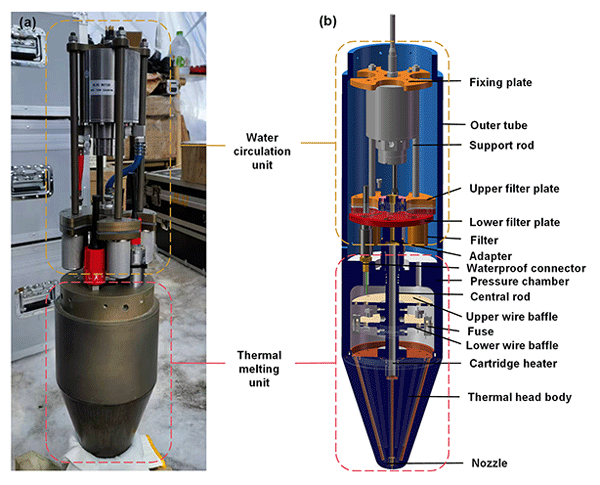
To enable the use of the Recoverable Autonomous Sonde for exploring Qilin Subglacial Lake in Antarctica, its original thermal head was upgraded. The material was changed from pure copper to chromium‑zirconium copper, and the thermal head was redesigned as a solid construction to withstand high water pressures. Additionally, the incorporation of a water‑jetting component significantly improved drilling performance in clear, dust‑laden, and debris‑rich ice.
Xinyu Lv, Zhihao Cui, Ting Wang, Yumin Wen, An Liu, and Rusheng Wang
The Cryosphere, 18, 3351–3362, https://doi.org/10.5194/tc-18-3351-2024, https://doi.org/10.5194/tc-18-3351-2024, 2024
Short summary
Short summary
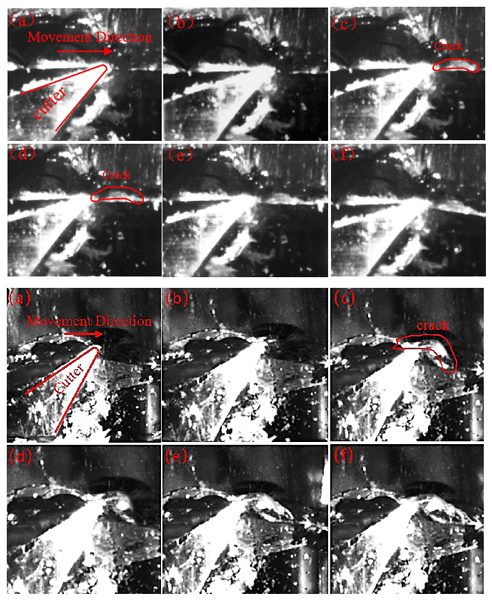
In this study, the formation process of ice chips was observed and the fracture mechanics characteristics of the ice during the cutting process were analyzed. Additionally, a mechanical model for the cutting force was established based on the observation and analysis results. Finally, influencing factors and laws of the cutting force were verified by cutting force test results generated under various experimental conditions.
William Colgan, Christopher Shields, Pavel Talalay, Xiaopeng Fan, Austin P. Lines, Joshua Elliott, Harihar Rajaram, Kenneth Mankoff, Morten Jensen, Mira Backes, Yunchen Liu, Xianzhe Wei, Nanna B. Karlsson, Henrik Spanggård, and Allan Ø. Pedersen
Geosci. Instrum. Method. Data Syst., 12, 121–140, https://doi.org/10.5194/gi-12-121-2023, https://doi.org/10.5194/gi-12-121-2023, 2023
Short summary
Short summary
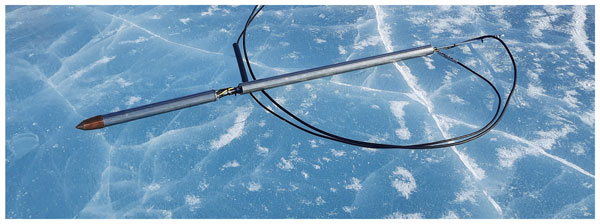
We describe a new drill for glaciers and ice sheets. Instead of drilling down into the ice, via mechanical action, our drill melts into the ice. Our goal is simply to pull a cable of temperature sensors on a one-way trip down to the ice–bed interface. Here, we describe the design and testing of our drill. Under laboratory conditions, our melt-tip drill has an efficiency of ∼ 35 % with a theoretical maximum penetration rate of ∼ 12 m h−1. Under field conditions, our efficiency is just ∼ 15 %.
Youhong Sun, Bing Li, Xiaopeng Fan, Yuansheng Li, Guopin Li, Haibin Yu, Hongzhi Li, Dongliang Wang, Nan Zhang, Da Gong, Rusheng Wang, Yazhou Li, and Pavel G. Talalay
The Cryosphere, 17, 1089–1095, https://doi.org/10.5194/tc-17-1089-2023, https://doi.org/10.5194/tc-17-1089-2023, 2023
Short summary
Short summary
The discovery of polar subglacial lakes, rivers and streams has opened a new frontier of science within a short span. We present a new environmentally friendly approach to study subglacial reservoirs based on the concept of freezing-in instrumented probes carrying a tethering power-signal cable. In January 2022, the probe was successfully tested in East Antarctica: it reached the base of the ice sheet and returned to the ice surface with samples of melted water from the basal ice.
Cited articles
Ashmore, D. W. and Bingham, R. G.: Antarctic subglacial hydrology: current knowledge and future challenges, Antartic Sci., 26, 758–773, https://doi.org/10.1017/S0954102014000546, 2014.
Bowling, J. S., Livingstone, S. J., Sole, A. J., and Chu, W.: Distribution and dynamics of Greenland subglacial lakes, Nat. Commun., 10, 2810, https://doi.org/10.1038/s41467-019-10821-w, 2019.
Dachwald, B., Mikucki, J., Tulaczyk, S., Digel, I., Espe, C., Feldmann, M., Francke, G., Kowalski, J., and Xu, C.: IceMole: a maneuverable probe for clean in situ analysis and sampling of subsurface ice and subglacial aquatic ecosystems, Ann. Glaciol., 55, 14–22, https://doi.org/10.3189/2014AoG65A004, 2014.
Heinen, D., Audehm, J., Becker, F., Boeck, G., Espe, C., Feldmann, M., Francke, G., Friend, P., Haberberger, N., Helbin, K., Nghe, C. T., Stelzig, M., Vossiek, M., Wiebusch, C., and Zierke, S.: The TRIPLE Melting Probe – an Electro-Thermal Drill with a Forefield Reconnaissance System to Access Subglacial Lakes and Oceans, in: OCEANS 2021: San Diego–Porto, 20–23 September 2021, San Diego, CA, USA, https://doi.org/10.23919/OCEANS44145.2021.9705999, 1–7, 2021.
Kyurkchiev, N. and Markov, S.: Sigmoid Functions: Some Approximation and Modelling Aspects Some Moduli in Programming Environment MATHEMATICA, 1. edn., LAP LAMBERT Academic Publishing, Saarbrücken, 2015, ISBN: 978-3-659-76045-7, 2015.
Li, X.: Research on the temperature field and closure rate of ice hole formed by thermal drill, Dissertation for the Doctoral Degree, Jilin University, Changchun, 2020.
Li, Y., Talalay, P. G., Sysoev, M. A., Zagorodnov, V. S., Li, X., and Fan, X.: Thermal Heads for Melt Drilling to Subglacial Lakes: Design and Testing, Astrobiology, 20, 142–156, https://doi.org/10.1089/ast.2019.2103, 2020.
Livingstone, S. J., Li, Y., Rutishauser, A., Sanderson, R. J., Winter, K., Mikucki, J. A., Björnsson, H., Bowling, J. S., Chu, W., Dow, C. F., Fricker, H. A., McMillan, M., Ng, F. S. L., Ross, N., Siegert, M. J., Siegfried, M., and Sole, A. J.: Subglacial lakes and their changing role in a warming climate, Nat. Rev. Earth. Environ., 3, 106–124, https://doi.org/10.1038/s43017-021-00246-9, 2022.
Pereira, P. V., Durka, M. J., Hogan, B. P., Richmond, K., Smith, M. W. E., Winebrenner, D. P., Elam, W. T., Hockman, B. J., Lopez, A., Tanner, N., Moor, J., Ralston, J., Alexander, M., Zimmerman, W., Flannery, N., Kuhl, W., Wielgosz, S., Cahoy, K. L., Cwik, T. A., and Stone, W. C.: Experimental Validation of Cryobot Thermal Models for the Exploration of Ocean Worlds, Planet. Sci. J., 4, 81, https://doi.org/10.3847/PSJ/acc2b7, 2023.
Priscu, J. C., Kalin, J., Winans, J., Campbell, T., Siegfried, M. R., Skidmore, M., Dore, J. E., Leventer, A., Harwood, D. M., Duling, D., Zook, R., Burnett, J., Gibson, D., Krula, E., Mironov, A., McManis, J., Roberts, G., Rosenheim, B. E., Christner, B. C., Kasic, K., Fricker, H. A., Lyons, W. B., Barker, J., Bowling, M., Collins, B., Davis, C., Gagnon, A., Gardner, C., Gustafson, C., Kim, O.-S., Li, W., Michaud, A., Patterson, M. O., Tranter, M., Venturelli, R., Vick-Majors, T., Elsworth, C., and The SALSA Science Team: Scientific access into Mercer Subglacial Lake: scientific objectives, drilling operations and initial observations, Ann. Glaciol., 62, 340–352, https://doi.org/10.1017/aog.2021.10, 2021.
Schuler, C. G., Winebrenner, D. P., Elam, W. T., Burnett, J., Boles, B. W., and Mikucki, J. A.: In situ contamination of melt probes: implications for future subglacial microbiological sampling and icy worlds life detection missions, Geol. Soc. Am., 50, 312–314, https://doi.org/10.1130/abs/2018SE-312314, 2018.
Shamshev, F. A., Tarakanov, C. N., Kudrjashov, B. B., Parijskij, J. M., and Jakovlev, A. M.: Tehnologija i tehnika razvedochnogo burenija [Technology and technique of exploration drilling], Nedra, Moscow, UDC number: UDC 622.143(075), 1983 (in Russian).
Siegert, M. J., Woodward, J., and Royston-Bishop, G.: Antarctic Subglacial Lakes, in: Encyclopedia of Lakes and Reservoirs, edited by: Bengtsson, L., Herschy, R. W., and Fairbridge, R. W., Springer Netherlands, Dordrecht, https://doi.org/10.1007/978-1-4020-4410-6_39, 37–39, 2012a.
Siegert, M. J., Clarke, R. J., Mowlem, M., Ross, N., Hill, C. S., Tait, A., Hodgson, D., Parnell, J., Tranter, M., Pearce, D., Bentley, M. J., Cockell, C., Tsaloglou, M., Smith, A., Woodward, J., Brito, M. P., and Waugh, E.: Clean access, measurement, and sampling of Ellsworth Subglacial Lake: A method for exploring deep Antarctic subglacial lake environments, Rev. Geophys., 50, 2011RG000361, https://doi.org/10.1029/2011RG000361, 2012b.
Skidmore, M.: Microbial communities in Antarctic subglacial aquatic environments, in: Geophysical Monograph Series, vol. 192, edited by: Siegert, M. J., Kennicutt, M. C., and Bindschadler, R. A., American Geophysical Union, Washington, DC, https://doi.org/10.1029/2010GM000995, 61–81, 2011.
Stone, W., Hogan, B., Siegel, V., Harman, J., Flesher, C., Clark, E., Pradhan, O., Gasiewski, A., Howe, S., and Howe, T.: Project VALKYRIE: Laser-Powered Cryobots and Other Methods for Penetrating Deep Ice on Ocean Worlds, in: Outer Solar System, edited by: Badescu, V. and Zacny, K., Springer International Publishing, Cham, https://doi.org/10.1007/978-3-319-73845-1_4, 47–165, 2018.
Sun, Y., Li, B., Fan, X., Li, Y., Li, G., Yu, H., Li, H., Wang, D., Zhang, N., Gong, D., Wang, R., Li, Y., and Talalay, P. G.: Brief communication: New sonde to unravel the mystery of polar subglacial lakes, The Cryosphere, 17, 1089–1095, https://doi.org/10.5194/tc-17-1089-2023, 2023.
Sun, Y., Pavel, T., Li, Y., Yu, H., Wang, D., Li, G., Xu, L., Gong, D., Wang, J., Wang, J., Wang, T., Zhang, N., Wang, Z., Chen, Y., Liu, Y., Li, Y., Peng, S., Shi, J., An, C., Ge, Q., Xu, J., Ni, X., Cui, Q., Jiang, Q., Mikhail, S., Yang, Y., Wang, R., Wei, X., Wang, Y., Zhu, T., Deng, Z., Alexey, M., Li, B., and Fan, X.: Exploring Antarctic subglacial lakes with RECoverable Autonomous Sonde (RECAS): Design and first field tests, Sci. China Technol. Sc., 67, 1866–1878, https://doi.org/10.1007/s11431-023-2620-3, 2024.
Talalay, P. G., Zagorodnov, V. S., Markov, A. N., Sysoev, M. A., and Hong, J.: Recoverable autonomous sonde (RECAS) for environmental exploration of Antarctic subglacial lakes: general concept, Ann. Glaciol., 55, 23–30, https://doi.org/10.3189/2014AoG65A003, 2014.
Talalay, P. G., Li, Y., Sysoev, M. A., Hong, J., Li, X., and Fan, X.: Thermal tips for ice hot-point drilling: Experiments and preliminary thermal modeling, Cold Reg. Sci. Technol., 160, 97–109, https://doi.org/10.1016/j.coldregions.2019.01.015, 2019.
Tulaczyk, S., Mikucki, J. A., Siegfried, M. R., Priscu, J. C., Barcheck, C. G., Beem, L. H., Behar, A., Burnett, J., Christner, B. C., Fisher, A. T., Fricker, H. A., Mankoff, K. D., Powell, R. D., Rack, F., Sampson, D., Scherer, R. P., Schwartz, S. Y., and The Wissard Science Team: WISSARD at Subglacial Lake Whillans, West Antarctica: scientific operations and initial observations, Ann. Glaciol., 55, 51–58, https://doi.org/10.3189/2014AoG65A009, 2014.
Wright, A. and Siegert, M. J.: The identification and physiographical setting of Antarctic subglacial lakes: An update based on recent discoveries, in: Geophysical Monograph Series, Vol. 192, edited by: Siegert, M. J., Kennicutt, M. C., and Bindschadler, R. A., American Geophysical Union, Washington, DC, 9–26 pp., https://doi.org/10.1029/2010GM000933, 2011.
Ye, Y., Zierke, S., Li, B., Heinen, D., Li, Y., Wiebusch, C., Kaiser, S., Sun, Y., and Fan, X.: Melting trajectory of the asymmetrically-heated conical thermal head for ice-melting probes, Case Stud. Thermal Eng., 55, 104160, https://doi.org/10.1016/j.csite.2024.104160, 2024.
Zvarygin, V. I.: Burovye stanki i burenie skvazhin [Drilling rigs and well drilling], Siberian Federal University, Krasnoyarsk, ISBN 978-5-7638-2219-9, 2011 (in Russian).
Short summary
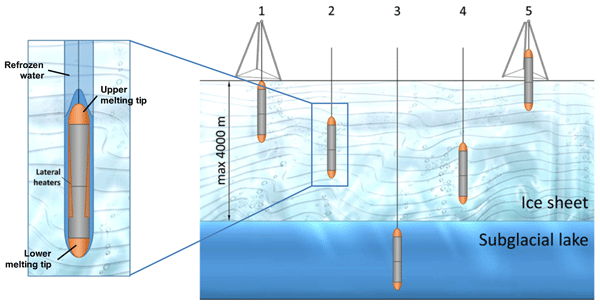
Our research introduces technology for exploring subglacial lakes while keeping them isolated from surface contamination. The RECoverable Autonomous Sonde (RECAS) can drill ice both downward and upward, allowing clean water sampling. In some cases, the sonde should drill at specific angles to follow a trajectory, maintain verticality, or bypass obstacles. This paper describes the general principles of steering the RECAS by adjusting the drill's heat distribution and the experimental results.
Our research introduces technology for exploring subglacial lakes while keeping them isolated...